Math Academy Interiors in the 30-Pyeong Range, 4 Cases on Boards, Windows and Lighting
Four math academy designs in Bucheon, Yeongtong and Gwangmyeong show how boards relate to exterior windows and ceiling lights. Learn how to check reflections from student seats and scope work on blinds, lighting and boards.

Before you begin
- In a window-side classroom, look at both the board and a notebook from a student’s seat during class hours before deciding how much shading you need.
- For an interior classroom, check the board and the back desks with ceiling lights on, and price the board and wiring separately.
30-pyeong Bucheon design with blinds beside the board
When planning a math academy in the 30-pyeong range, draw the sightline from student seats to the board as well as the space for writing at each desk. The same reflection can fall on different parts of the board when viewed from a window seat or from the far end of the room. Checking only with the blinds shut leaves out how much daylight can be used.
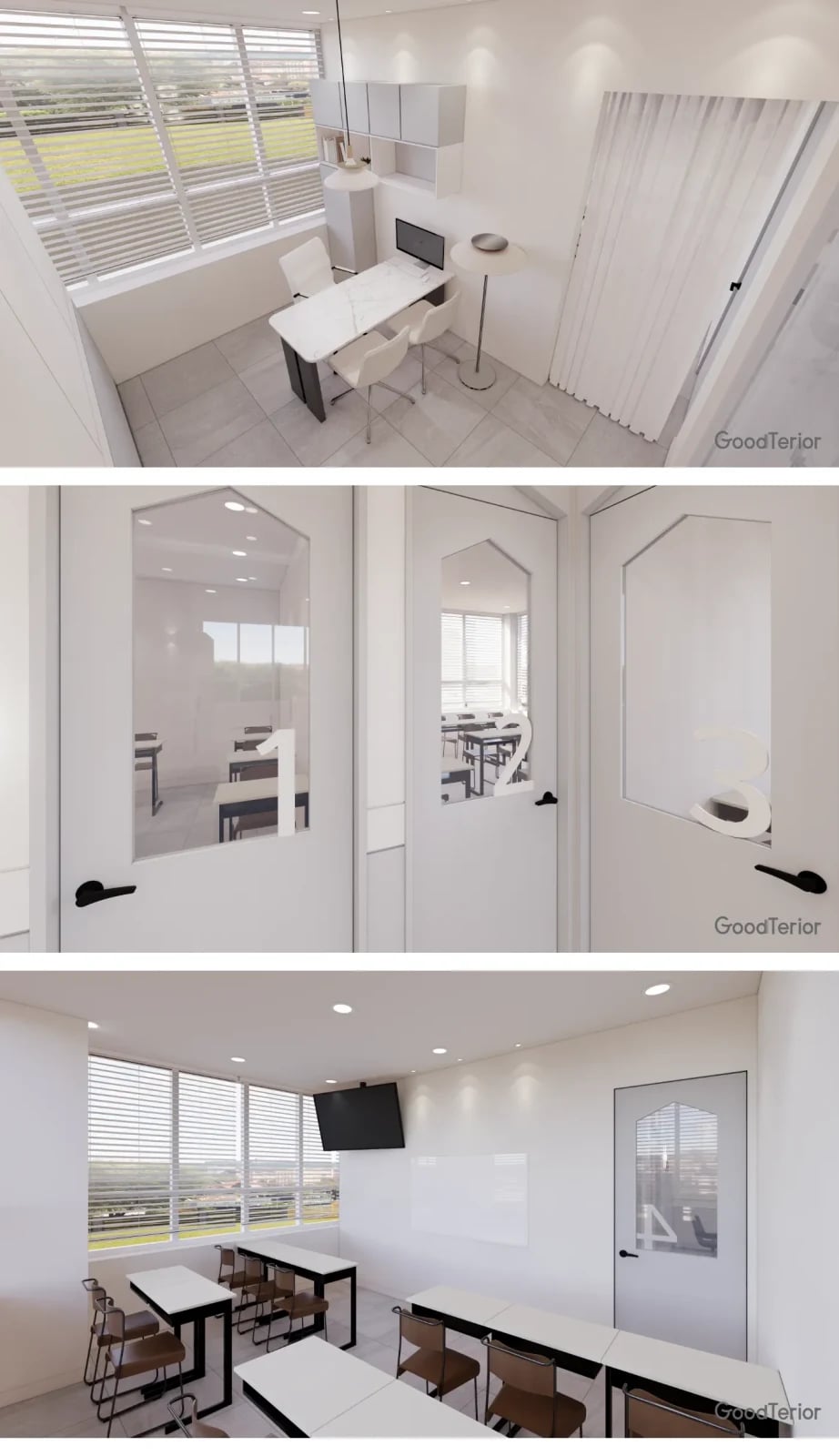
Goodterior’s 30-pyeong Bucheon math academy design places classrooms along the windows. In the bottom view, blinds on the large exterior window sit to the left of the white writing surface, with a screen mounted high between them. The render shows the bands of the blinds reflected on the board. It is a reminder to try different seats even when the window and board do not face each other.
Sit in a front seat by the window and a back seat on the opposite side at the actual lesson time. If notebooks get dark when the window is fully shaded, try lowering the blinds partway or adjusting the slat angle. Pick a place where the teacher can reach the controls before a lesson.
30-pyeong Yeongtong Urban Square design with rows of rectangular ceiling lights
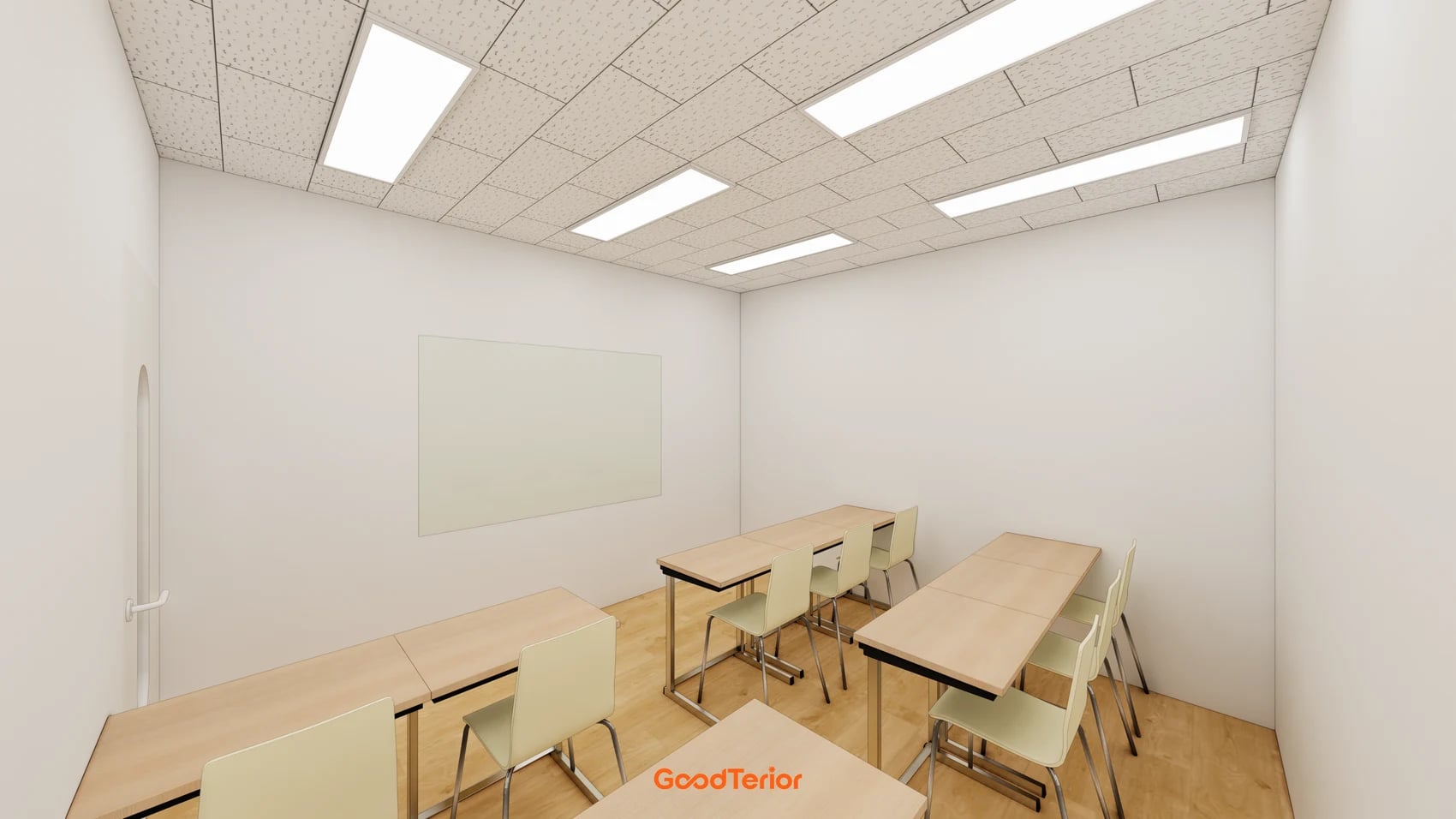
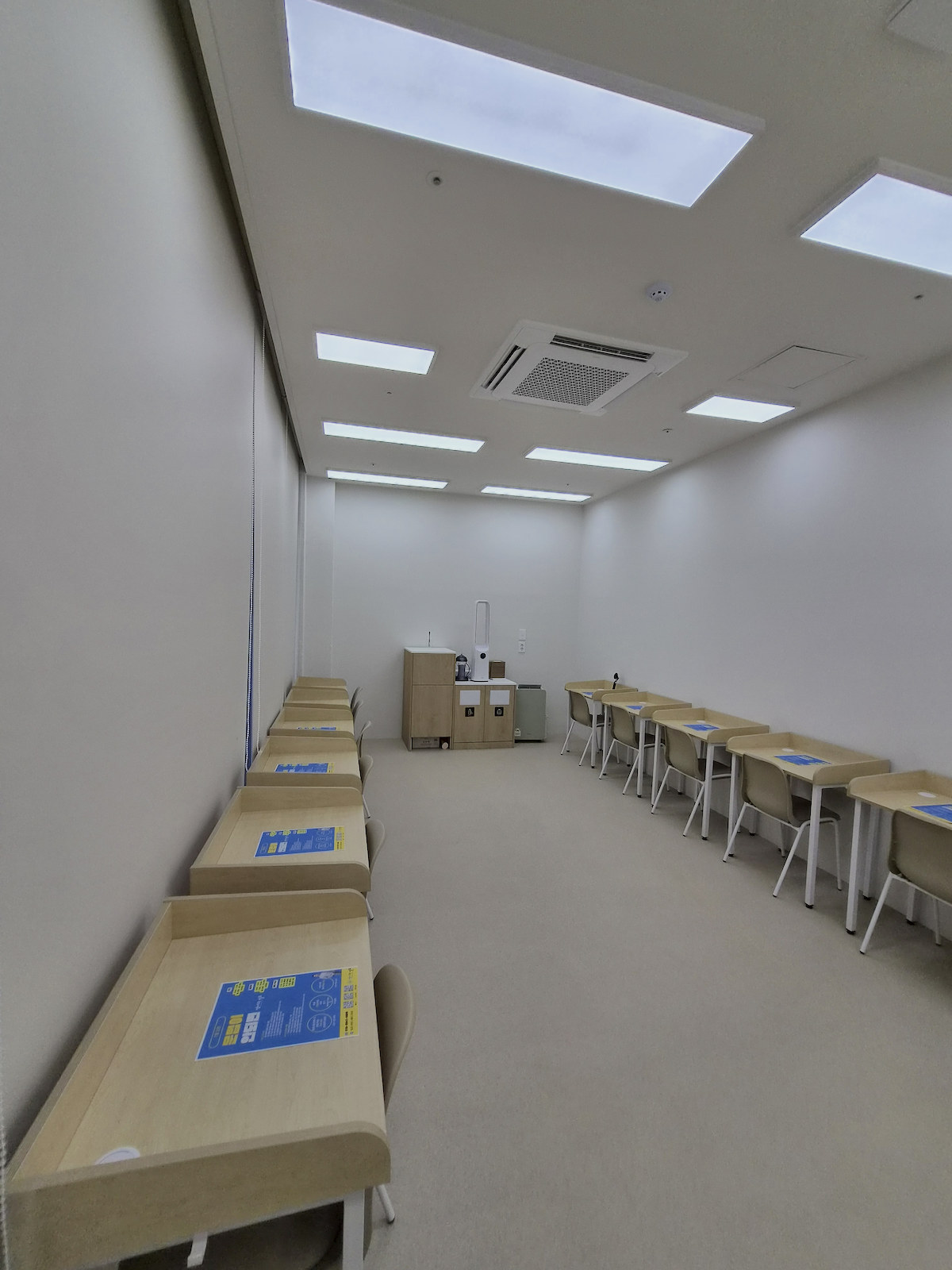
In a room with little daylight, check the front wall with ceiling lights on. The classroom shown in Goodterior’s 30-pyeong Yeongtong Urban Square math academy design has rows of long rectangular fixtures above pale wood desks. Holding a board sample against the teaching wall lets you see where a fixture reflects and where your hand casts a shadow as you write.
For an academy that mainly teaches in the evening, measure the ceiling and fixture locations, then mark board height and where the teacher stands. Switching off a row may help at the board but leave the back desks dimmer. Price a change to switch circuits with fixtures in place and a separate option that moves some fixtures and repairs the ceiling.
If a monitor or projector is used only occasionally, test ordinary board use and screen use separately. Check whether all the rear lights need to be off while pupils are still solving or copying a problem. See whether the teacher must walk between student desks to change the lights. Keeping the fixtures while bringing the controls closer to the teacher may be an option.
32-pyeong Gwangmyeong design with a door beside the board
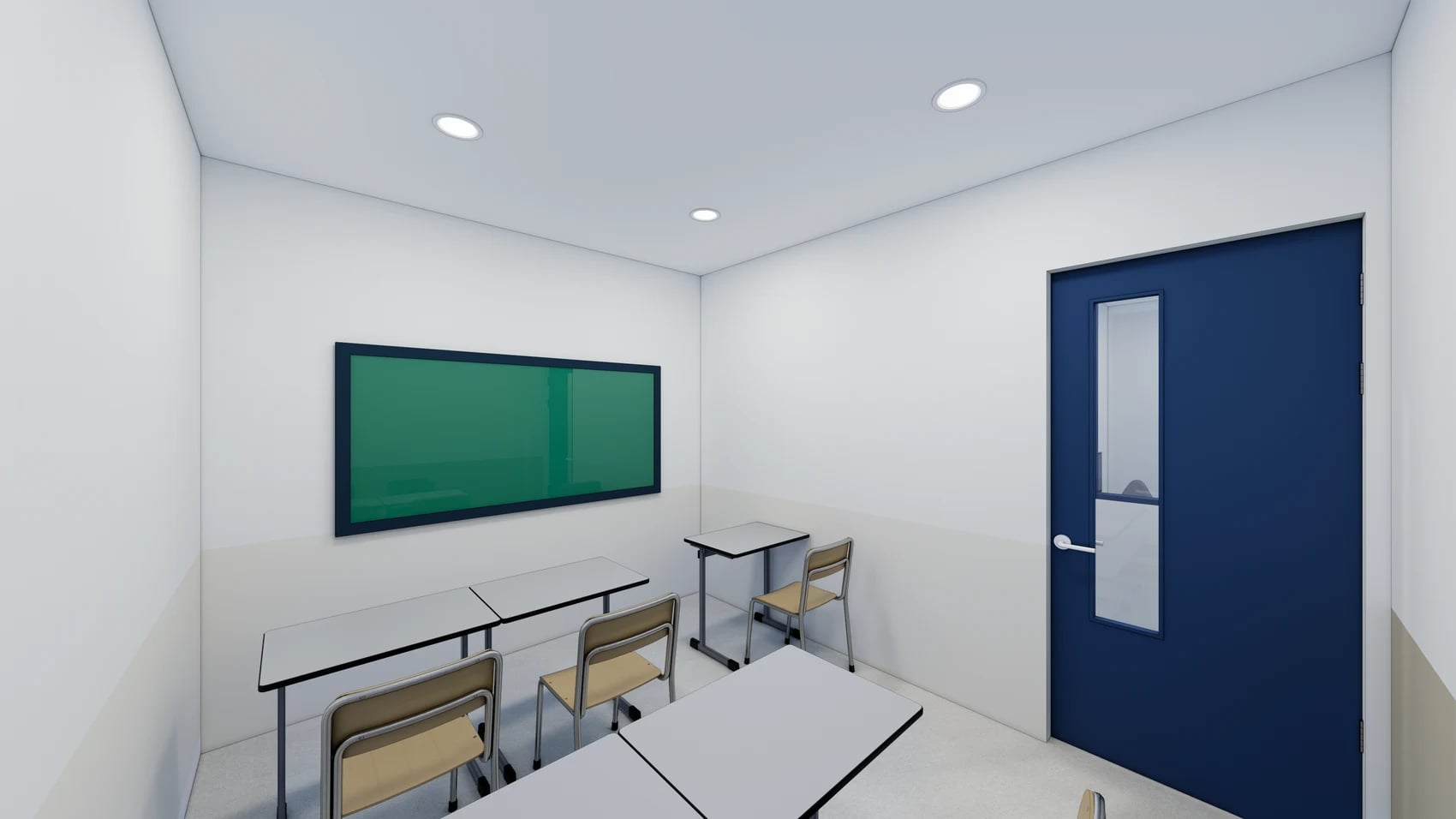
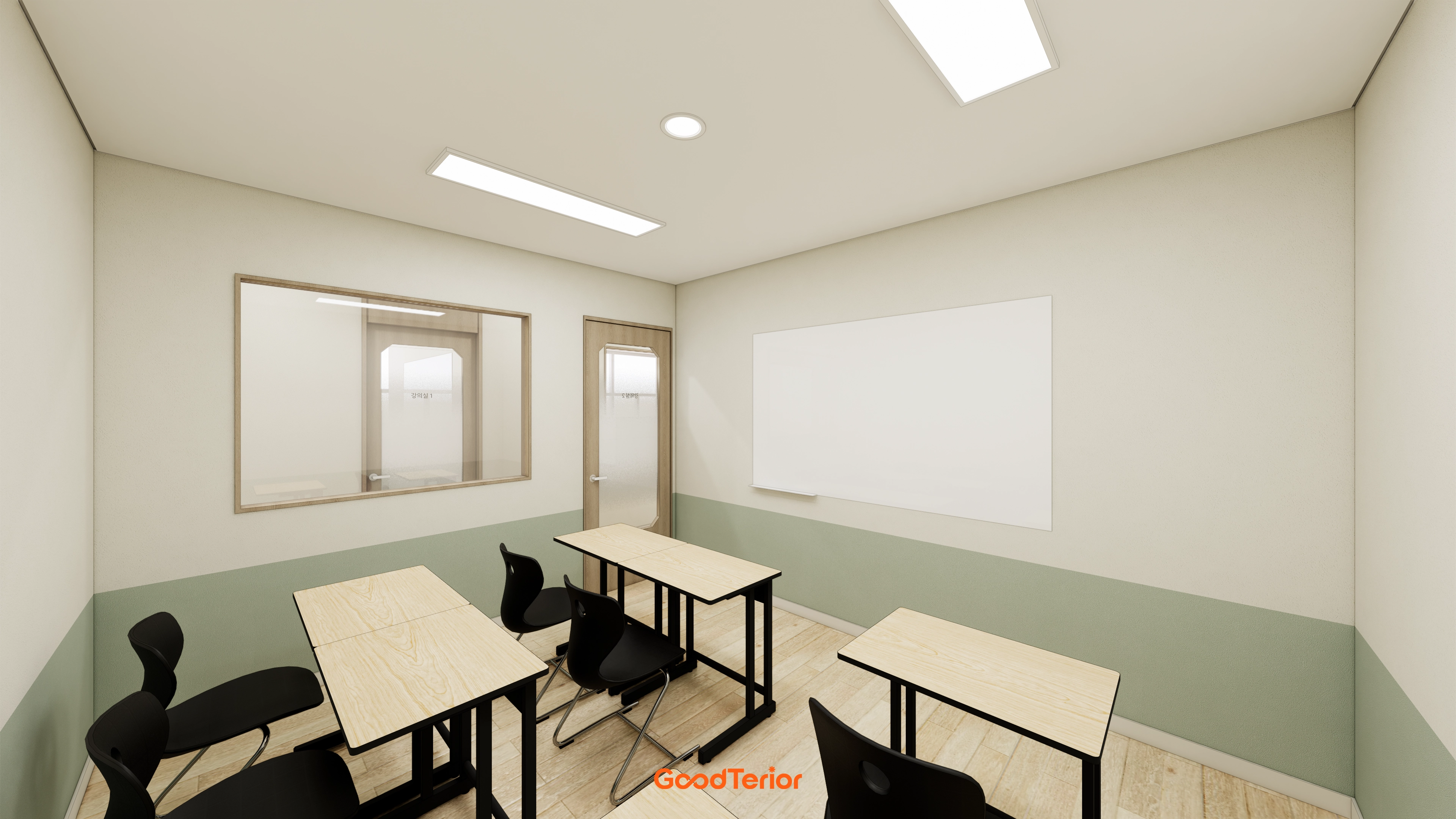
In Goodterior’s 32-pyeong Gwangmyeong math academy design, a blue door sits in the wall adjoining the green board under recessed lights. The door has a narrow vertical window. Checking only the board can miss what students see moving near the door. Sit at the end of the front row and look from the writing surface to the doorway.
If the board is near the door, rehearse where a student walks when arriving after class begins. From the teacher’s position, check whether someone opening the door enters the writing area. See whether shifting the front desks back slightly still leaves enough seats. If a layout change is enough, you can compare it with the cost of changing lighting or the door.
36-pyeong Bucheon design with a window-side room and an interior room
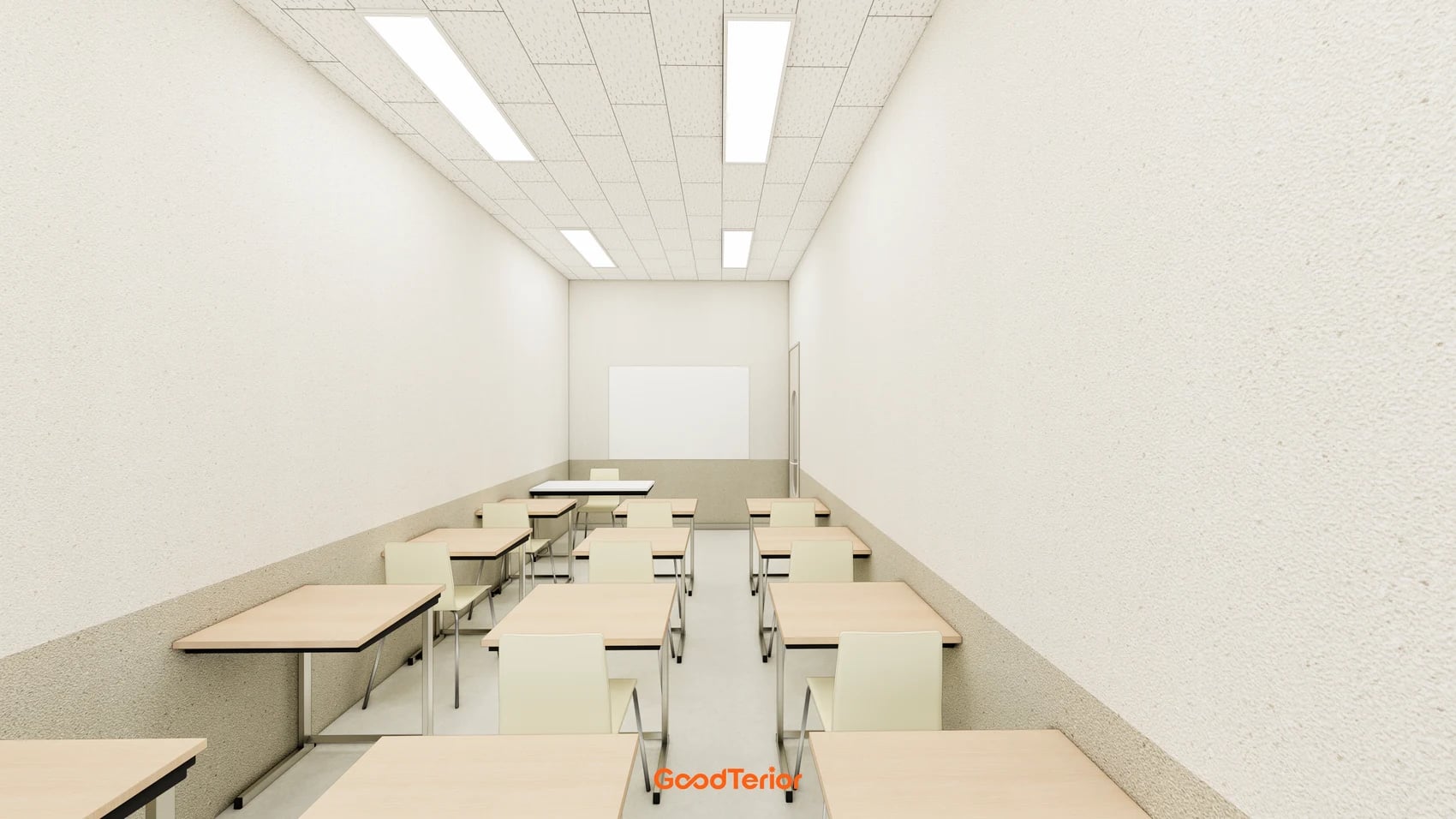
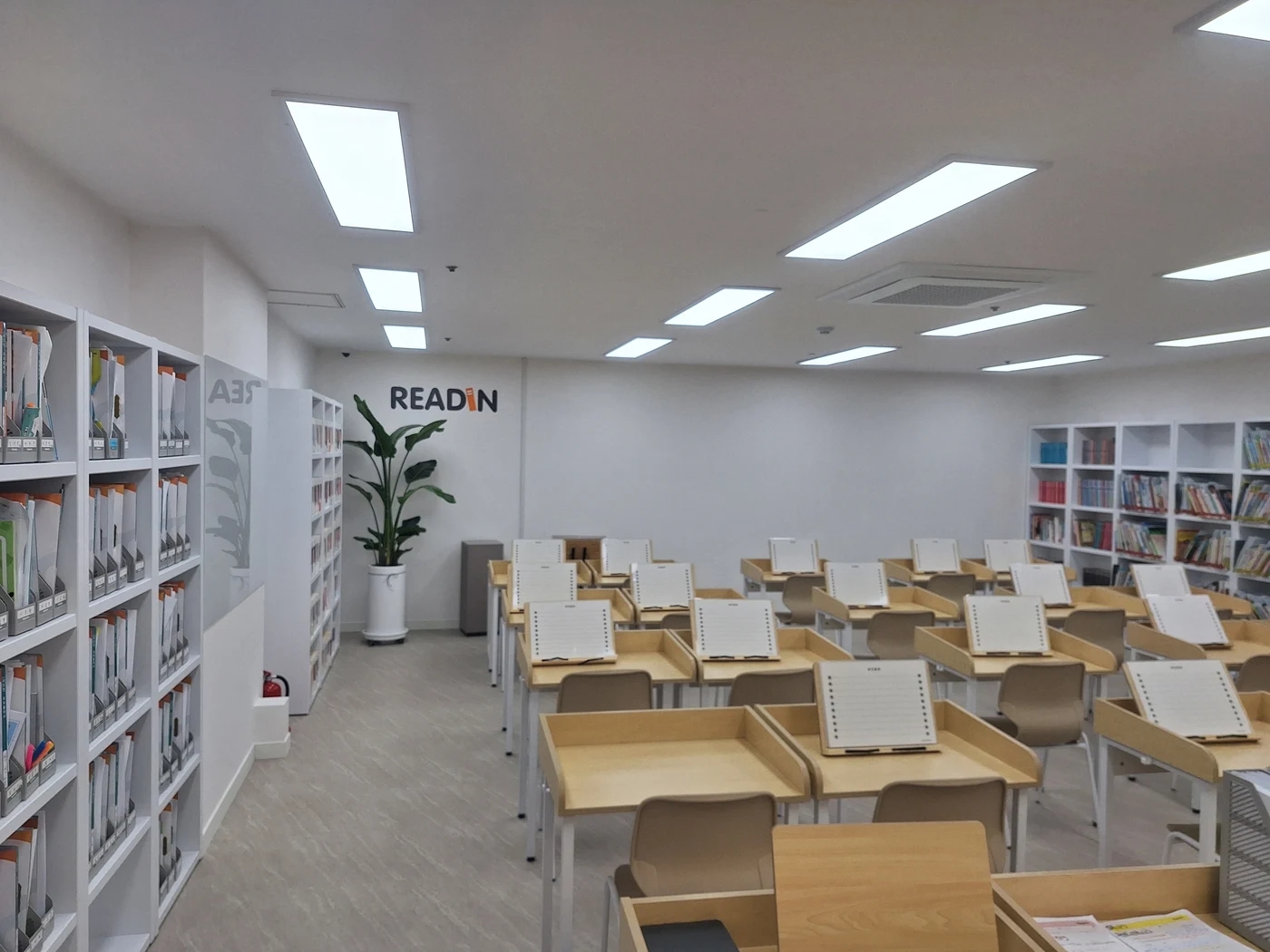
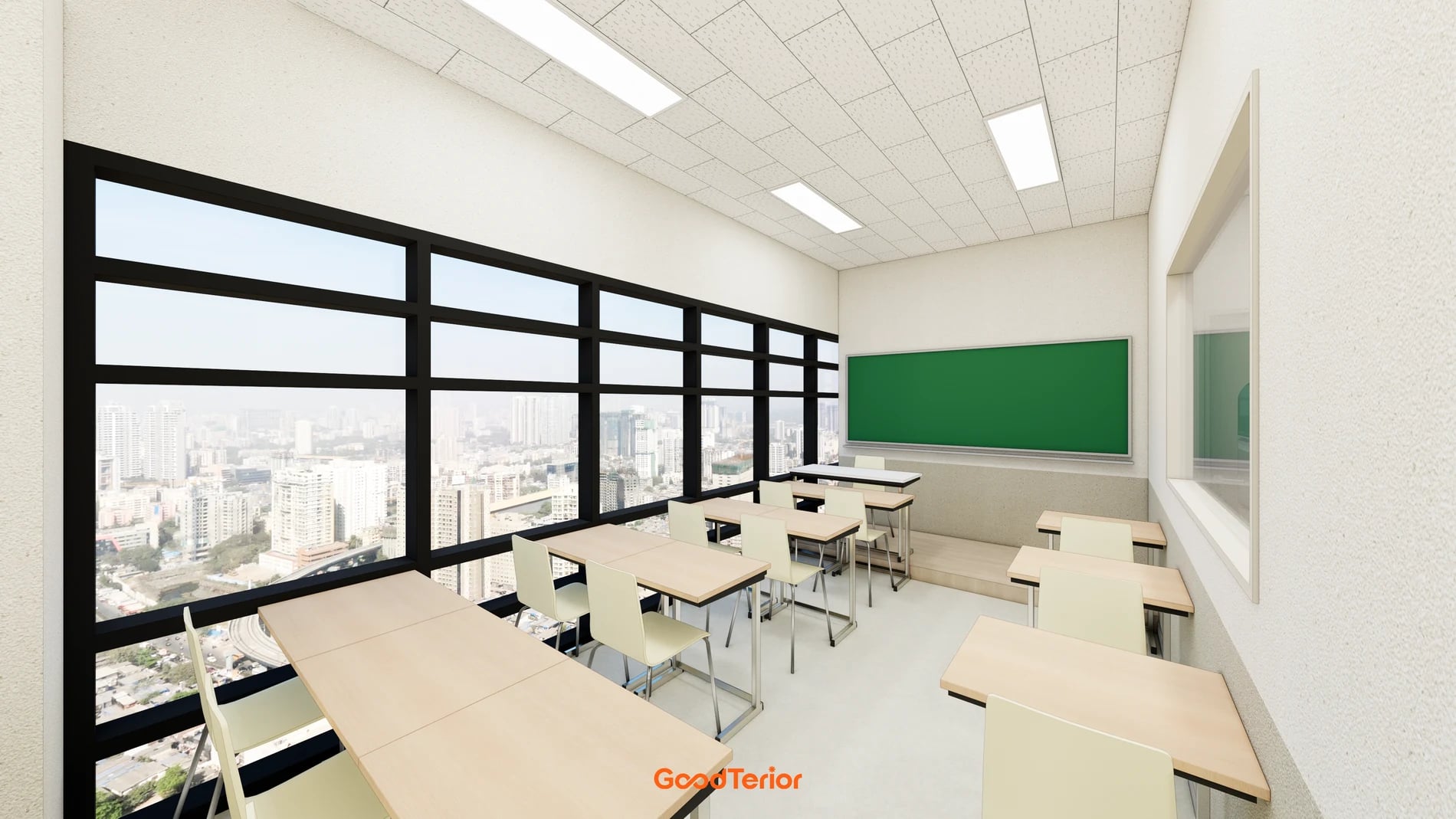
Goodterior’s 36-pyeong Bucheon math academy design shows classrooms of different sizes. The cover image shows a long exterior window beside the desks and a green board on the end wall. In another front-facing room, shown here, the fixture rows and white writing surface are the main elements. Rooms in the same academy may need different board placement or lighting controls.
Before assigning larger rooms by seat count alone, list which class uses the brightest room and when. A board-led lesson and a workbook session put students’ attention in different places. Identify the windows that actually need shading and decide whether to adjust fixtures or board placement first in the interior room.
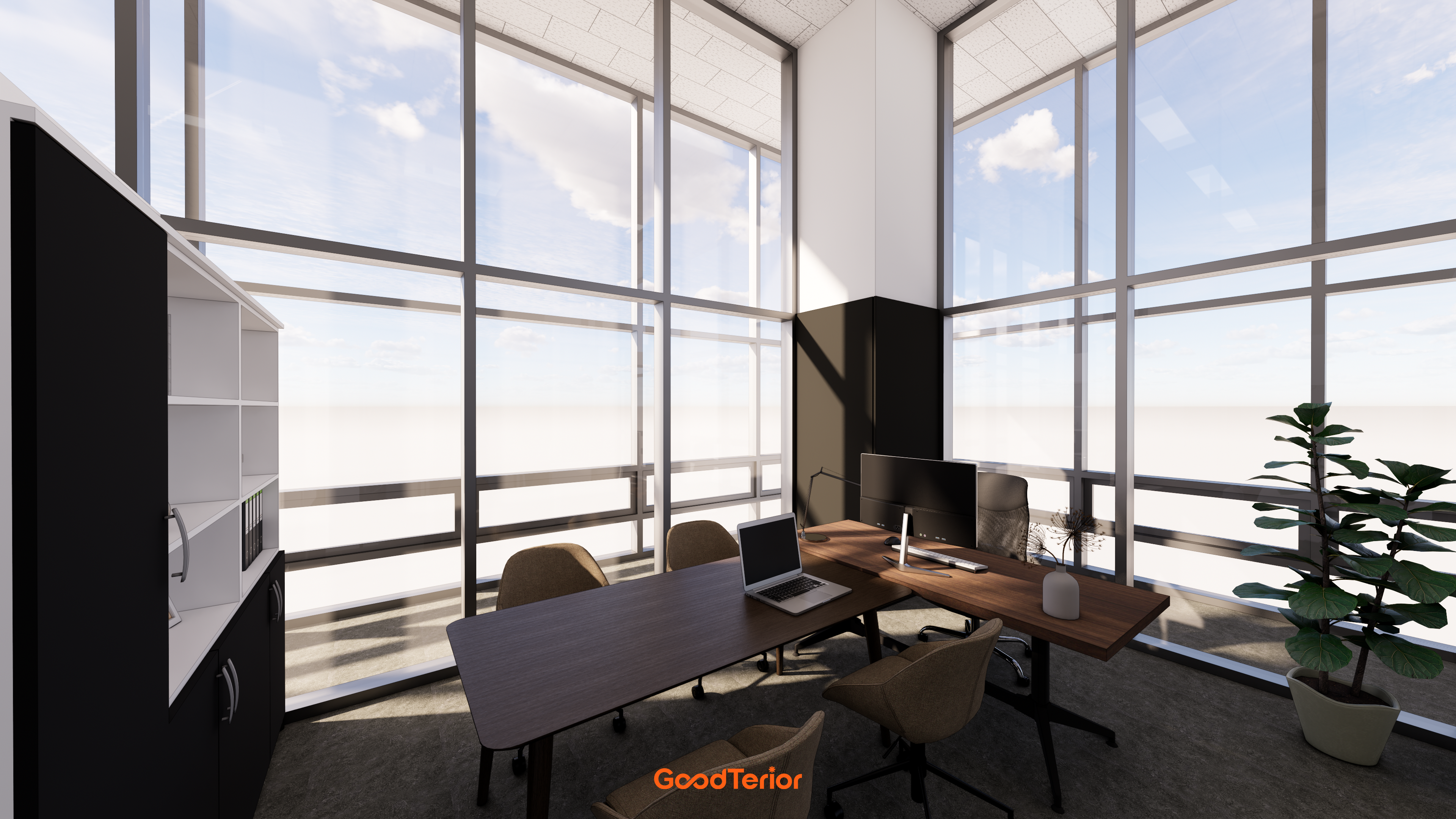
If you want to use one board model throughout, take the same sample into a window-side and an interior room before ordering. In a room with long dark window frames like the cover design, check both a seat near the centre of the windows and a seat near a corner. Where desk rows are long, check that an equation written at the edge of the board is readable from the back and try moving the writing away from any troublesome area.
Checks from the student seats before ordering the board
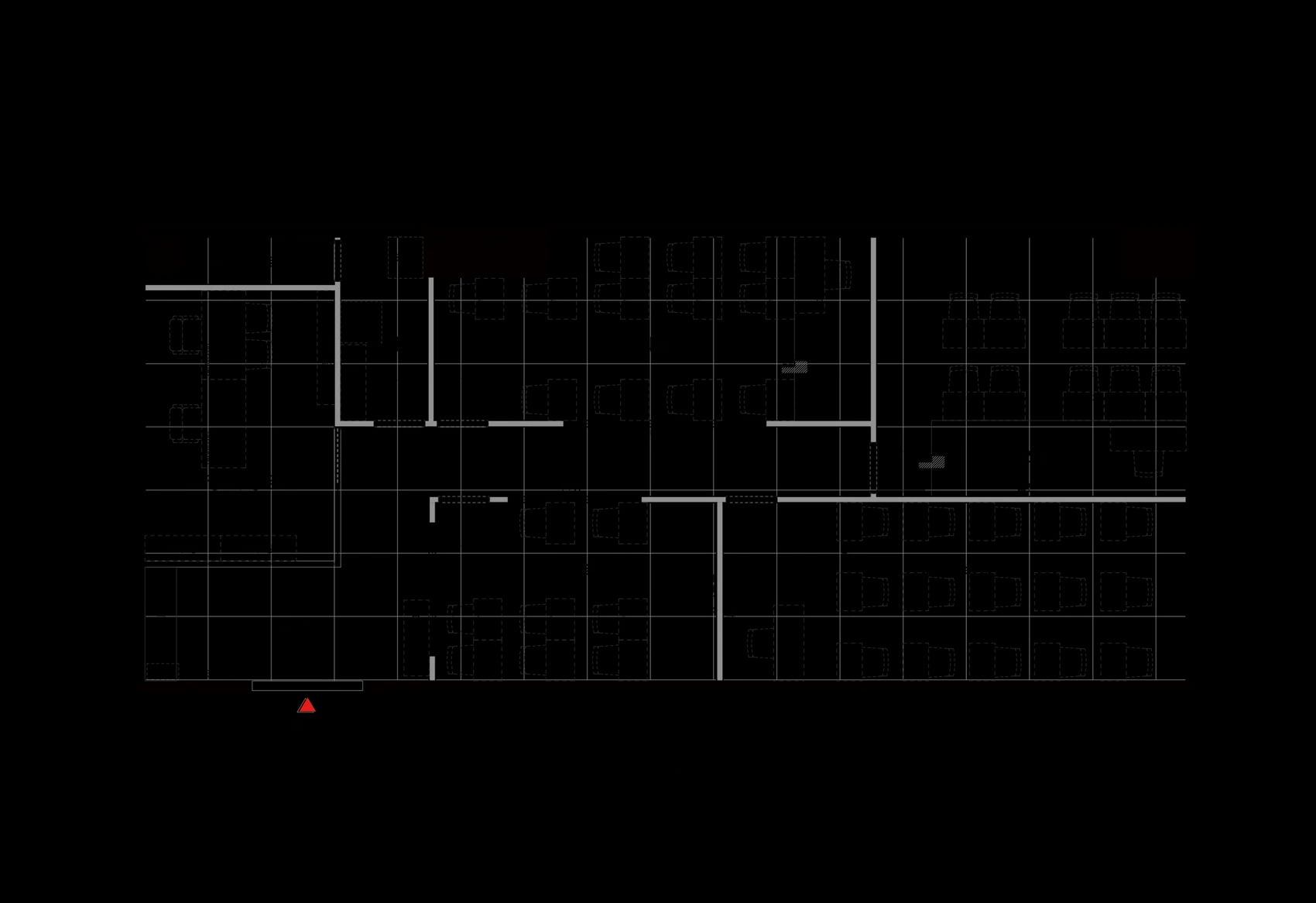
Mark exterior windows, doors, the board and ceiling fixtures on the same plan. Check a seat with its back to the window, a seat beside one and an end seat that views the board obliquely. Write an equation at teaching size and open the usual workbook and notebook on a desk. Check with the blinds open and closed and with the lights used in class to narrow down what needs adjustment.
Separate quotes for the windows and blinds you keep, board mounting and wall reinforcement, lighting moves and switches, and wiring for a screen where used. Try moving the board position or desks first. Check at the same lesson time again before committing to ceiling and wall work, so contractors are quoting the same scope.
If you can only inspect the empty premises before signing, first check the windows at a likely class time. Schedule another visit during construction to hold a board sample at installation height. Final reflections and circulation are difficult to judge before lights and furniture are in, so agree where to sit once desks and chairs are installed. Include both checks in the quote so it is clear who makes adjustments and what repairs are included.
Ask us about your interior project
We can discuss a quote and design suited to the space you are planning.
Request a free consultation