Reading and writing academy shelves: separating book selection from class seating
Simply lining academy walls with shelves can overlap browsing with students in class. Actual photos illustrate relationships between entrances, shelving, and classroom seats.

Before you begin
- Check whether someone choosing books must pass between occupied desks.
- Separate entrance guidance from shelving functions to clarify first-time students' routes.
- First decide whether a small classroom bookcase supplies lessons or stores books.
Must students pass through class seats to choose books?
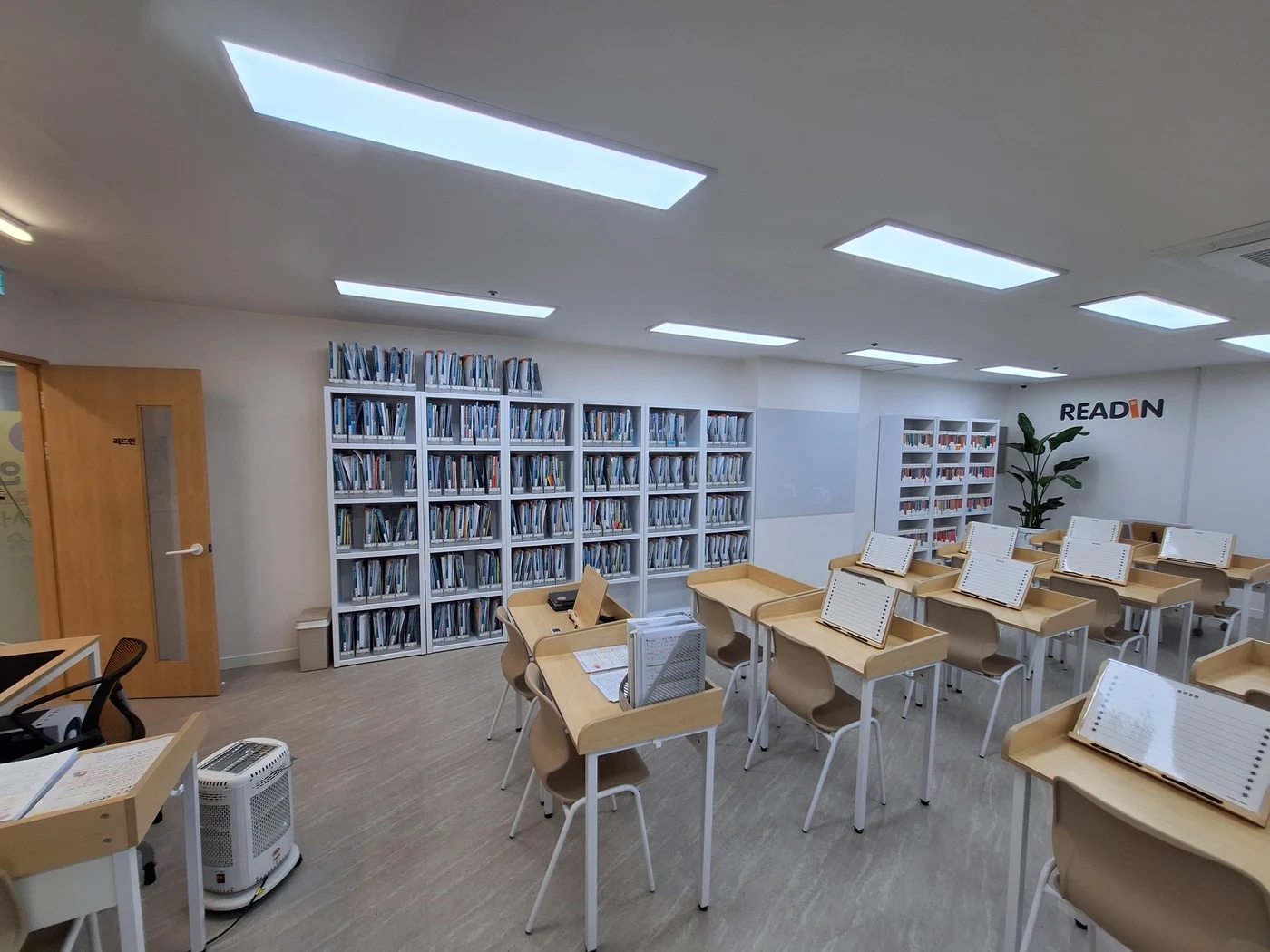
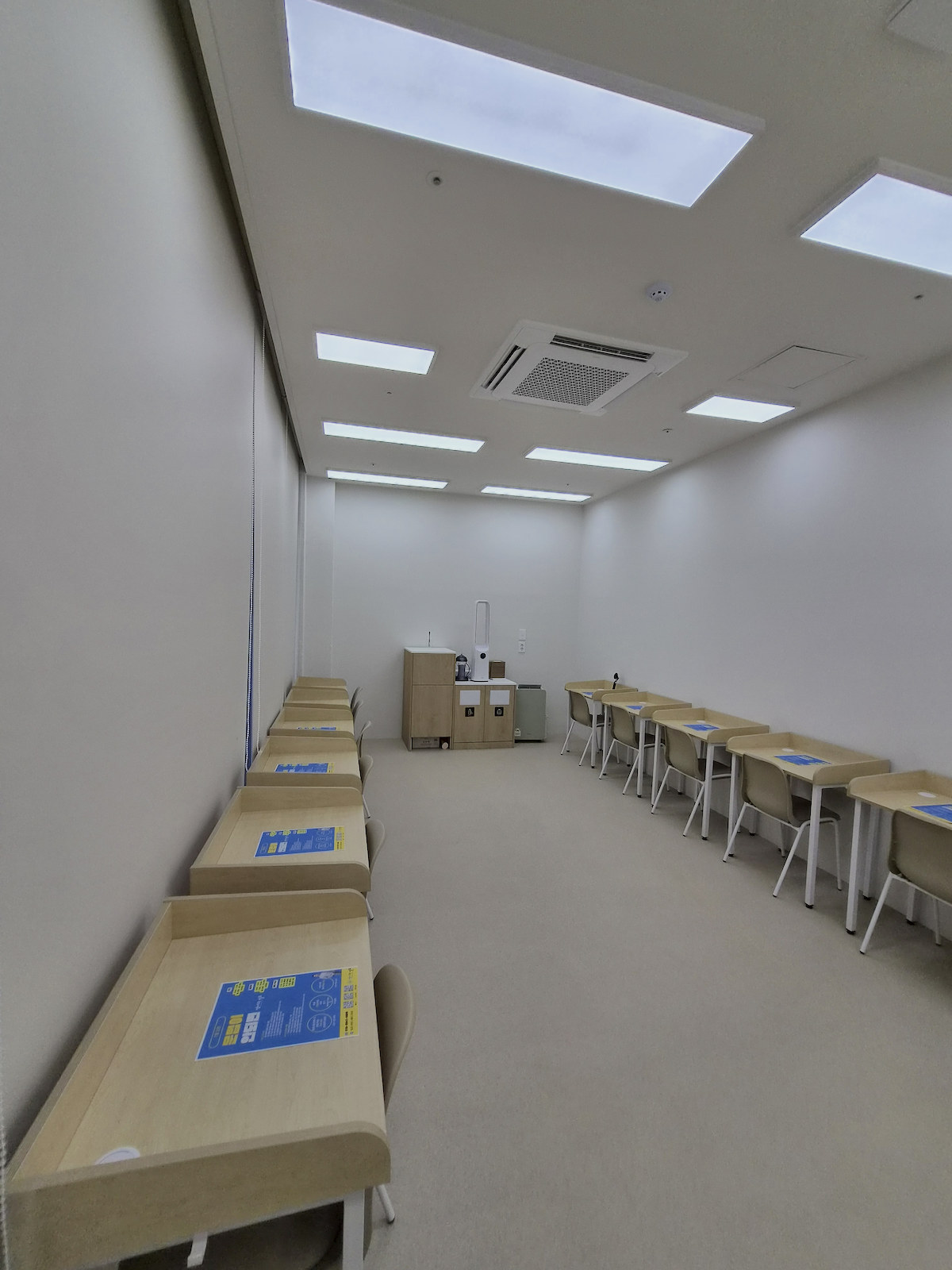
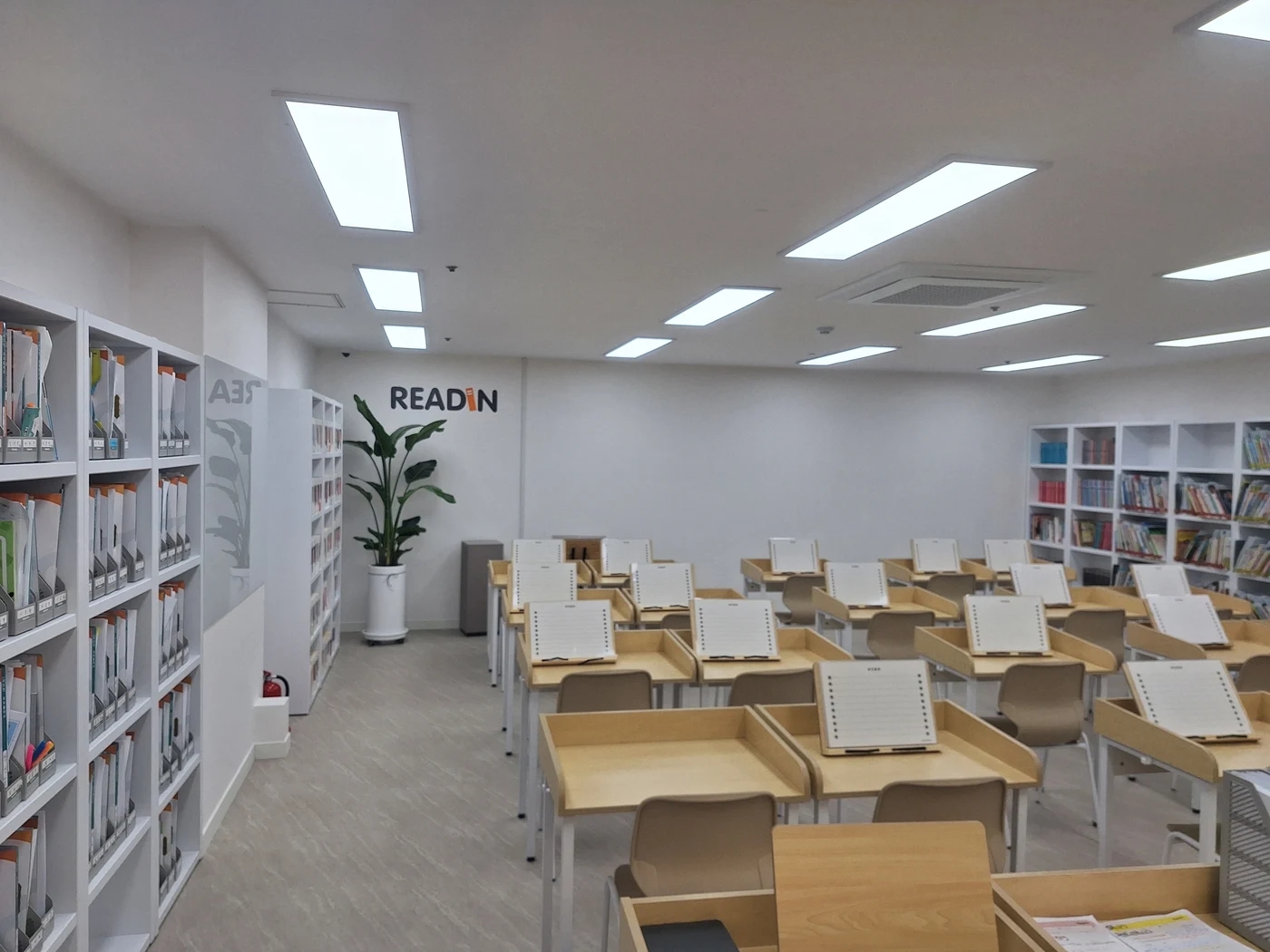
In a reading and writing academy, selecting books matters as much as reading them. This classroom has long wall shelves and several central desks. The same layout can work differently depending on whether students retrieve books before class or change materials during lessons.
Frequent trips to rear shelves during class may take students behind occupied seats or require others to move chairs. If materials are collected beforehand, greater distances may be manageable. Since photos cannot establish teaching methods or student numbers, decide when books are retrieved first.
The American Library Association's library building design checklist asks whether users understand different areas on arrival and whether internal circulation is efficient. This library checklist is not a source of Korean academy requirements or aisle widths. Here, it provides questions about shelf visibility for book seekers and overlap with desk use.
What appears first at the entrance: reception or bookshelves?

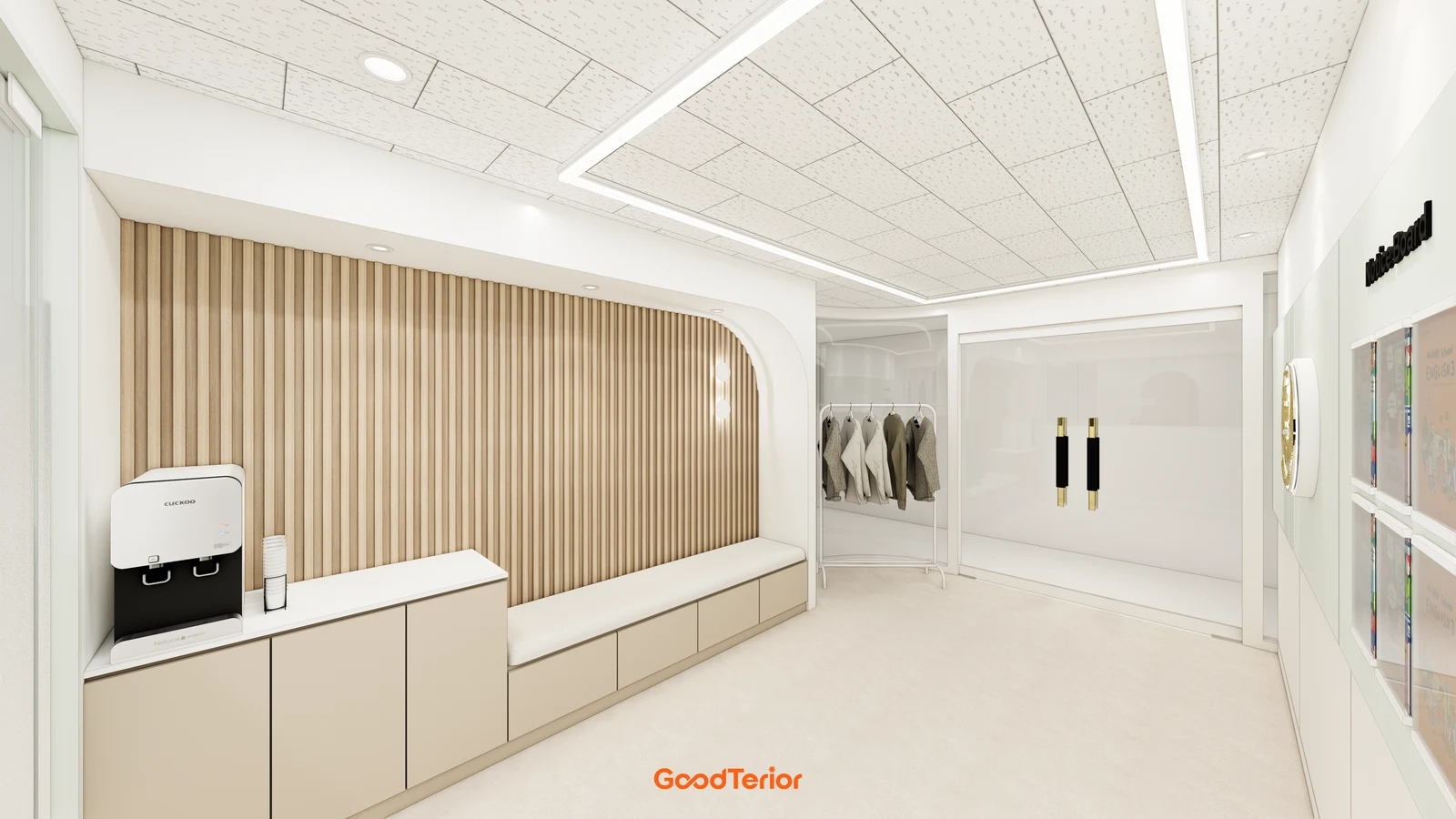
The entrance photo shows a reception desk and glass door toward classrooms. New students and guardians first need to know where to check in and where to go. Reception and teaching areas are distinct here, but the photo cannot establish actual arrival and departure procedures.
If students choose books freely, indicate their direction from the entrance. If assigned materials are used, define where teachers hand them out. Before adding shelving, write the sequence: enter → receive guidance → choose a book → sit down. Adapt notices and furniture to the actual operating sequence if it differs.
The ALA question about understanding spatial purposes on entry also offers a useful prompt here. However, library visitor guidance and academy arrival instructions differ. The operator must decide who retrieves which books and how far guardians enter before the entrance role becomes clear.
Does a small room's bookcase support lessons or storage?
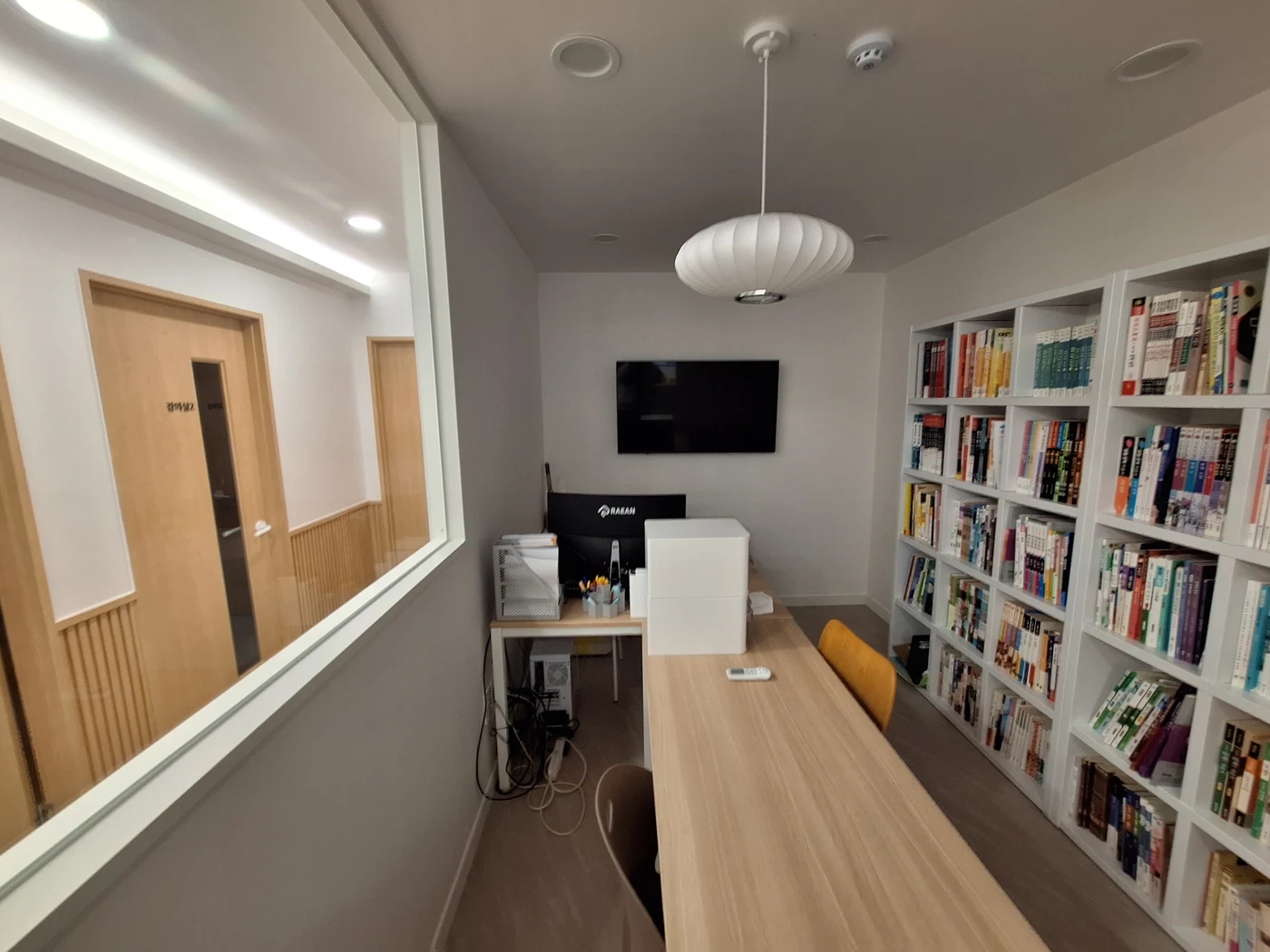
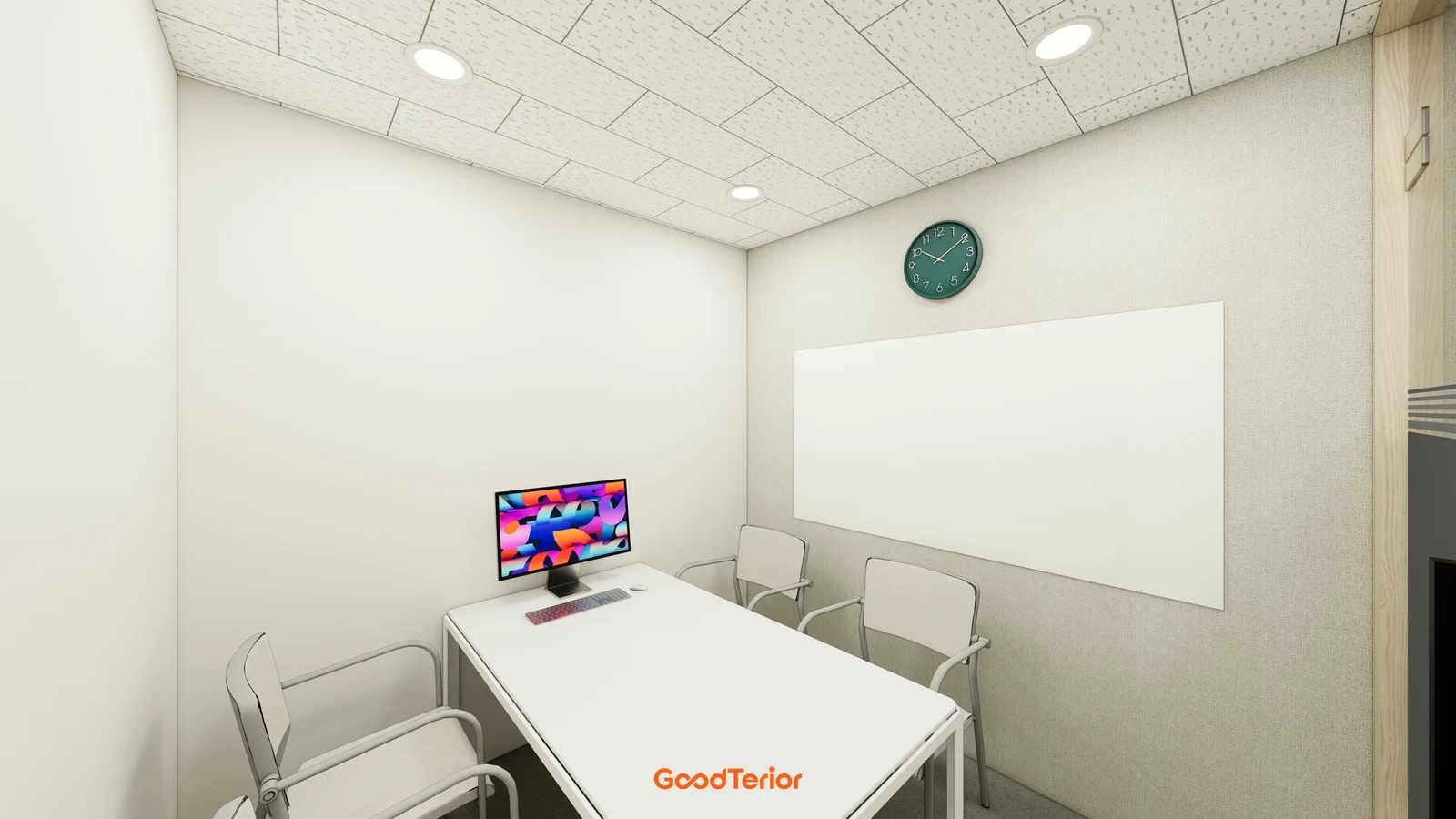
A separate room contains a long table and books along one wall. Unlike the larger classroom's shelving on both sides, it groups books close to teaching seats. The photo cannot establish whether the room serves small discussions, consultations, or material storage.
If the shelves hold materials used immediately in class, teachers need easy access from their seats. If most books are stored for later, students may seldom stand there, favoring a location with less interference around the table. The same furniture belongs in different positions depending on contents and users.
Book quantities alone cannot determine reading and writing academy shelf layouts. First record when students choose books, where they receive guidance, and how teachers retrieve materials. Then use real books and chairs to test door opening and movement, revealing difficulties absent from photos.
Ask us about your interior project
We can discuss a quote and design suited to the space you are planning.
Request a free consultation