Choosing a meeting room whiteboard position
A wall may have room for a whiteboard, yet adding a table can make it difficult to use. Using office proposals, we examine seated reading and standing writing positions, placement alongside a screen, and the choice between wall-mounted and mobile boards.

Before you begin
- Mark seats for reading the board separately from standing writing positions and compare them with chairs pulled out.
- For a wall-mounted board, check the wall substrate and surrounding fittings; for a mobile board, include its base and storage position.
- Decide whether the screen and written notes will be viewed together or in sequence, and test the arrangement with the actual meeting equipment before installation.
Separate seated reading positions from standing writing positions
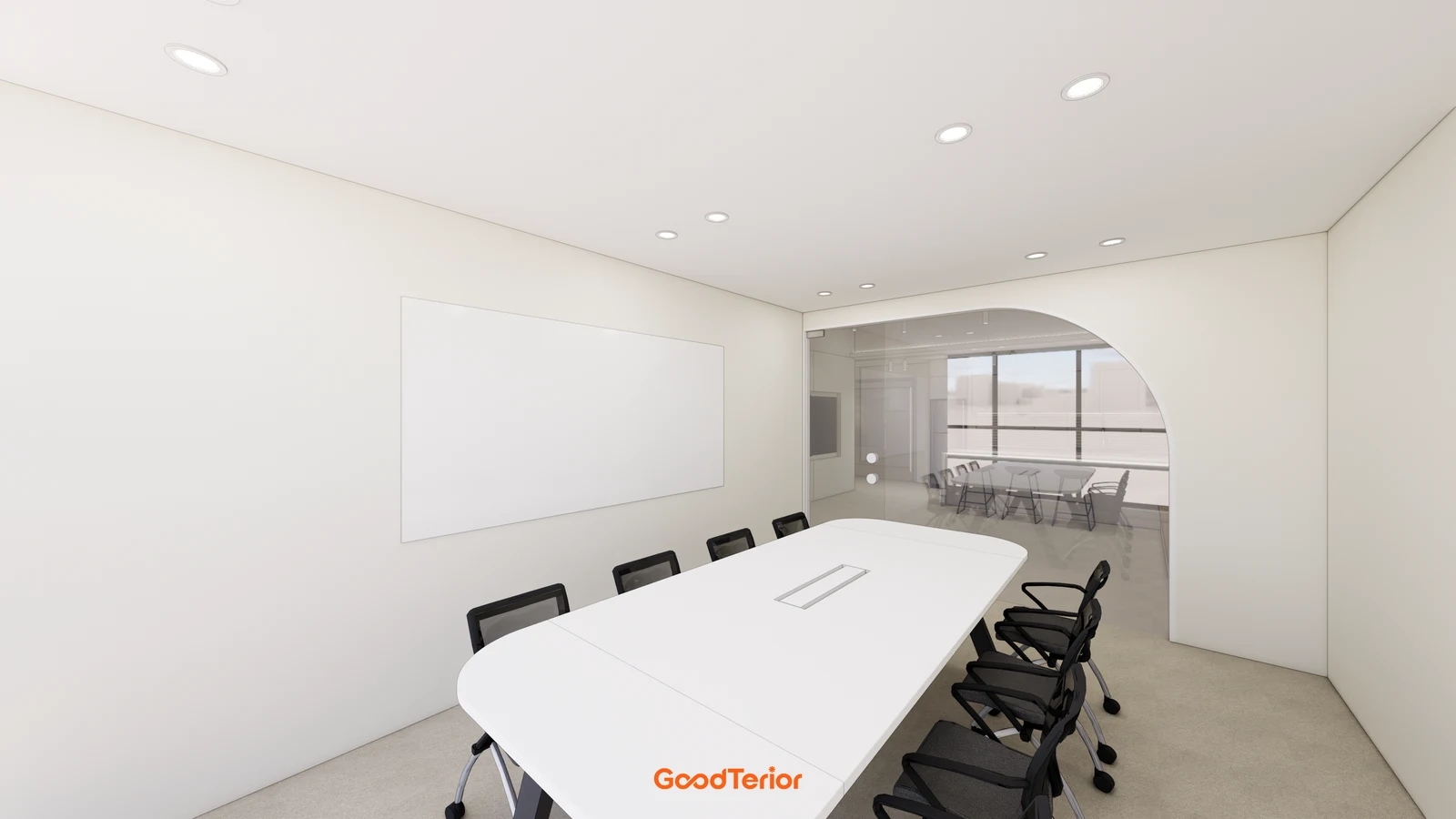
The first body image shows an office proposal with a whiteboard on the wall beside a long table. Chairs also occupy the side nearest the board, with a glass-partitioned space behind. A board fitting on a wall and a person being able to write comfortably in front of it are separate questions. This image calls for checking chairs pulled out and someone standing, rather than looking only at the empty area around the table.
First, establish what people will write during meetings. A meeting in which one person explains a drawing differs from one in which several people take turns posting notes in the number of people occupying the board area. Also distinguish a short schedule from material that must remain visible while further notes are added. Sketching the content that needs to be displayed at once makes it easier to explain the required writing area than selecting a board from room size alone.
Mark the writer's foot position on the plan as well as the table and chairs. Check whether someone seated with a chair pulled out, someone getting up, and someone at the board overlap. If the strip between table and wall is allocated to board use, check whether it is also the route to the door. If people must continually pass the writer, compare moving the table or relocating the writing surface.
Do not assess reading from just one seat facing the board. Sit at both ends and at seats near the wall to check whether the whole board is visible. A long board on a side wall can leave the front of the table clear, but someone sitting parallel to it may need to turn to read. Draw end-wall and side-wall options using the same furniture layout and choose according to how meetings work.
Do not finalise installation height by centring the board on the wall. Have the actual users reach to write at the top and erase the bottom, and check whether the table or monitor obscures lower writing for seated viewers. Attach a paper mock-up to the wall and try normal lettering and diagrams. Mark the product's overall outline separately from the boundary of its usable writing area.
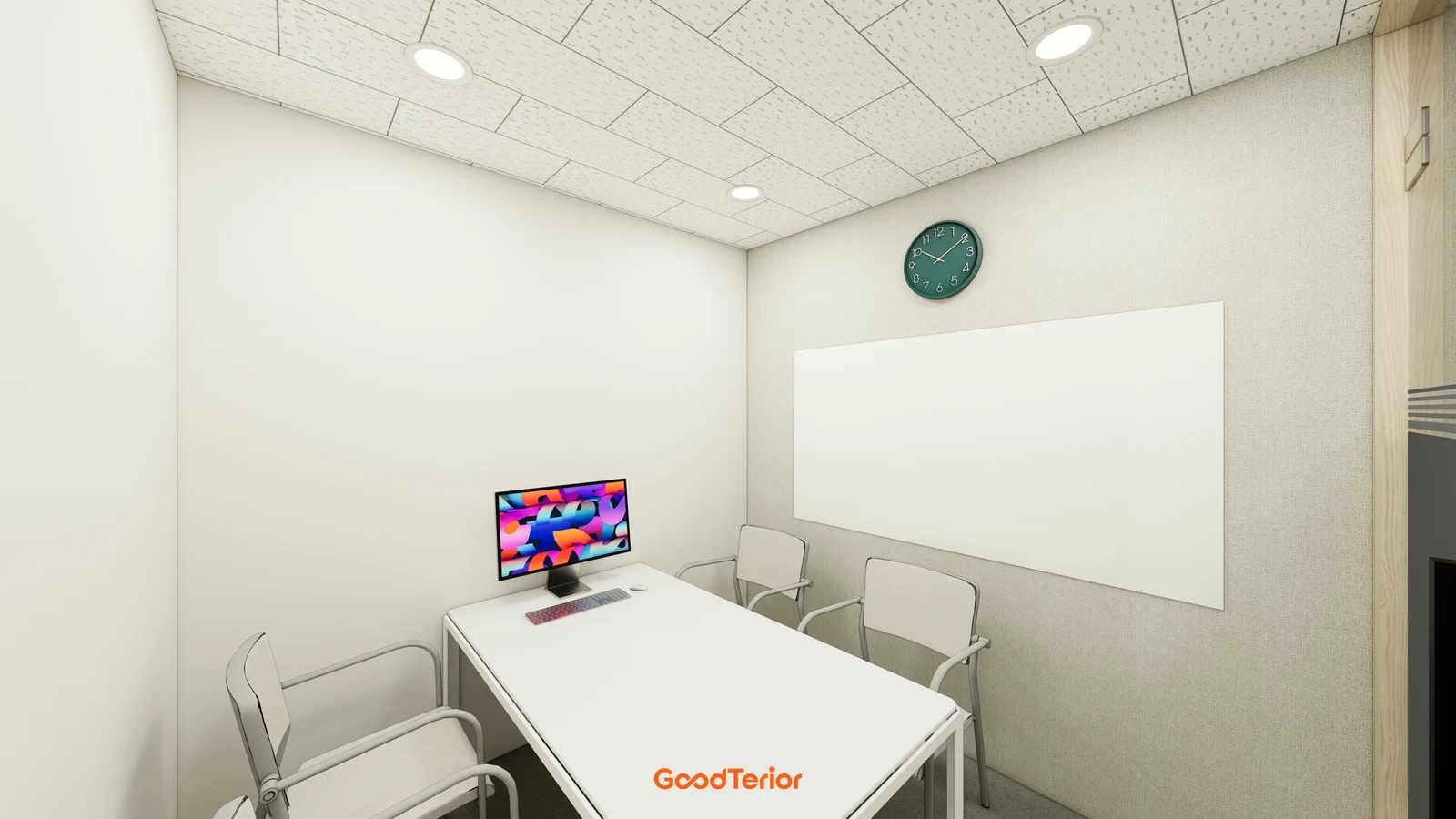
The small meeting room proposal on the cover places a writing surface beside the table and a monitor at its end. Body orientation changes between writing while watching the screen and discussing the board alone. If a monitor will be brought in, include its stand and height in the mock-up. If the existing table will stay, compare reducing seats or rotating the table before simply enlarging the board.
Plan both the fixing wall and the place a mobile board will go
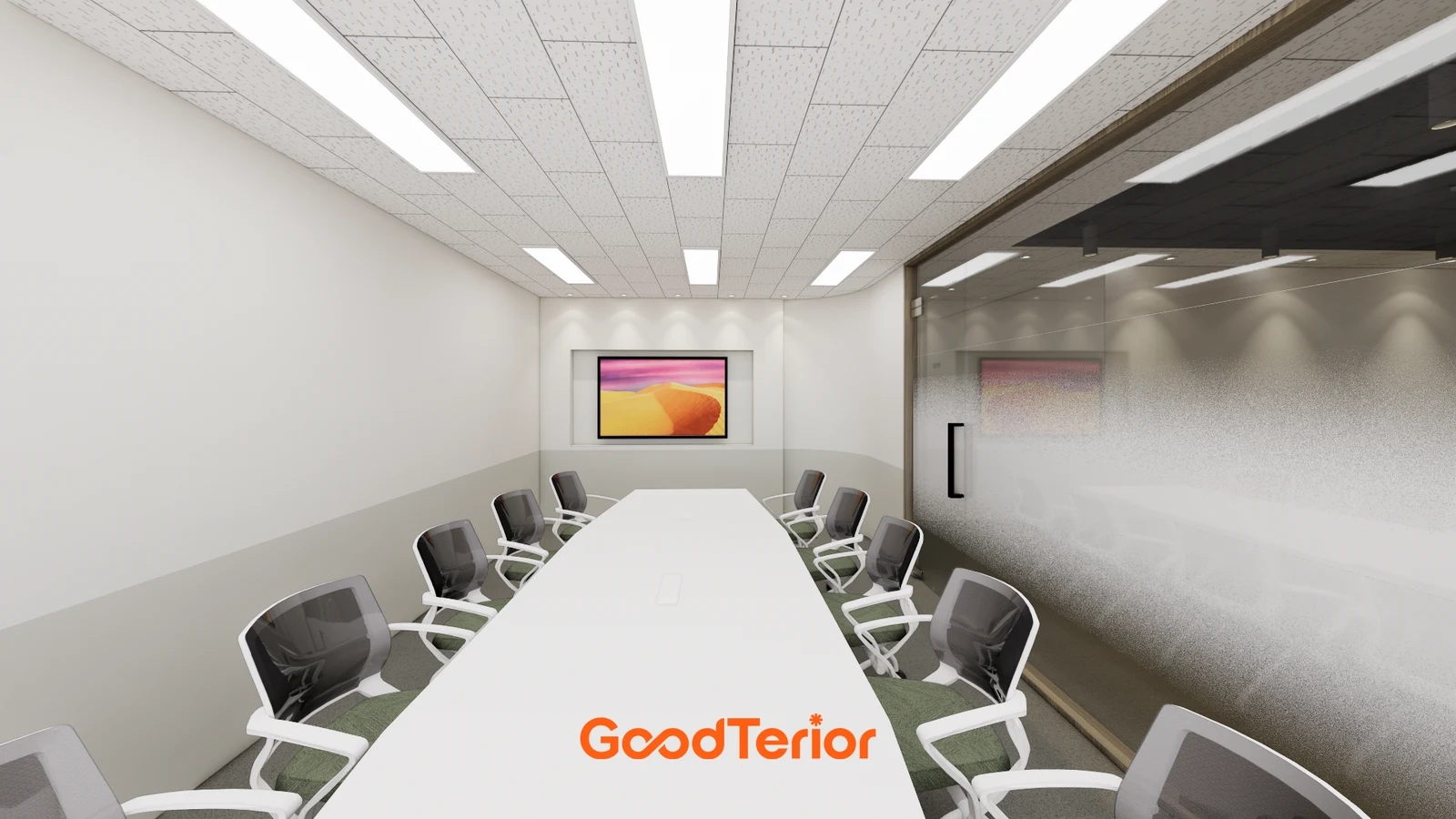
The second body image shows a long table with a screen at its end, a wall on one side, and a glass partition on the other. It does not mean a board has been installed in this scene. It illustrates why adding a writing surface requires checking the screen surround, side wall, and doorway separately. Do not assume a white wall is a writable material or attach a board to glass without checking.
For a wall-mounted board, confirm the product's size, weight, and attachment method, then ask the installer to check them against the wall substrate and fixing positions. Mark on the elevation whether the frame covers switches or outlets and whether the pen tray projects into the passage. Check before wall finishes whether reinforcement or wiring review is needed, and distinguish responsibility for board purchase, installation, and making good surrounding finishes in the quotation.
A mobile board can leave the wall clear, but do not plan its placement from board width alone. Use the product drawing to check the overall envelope including the base's front and rear projections, wheels, and handles. Open the door with the board in its working position and check chairs against the base. For a reversible double-sided product, mark the separate clearance needed for rotation and consult the selected product's instructions for moving and locking it.
Decide its unused position in advance as well. Rather than leaving a plan to push it into the corridor or in front of a window after each meeting, move it all the way to the actual storage position and check doors and corners. If several rooms share it, consider avoiding a storage position that can only be accessed through a room in use. Compare the storage space and effort of moving it alongside wall-mounting work and mobile-board purchase cost.
Decide whether the meeting needs the screen and board visible simultaneously or in sequence. An arrangement where a lowered screen covers the board can be awkward when discussing previous notes. Conversely, there is no need to shrink the table excessively just to keep both surfaces permanently visible in a small room. Discuss whether presentation and writing time can be separated, and include a way to retain the notes in the operating routine.
Check lighting and daylight with writing on the board, rather than with an empty board. Read from the actual seats in daytime and evening and check whether reflections from particular directions obscure text. If people attend remotely, connect the usual meeting equipment and separately test whether they can read the writing. Visibility within the room does not establish that the same content will be conveyed equally well through video conferencing.
Record the product name, writing-surface dimensions, installation or storage position, accessories, and installer in the final order. If magnets or particular pens are required, check the product information and try writing and erasing on an actual sample. After installation, check fixing security, surrounding interference, and storage for pens and erasers. The final criterion is whether the full sequence of bringing the board into use and putting it away works during meetings, rather than board size alone.
Ask us about your interior project
We can discuss a quote and design suited to the space you are planning.
Request a free consultation