Office worktop care: can you use the same scrubber everywhere?
Meeting tables and pantry worktops may look similar without sharing cleaning methods. Compare solid surface and laminate care guidance, and learn to distinguish stains from scratches.

Before you begin
- Find care instructions for the product and surface finish, rather than relying on color or pattern.
- An abrasive permitted on one material may damage a different worktop.
- Use protective pads beneath hot items, and do not keep scrubbing a scratch as though it were a stain.
White worktops do not necessarily share cleaning methods
A stubborn coffee mark after a meeting can tempt someone to reach for a rough scrubber. The useful information is not whether the worktop is white or stone-patterned, but which product it uses. Furniture faced with a thin surface material and a thicker solid surface may have different care instructions despite looking similar.
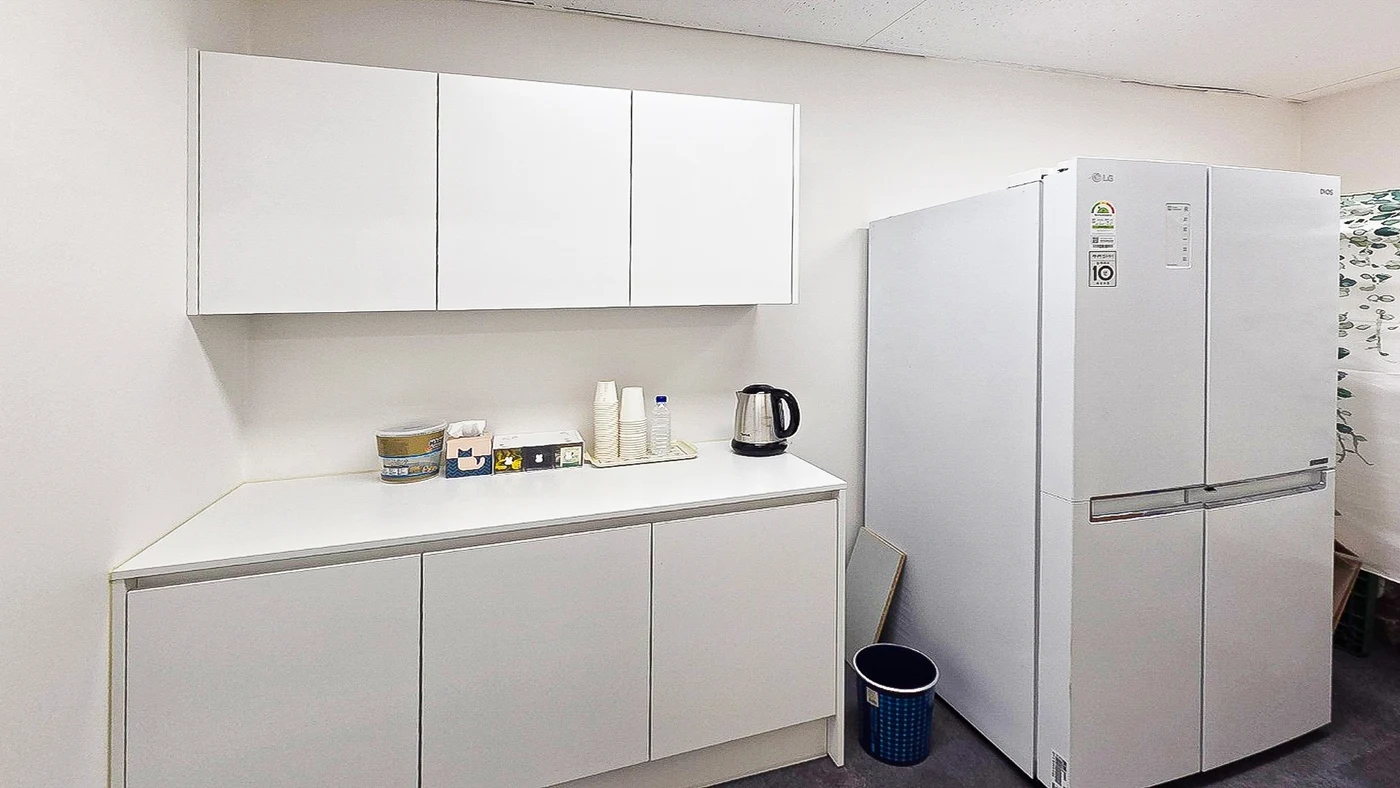
The photo shows a pantry worktop carrying cups and an electric kettle. With frequent exposure to water and drinks, this area benefits from a defined daily cleaning method. The photo alone cannot identify the material or manufacturer. The product guidance below illustrates differences in cleaning requirements; it is not an instruction manual for the photographed surface.
LX Hausys HIMACS use and care guidance recommends a damp cloth and mild detergent for daily cleaning. It separately permits a mild abrasive cream cleaner on matte finishes. Abrasiveness means removing dirt by rubbing the surface. Omitting the finish restriction and concluding that all solid surfaces can be scrubbed aggressively would be incorrect.
By contrast, Formica laminate care guidance explicitly advises avoiding abrasive cleaners, steel wool, and sandpaper. This explains why a tool that worked on another worktop may not transfer safely. Escalating to a coarser scrubber without identifying the product can change the surface sheen rather than remove a stain.
When ordering furniture, obtain the product code, surface finish, and permitted cleaners. Keep a photo of the completed worktop with its care sheet so the method can continue when cleaning staff change. If meeting tables and pantry tops use different products, separate their cleaning tools too. Testing in a hidden corner does not make a prohibited cleaner acceptable.
Not every persistent mark is a stain
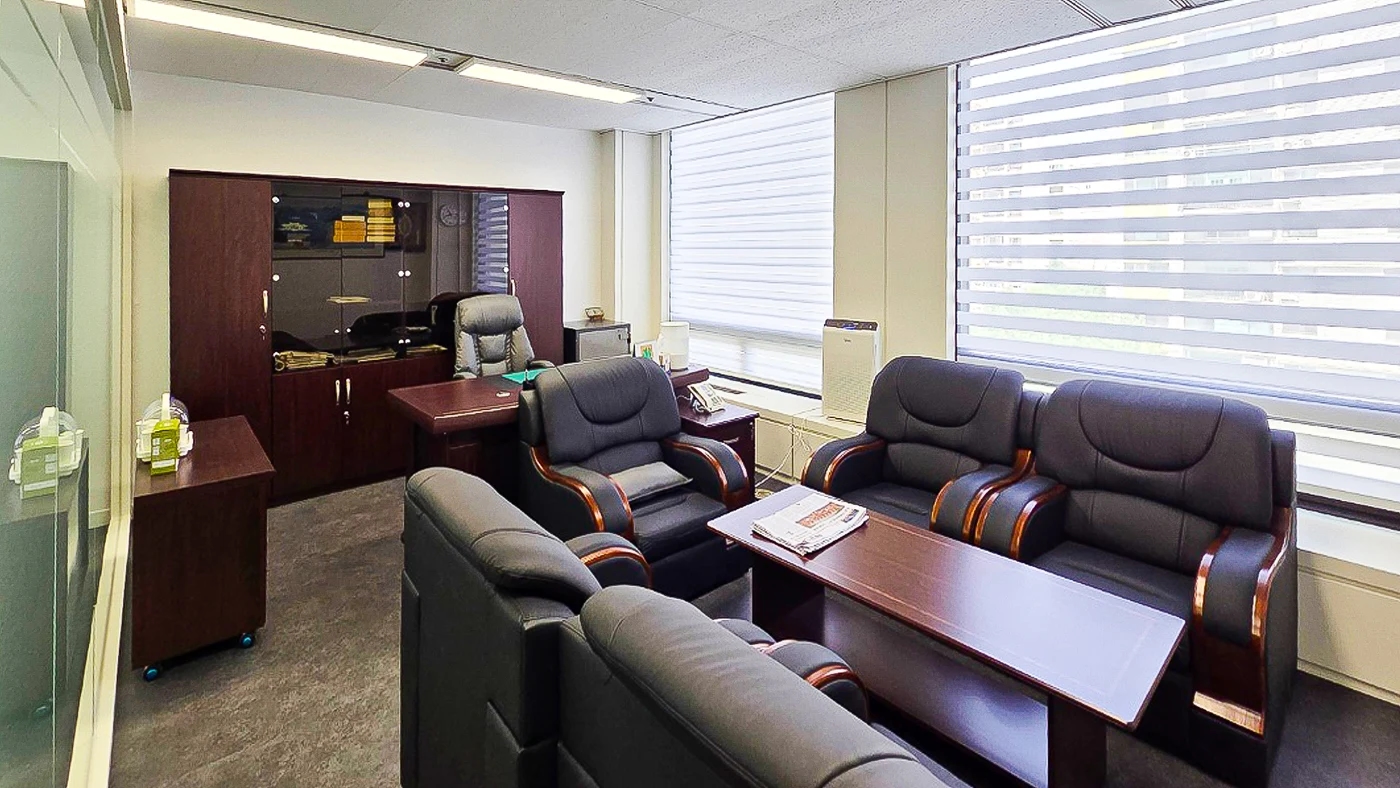
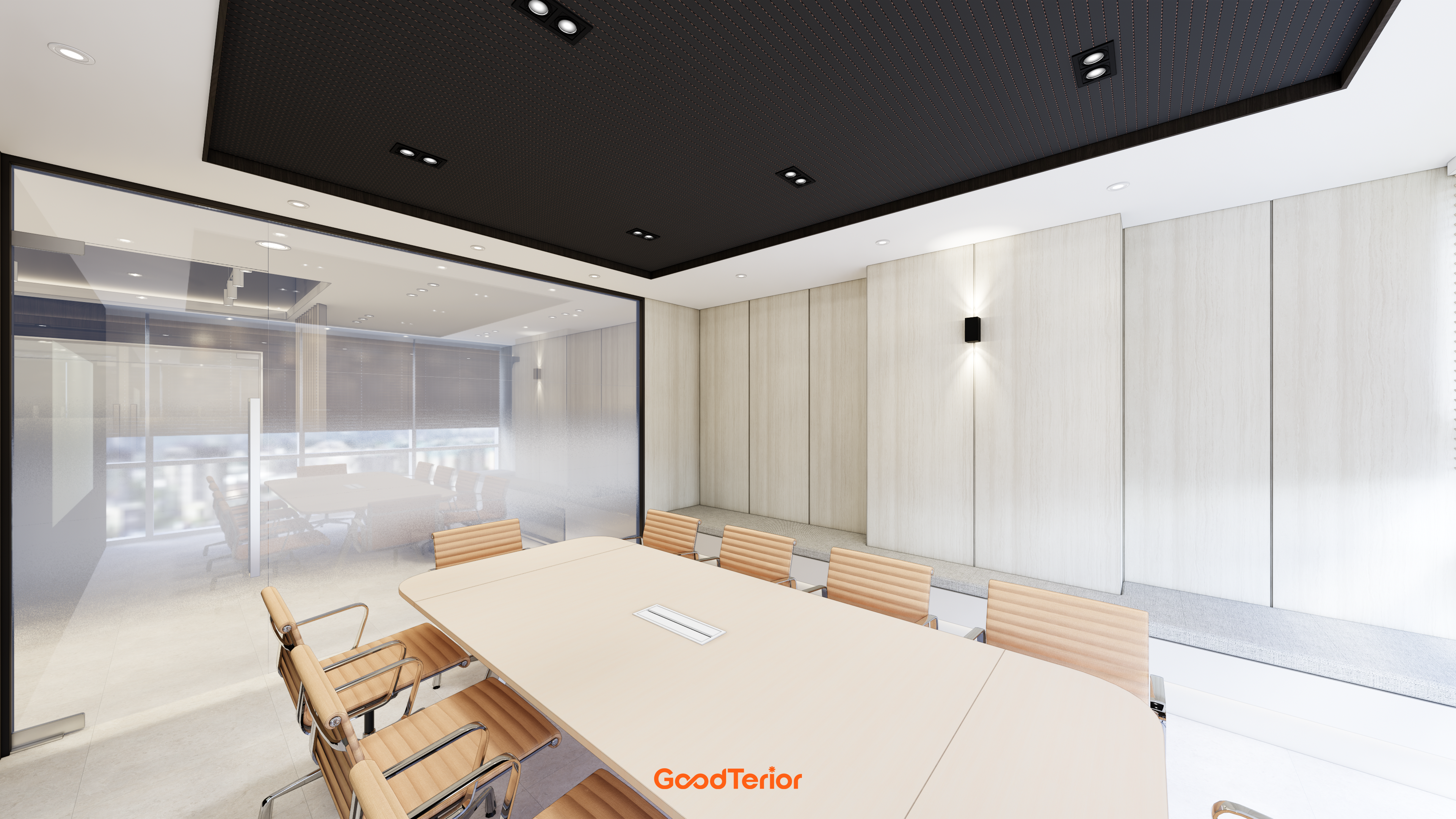
Window light makes reflections visible on the dark table pictured. If a mark appears on such a surface, first distinguish moisture, attached dirt, and scratches. If a line remains after cleaning and drying and changes with the viewing direction, document it before repeatedly scrubbing the same spot. This does not imply that the photographed table is damaged.
The same Formica guidance notes that scratches and hand marks can be more noticeable on dark colors. This concerns color selection and care within that product range, rather than suggesting every dark table is fragile. When choosing colors, examine samples at an angle under the actual lighting as well as straight on to assess reflections.
Also consider the habit of briefly putting down hot objects. Both HIMACS and Formica guidance above recommend protective supports instead of placing hot cookware or heat-producing appliances directly on the surface. A description of heat resistance alone does not justify placing a hot pan directly on a worktop. Decide which appliances will be used, then check both worktop care and appliance installation instructions.
Deep scratches or cracks that remain after wiping may require more than a different cleaning method. HIMACS guidance also recommends professional fabrication specialists for deep damage. Instead of applying sanding sequences or polishing methods found online to furniture made of another material, send the product name, an overall photo, and damage details to ask what repairs are possible. Also check how closely the repaired sheen can match its surroundings.
Rather than applying a single cleaning method throughout the office, keep a short care note for each frequently cleaned worktop. Start with the table's product, its permitted cleaner, and a reminder to use a pad for hot objects. This makes the right method easy to find before deciding to scrub a stain harder.
Ask us about your interior project
We can discuss a quote and design suited to the space you are planning.
Request a free consultation