Choosing metal finish colours for a shop
Gold handles may look different in colour from a mirror frame. Using clothing-store and beauty-space proposals, we examine where to repeat or reduce metal colours and what to check in actual samples and purchase orders.

Before you begin
- Before choosing gold or silver, list the frames, handles, and lights visible together in the same view.
- Distinguish elements to match from those to retain in a different colour, and compare sheen and surface direction using actual samples.
- Distinguish a metal colour description from the actual material and finish specification, and retain product codes, application positions, and approved samples.
Start by choosing where the same colour should repeat
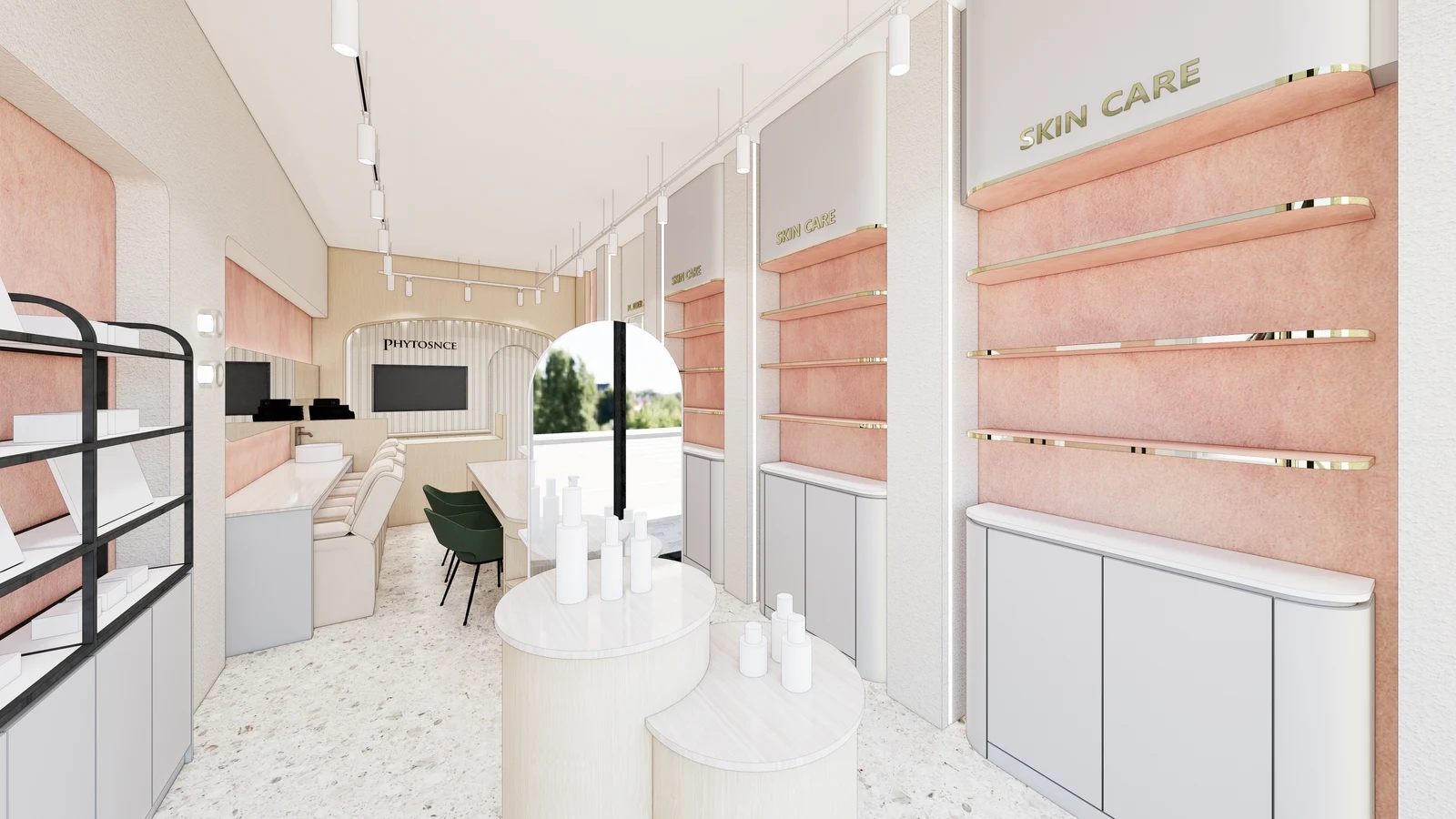
The first body image shows a cosmetics-store proposal. Gold-coloured shelf fronts repeat along the pink wall on the right, while freestanding displays on the left have black frames. White display furniture connects the two in the middle. Rather than matching every line in the same metal colour, the scene distinguishes thin decorative wall lines from the structure of freestanding furniture.
When deciding metal colours, first list the elements seen together in one view: entrance handles and frames, mirror surrounds, display legs, lighting, and counter trim. Views from the entrance differ from those at a consultation seat, so the list need not be organised solely by room name. Distinguishing fittings immediately beside each other from those seen farther apart makes it easier to decide what to coordinate first.
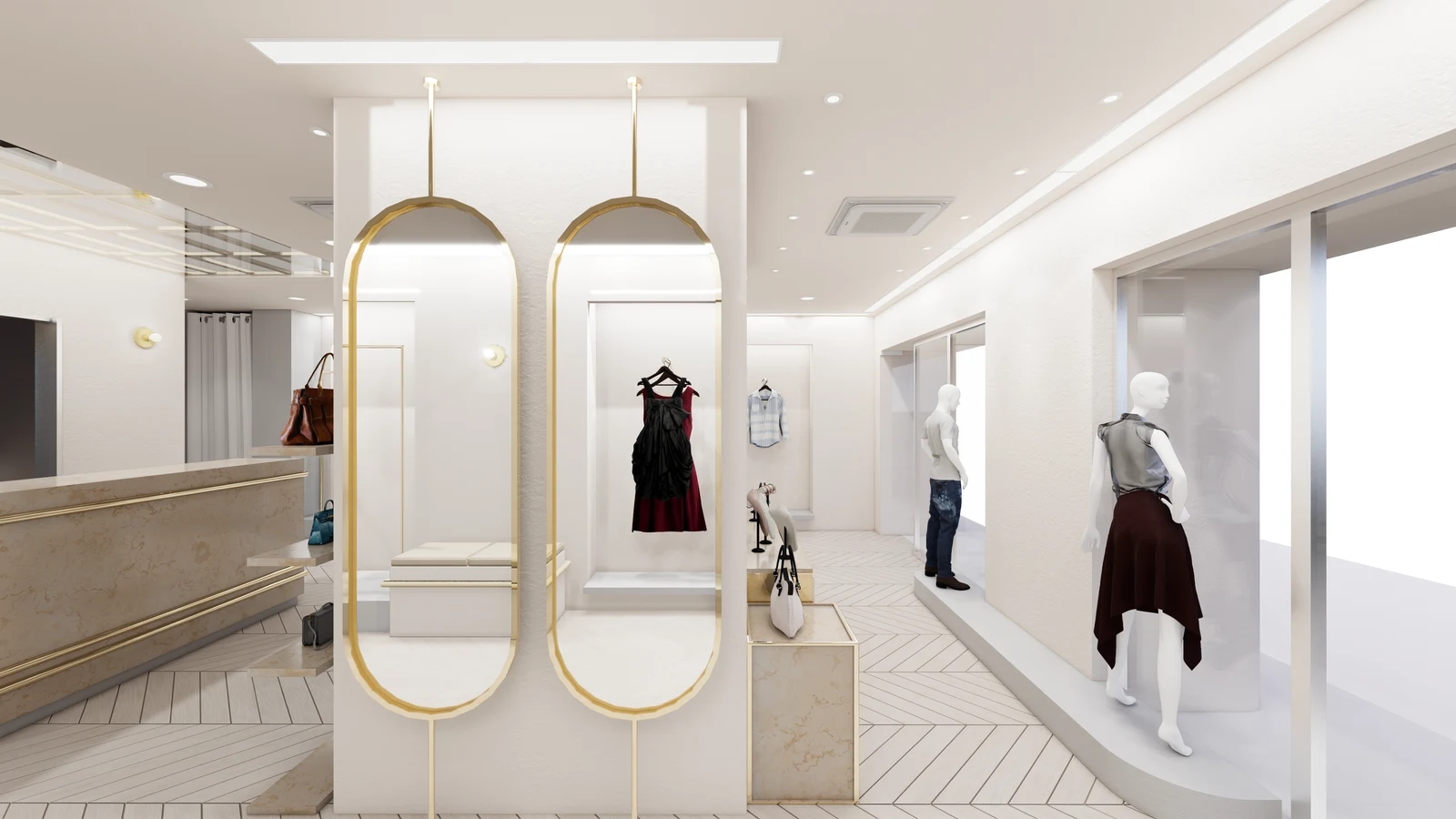
In the clothing-store proposal on the cover, gold-coloured lines continue across long mirror frames, the counter front, and display edges. Repeated slender lines connect the white furniture. If this is the intended direction, do not order the mirror first; compare it together with counter trim and display shelving. If handles may be added later, include candidate products in the comparison as well.
Repeated lines and broad panels occupy different areas even when they share a colour. Liking a slender gold handle does not establish that an entire counter front in the same colour will feel equally appropriate. Colour the proposed metal-finish areas on a front elevation, and use design proposals to compare their appearance in mirrors and lighting. If the mirror is the intended focal point, another option is to tone surrounding decorative lines closer to the wall colour.
Also decide in advance which fittings will remain black or white. If existing window frames are black, compare changing every furniture leg to gold with coordinating the furniture structure in black. The important question is whether you can explain where and in what role a colour repeats, rather than whether metal colours differ at all. Separating the roles of shelving and freestanding displays, as in the first image, makes a two-colour proposal easier to assess.
In partial renovations, retained elements can provide the colour reference. Mark doors, lighting, and furniture to be reused on photographs and compare them beside samples of new products. Obtain separate quotations for replacing all existing and new fittings in one colour, matching only adjacent handles, and creating deliberate contrast. Establish replacement quantities and work scope first so that matching colours does not keep expanding the renovation.
Reconsider whether merchandise or furniture should be the focus. Metal frames are exposed beside goods differently in a shop displaying small accessories and one hanging large garments. Place actual merchandise or similarly sized mock-ups to check how much metal remains visible. Narrow the options using the intended display volume in operation, rather than the neatness of an empty render alone.
Match actual samples and product codes rather than colour names alone
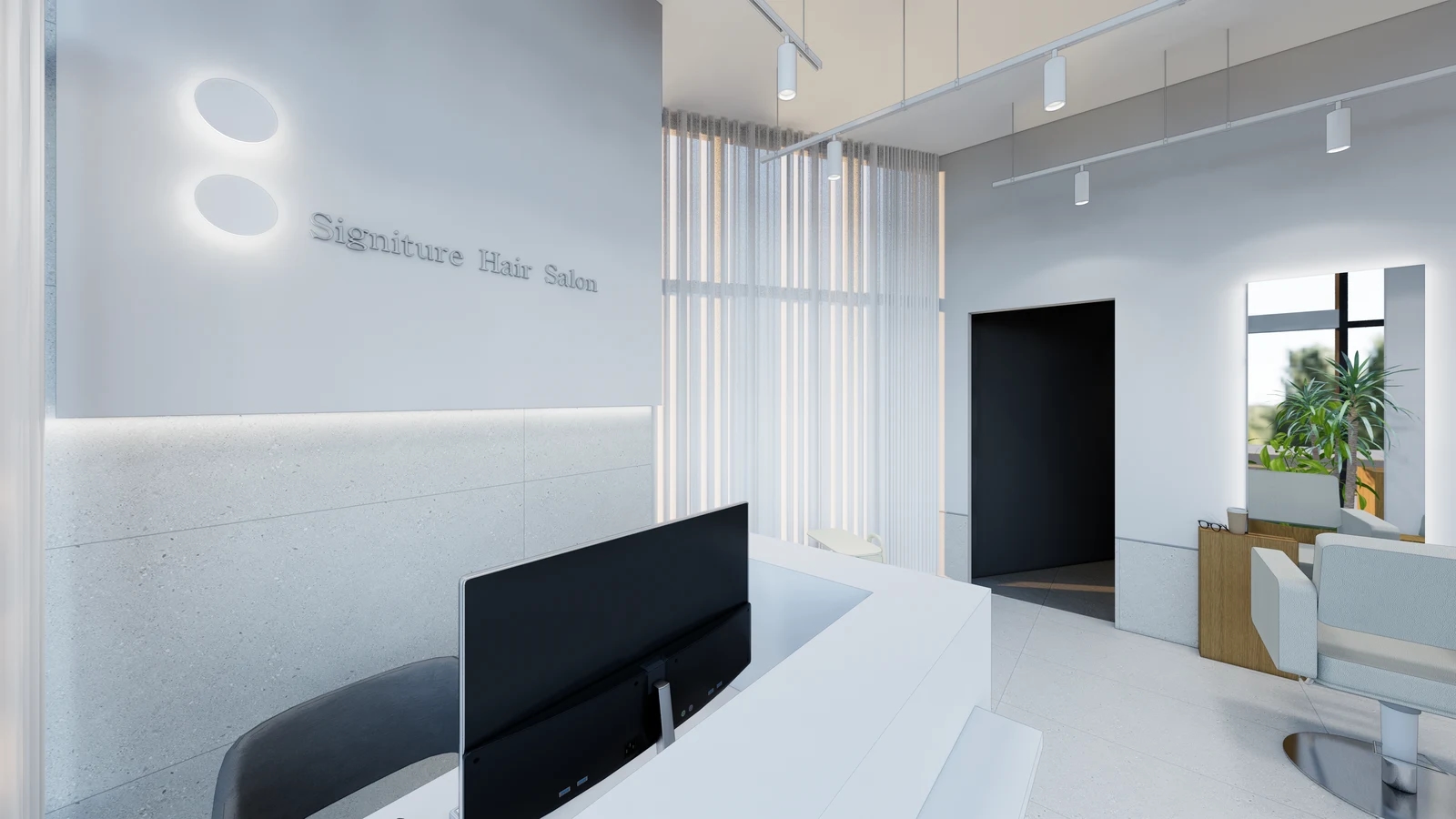
The second body image shows a hair-salon counter proposal. The broad logo surface is represented in a silver tone, the counter and lighting are white, and the monitor is black. A bright chair base appears in the same view. The broad silver-coloured surface is more prominent here than thin lines, but the design image's colour alone cannot establish the actual material or sheen.
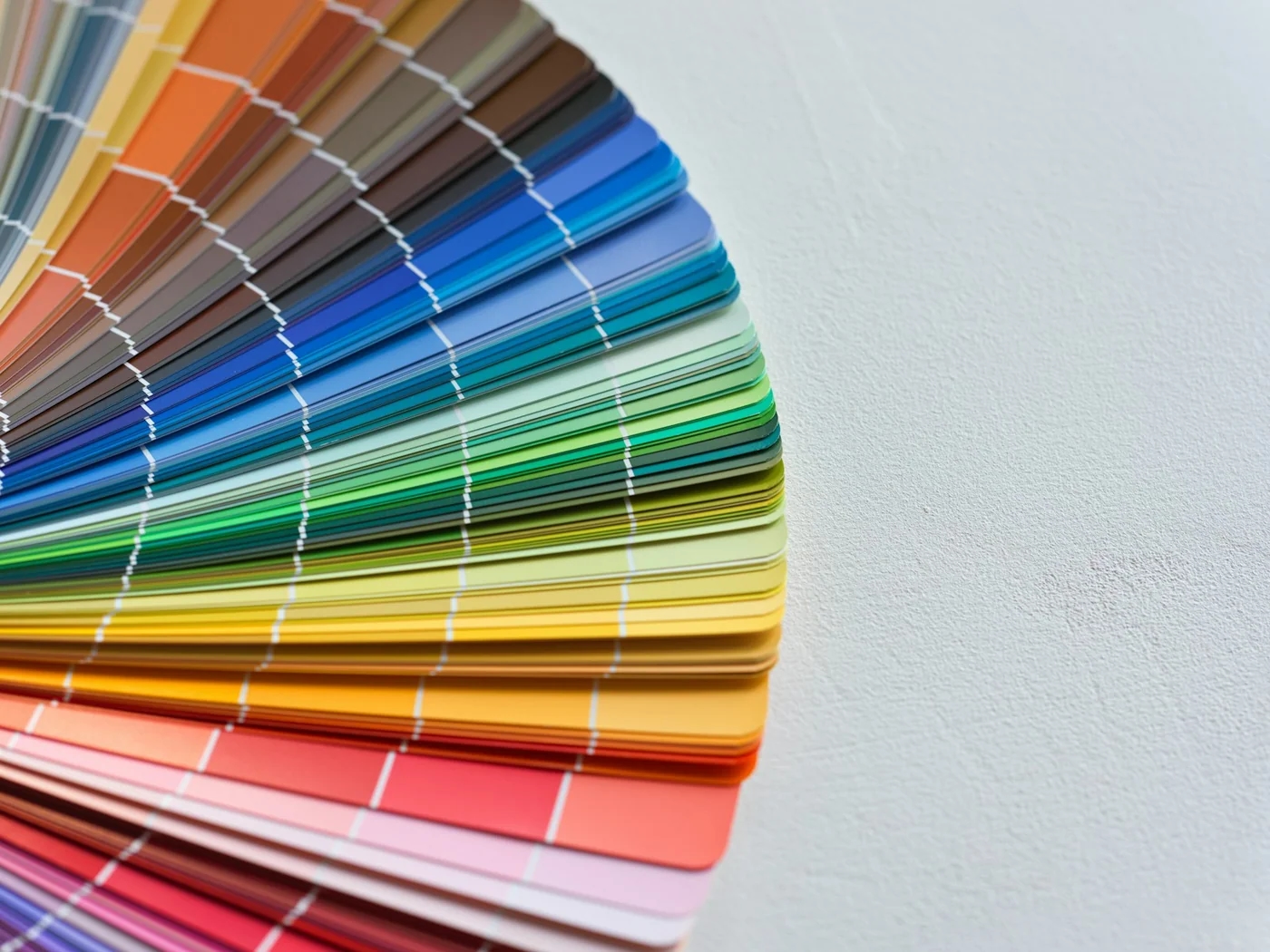
A product named metal is not necessarily sheet metal. For example, the LX Hausys LX Z:IN Stripe Metal Black RP56 product information describes a metal-look interior film. This is why colour and pattern names should be checked separately from the actual material. It does not mean that this product was used in the pictured project; it is only an example for distinguishing finish types that express metal colours.
Do not leave only a colour name such as gold on the order list. Record the manufacturer, product name, colour code, and surface-finish description for handles and mirror frames, and compare actual samples even when candidates use the same name. Be able to explain whether a yellowish, reddish, or pale gold is the reference. If products from different suppliers are to match, bring the final samples together for approval.
Compare sheen and surface direction as well. Place a mirror-like surface reflecting its surroundings clearly beside one that diffuses light, and compare lined surfaces vertically and horizontally. Names such as hairline or matt do not establish that different products share the same appearance. Alternate between front and oblique views under the intended lighting and in the actual installation orientation.
Compare samples both held close in the hand and viewed from a distance at their intended positions. Place handles beside the door, mirror surrounds beside the wall finish, and counter trim beside the worktop sample. If shop lighting changes, compare incoming daylight with the lights used in the evening. Use phone photographs to record positions and combinations, rather than treating screen colour as the final approval reference.
When comparing fabrication prices, specify both the extent of metal colour and how it will be achieved. Do not combine ready-made fittings and custom frames into an undifferentiated item. Review drawings with the supplier to establish how far the colour should continue across the substrate and surface finish, folded edges, joints, and screw heads. Obtain the selected product's own care instructions and approved cleaning agents for frequently touched areas.
Finally, label approved samples with names and dates and connect them to application positions on the drawings. Establish a process for comparing revised product codes and actual samples again if a similar colour is substituted. After installation, check surfaces previously hidden by logos or protective materials, edges, and fittings, and retain the product records. The final criterion is whether the intended repetition and contrast continue in the actual products, rather than making every metal colour identical.
Ask us about your interior project
We can discuss a quote and design suited to the space you are planning.
Request a free consultation