Choosing colors for office storage cabinets
Choosing office cabinet colors involves more than picking white or wood. Photos illustrate how shelving can relate to the wall, cabinets can coordinate with desks, and doors and surrounding finishes can be finalized together.

Before you begin
- First decide whether the cabinet should blend with the wall or form a set with the desk.
- Compare colors for open compartments, doors, and handles as well as the cabinet as a whole.
- Compare samples alongside the wall, floor, and existing desks, and record product names and color codes for each surface.
White shelves that continue the wall
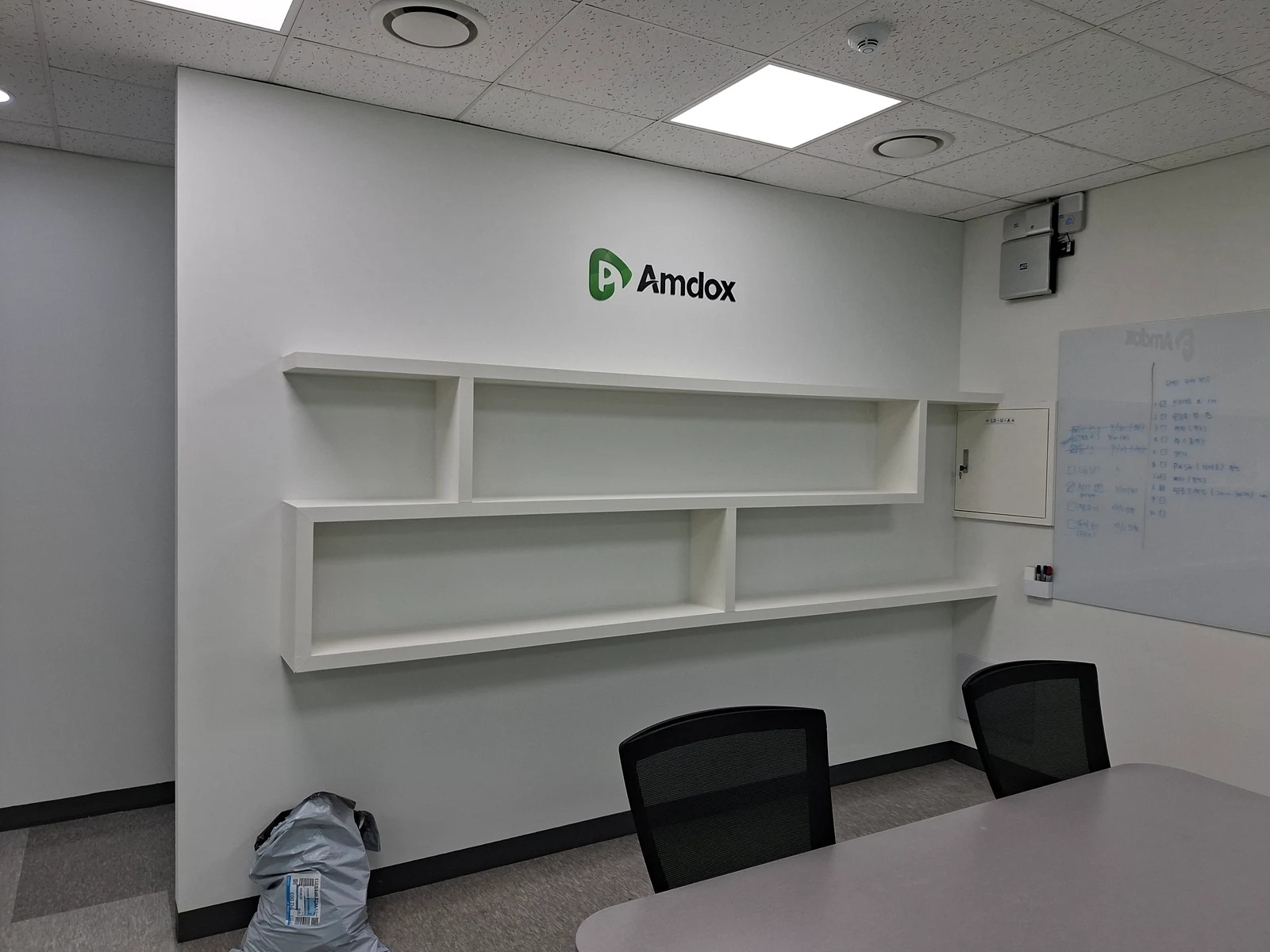
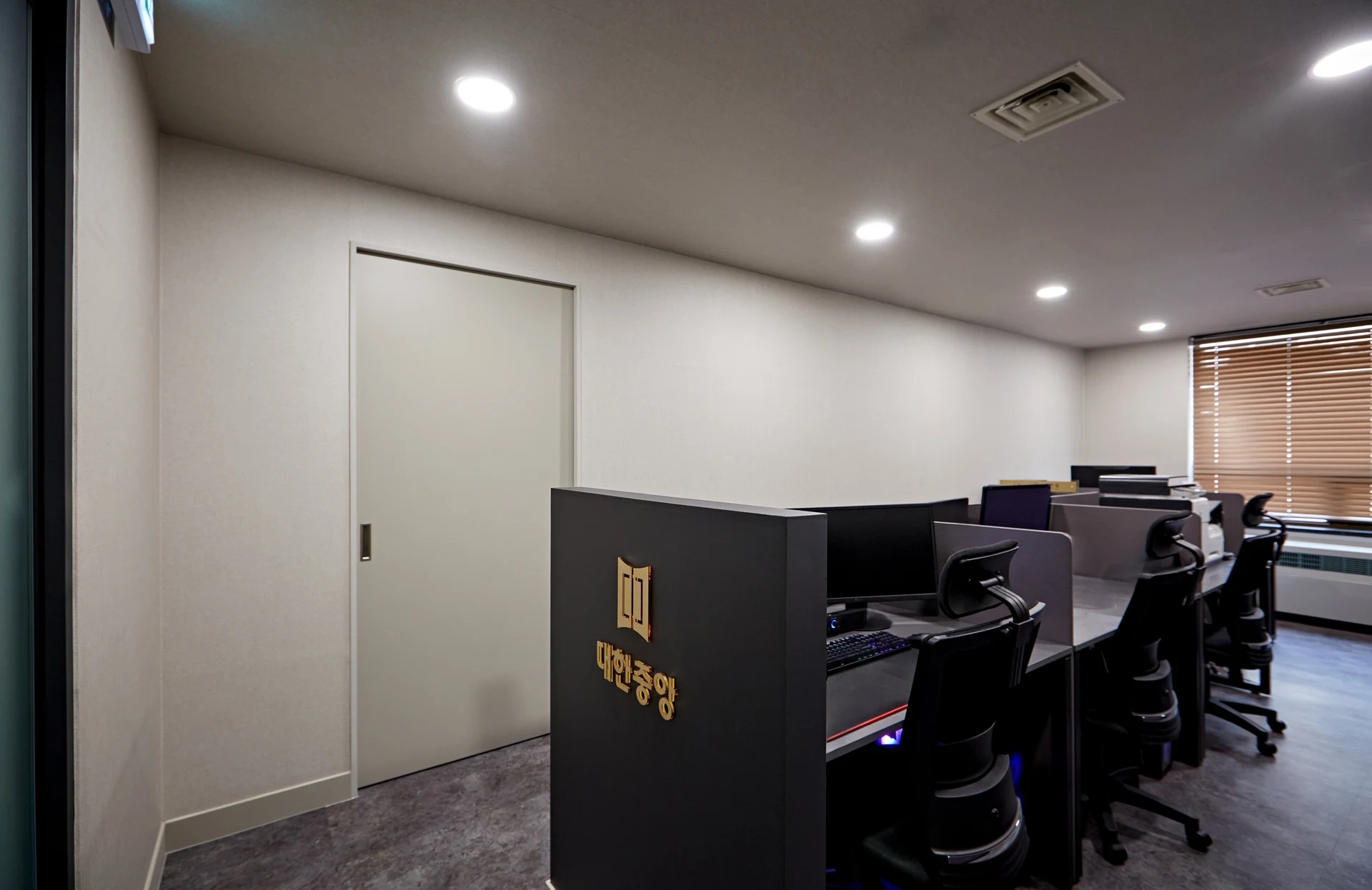
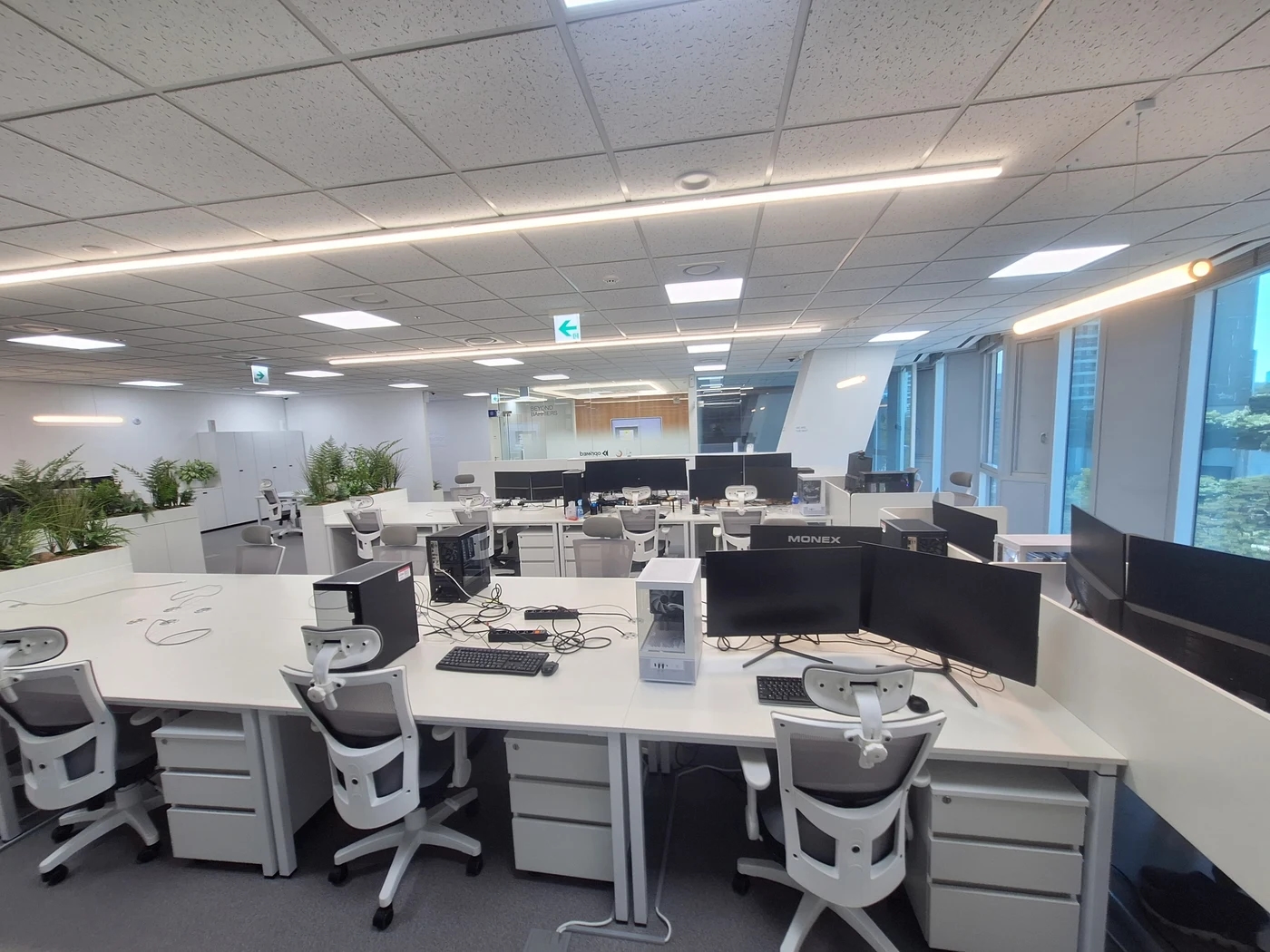
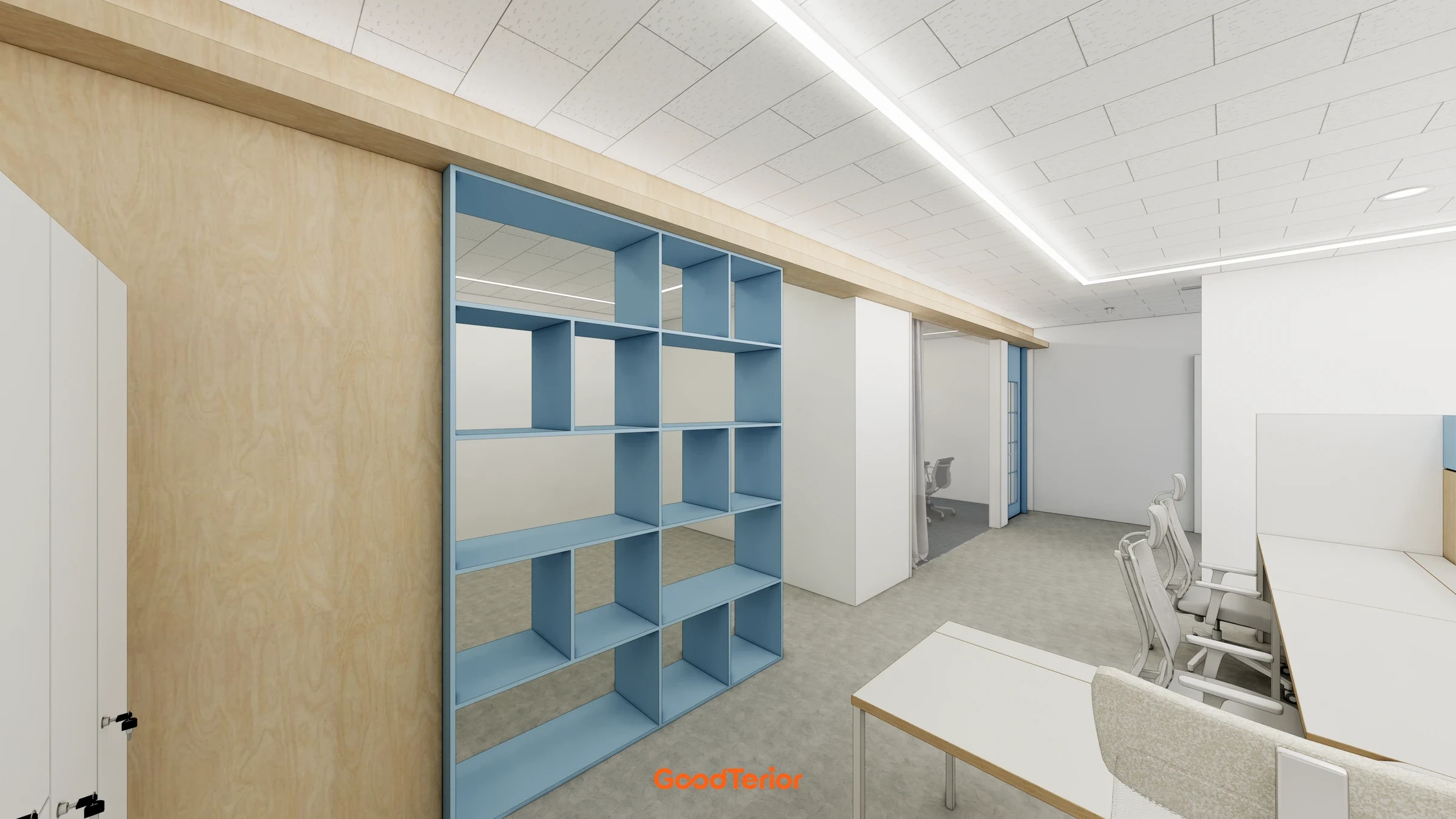
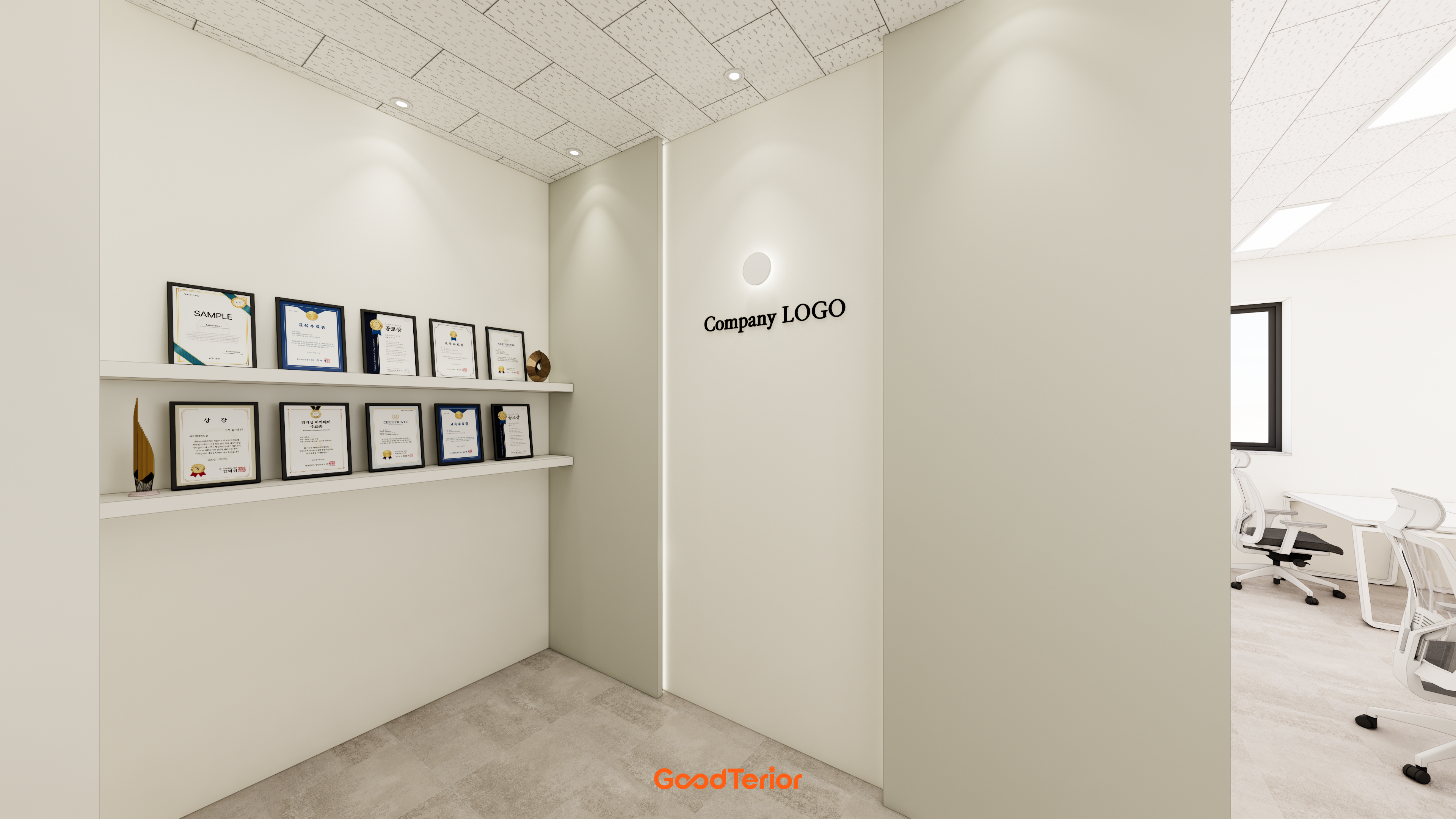
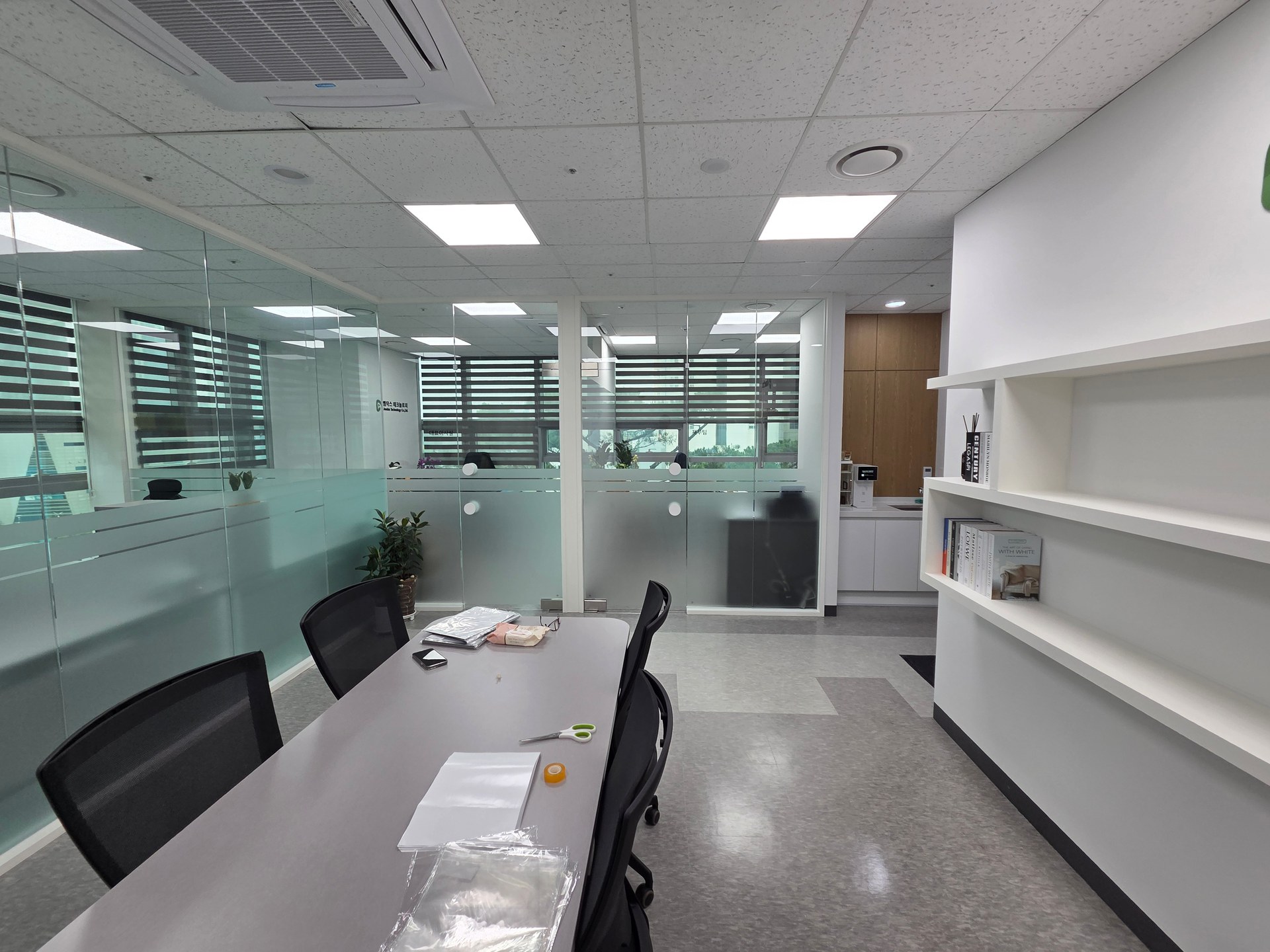
When choosing office cabinet colors, decide which surrounding surfaces they should relate to instead of judging from a furniture photo alone. Here, the shelving is a similar white to the wall, while the table and chairs below are gray and black. Compartment edges and interior shadows remain visible without adding a separate dark color. Matching wall and furniture colors does not remove every line.
For storage running along a long wall, a color close to the wall can be an initial candidate. It is also worth comparing when the aim is to emphasize books or exhibits rather than the furniture. To make the cabinet's form a focal point instead, compare a contrasting color. The distinction is about what should stand out, rather than which option is inherently more luxurious.
Even when choosing white, place actual wall and shelf samples side by side. Ordering on the assumption that both are simply white can produce an unexpected difference after installation. Examine the wall junction, exposed end, and underside under the same lighting. Comparing samples both flat on a desk and upright as the furniture will be installed makes the differences easier to assess.
For open shelving, include the colors of its future contents. Empty white shelves as photographed look different once filled with books, binders, and sample boxes in varied colors. Place frequently visible items beside the samples. If an office cannot leave every compartment empty for display, indicate the balance of closed and open storage in the color proposal too.
The shelving's finish method and color code are unconfirmed. Its white appearance does not identify a particular paint or film product. Even when seeking a similar look, check actual finish samples proposed by the fabricator and document the junction between wall and furniture materials in the approval records.
Cabinets that coordinate with the desk
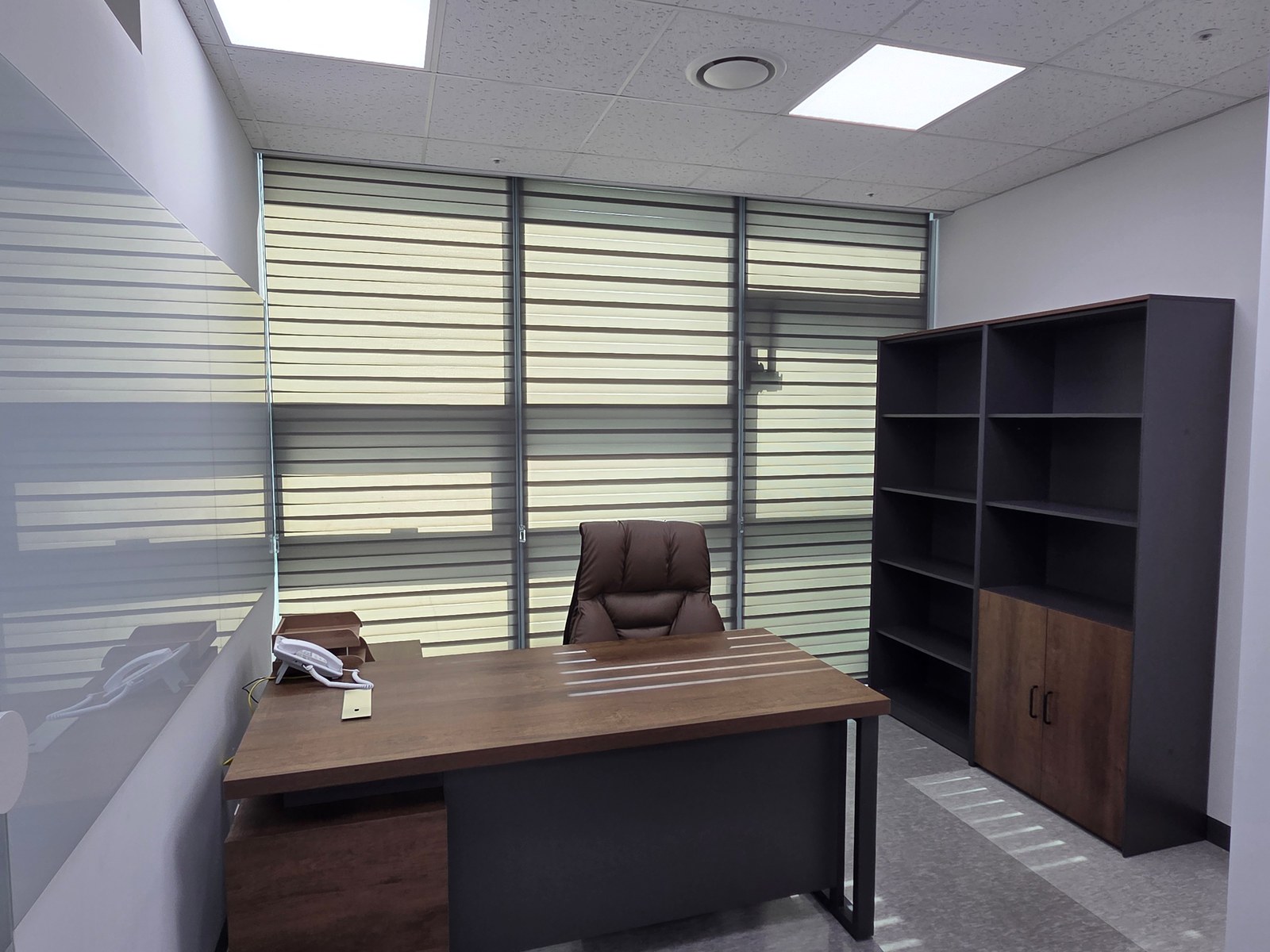
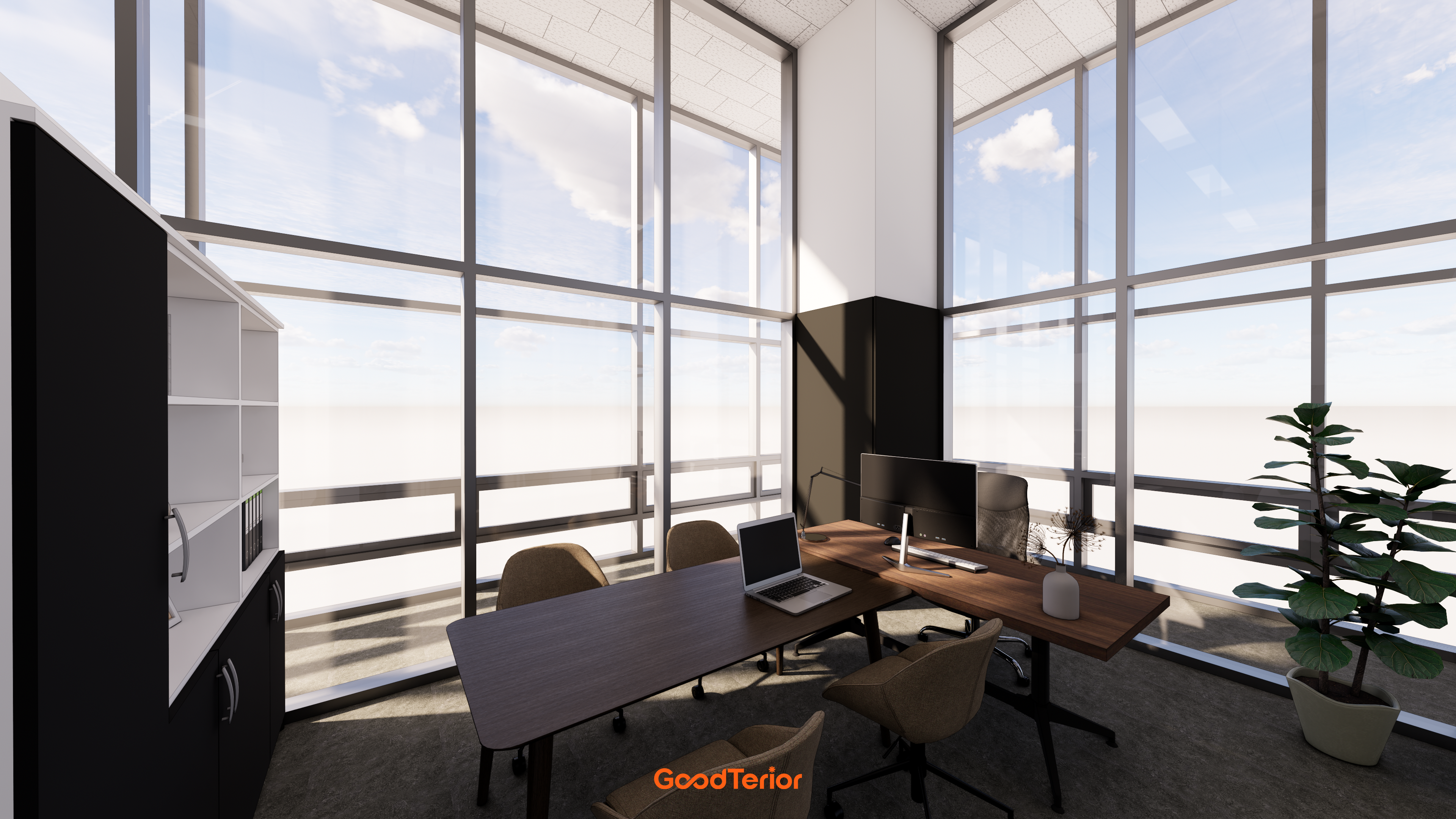
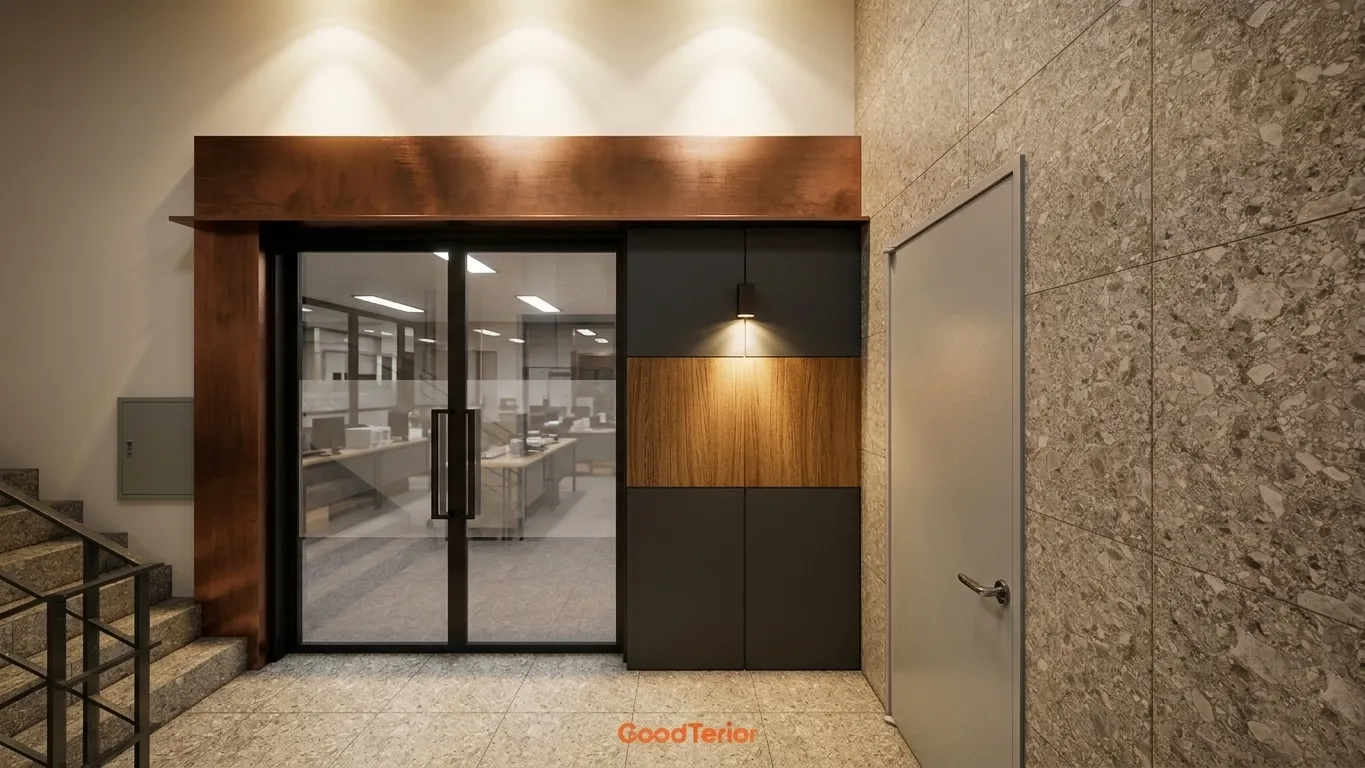
In a private room, cabinets can relate to the adjacent desk as well as the wall. This photo shows the desk's woodgrain top and dark front alongside woodgrain cabinet doors and dark open compartments. It illustrates how a similar color arrangement can repeat across separate pieces without making each entirely one color. It does not establish that they share a manufacturer or material.
If existing desks are moving into the office, use their actual appearance when selecting new cabinet colors. Following only the desktop color creates a different scheme from also picking up the dark legs and front panel. Photos can help narrow the options, but compare final samples beside the actual desk: the photography lighting may differ from the new office lighting.
When using woodgrain on a cabinet, decide whether it belongs on the outer carcass or the doors. Using it only on doors changes the visible color arrangement when they open. Draw separate options for dark backs and shelves inside open compartments or lighter interiors. Check whether a combination appealing in a front view works equally well from the side and during use.
For a dark cabinet, compare its appearance with actual binders or books in several compartments. Empty compartments expose more of the interior color; filled ones show more book spines and labels. Knowing whether uniform files or mixed packaging boxes will be stored helps determine how much cabinet color remains visible. Cabinet color alone should not be expected to create an organized appearance.
Coordinating a desk and cabinet need not mean replacing all existing furniture. Compare doors in a similar color family to the retained desk with an option close to the wall color. Defining which surfaces change also clarifies whether to request new fabrication or partial refinishing. The condition and substrate must be checked before deciding whether an existing piece can receive a new finish.
Finalize doors and surrounding finishes together
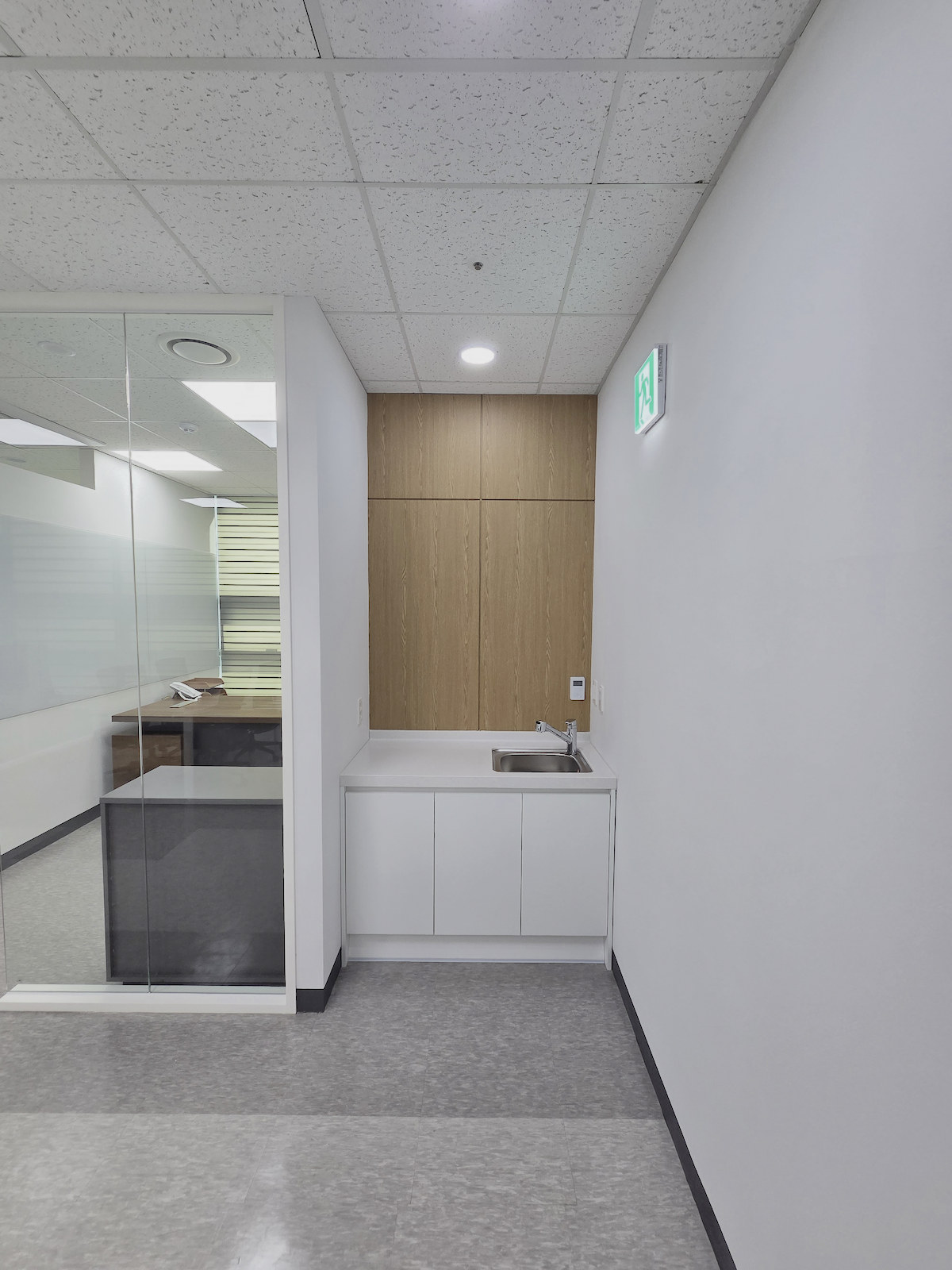
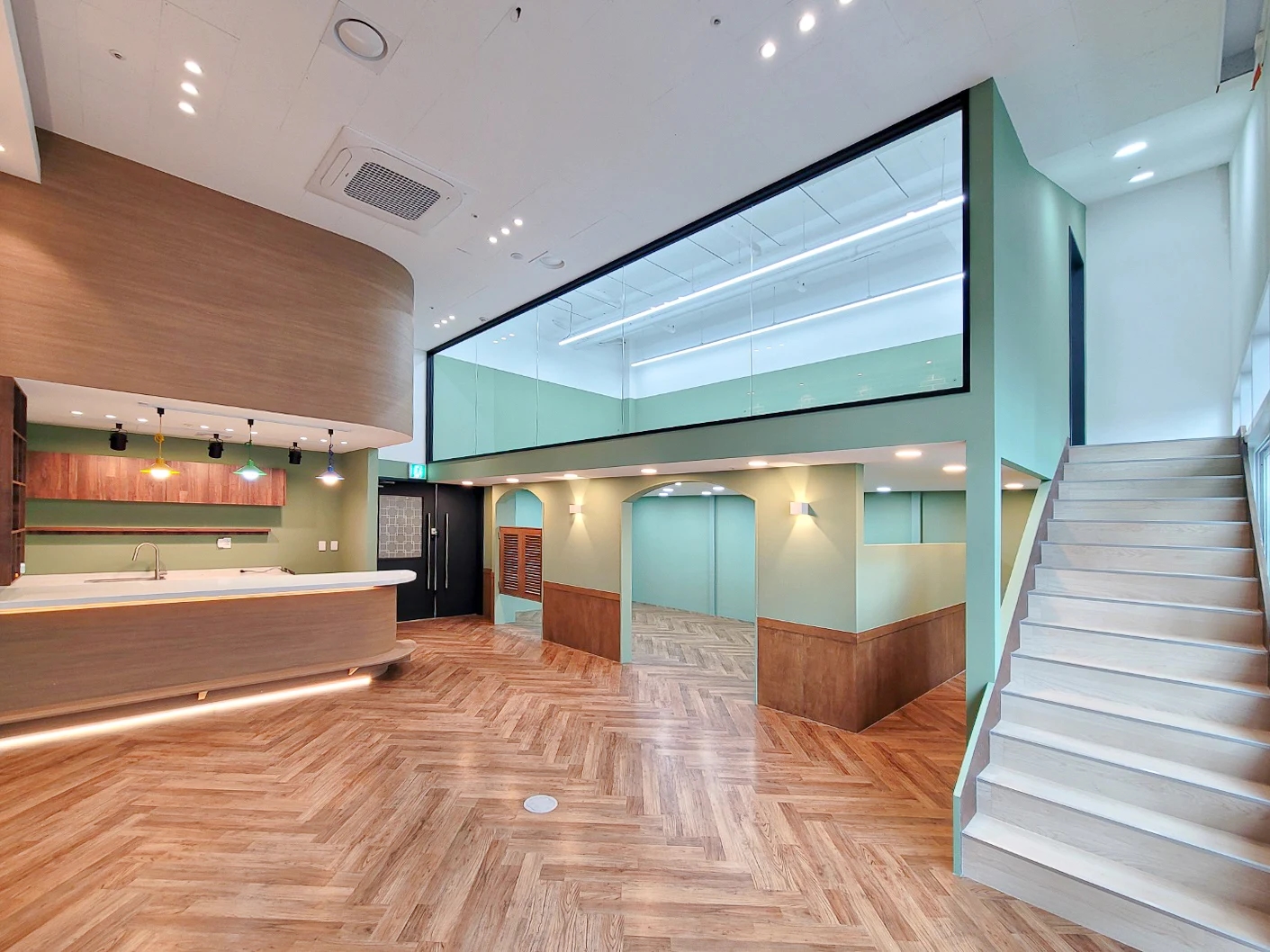
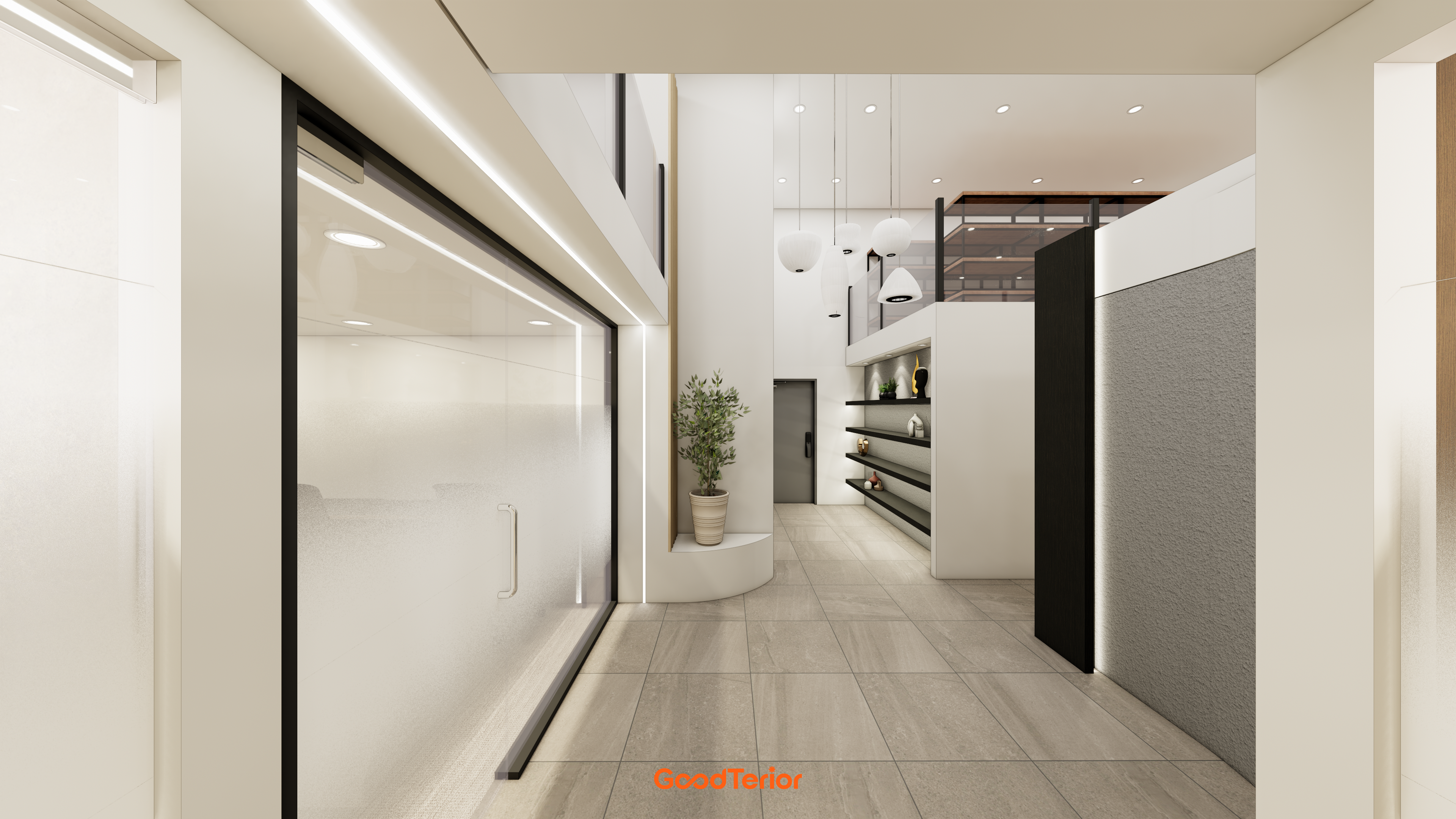
The small pantry in the photo has white base cabinets, a light worktop, and a woodgrain surface above. A woodgrain desktop is also visible through the adjacent glass. Here, compare the surfaces seen together from the corridor rather than only the cabinet front in isolation. Consider the visible color arrangement without assuming the upper woodgrain surface's internal construction or material from the photo.
When finalizing colors, distinguish the carcass, doors, worktop, handles, and surrounding walls. Record whether everything will be the same white or only the doors will change while the carcass stays. Where handles are used, compare their color and visible size too. Even a small fitting becomes a repeated feature across multiple doors.
Compare cabinet material samples with the floor, wall, and retained desk. In the photo, gray flooring and black skirting continue below the furniture. Checking relationships to the floor and surrounding lines only after changing the cabinet color can alter the intended combination. Deciding whether to seek an exact match or distinguish different surfaces helps narrow the options.
Record approved product names, color codes, and surface assignments on drawings or finish schedules. For woodgrain, also show its direction on each surface. Retain the approved physical samples so materials with matching colors but different textures or grain are not treated as equivalent. Use screenshots of photographed colors for initial discussion and keep them separate from final material specifications.
If the budget requires color changes, identify the affected surfaces and compare again. Reducing material types and retaining existing furniture change different surfaces and construction scopes. After selecting an option, review samples in daylight and with the lights on, standing them in their installed orientation. Distinguishing cabinets that relate to the wall from those that coordinate with desks gives the office a clear selection basis without requiring every surface to share a color.
Ask us about your interior project
We can discuss a quote and design suited to the space you are planning.
Request a free consultation