Should study rooms and shared academy spaces have the same lighting?
Academy lighting serves different purposes in each room. Real photographs help us examine light at end desks, rooms combining desks and storage, and corridor lighting for finding rooms.

Before you begin
- Check desktops at window-side and wall-side end seats as well as the center of a study room.
- In rooms combining desks and cabinets, check shadows beneath pendant lights.
- Plan shared-area and corridor light for movement and guidance rather than insisting on the same brightness as desks.
Light on desks at the room's edges
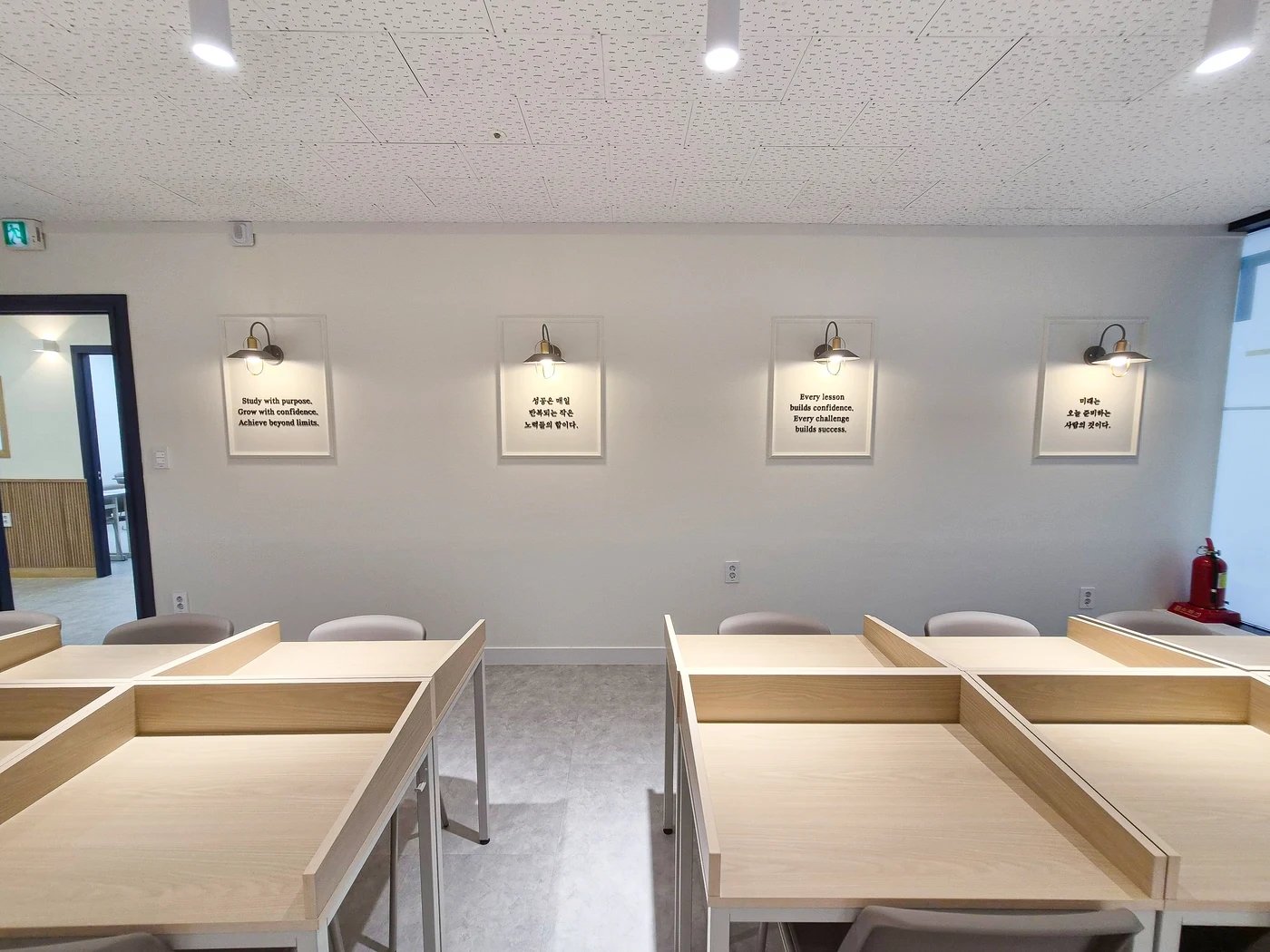
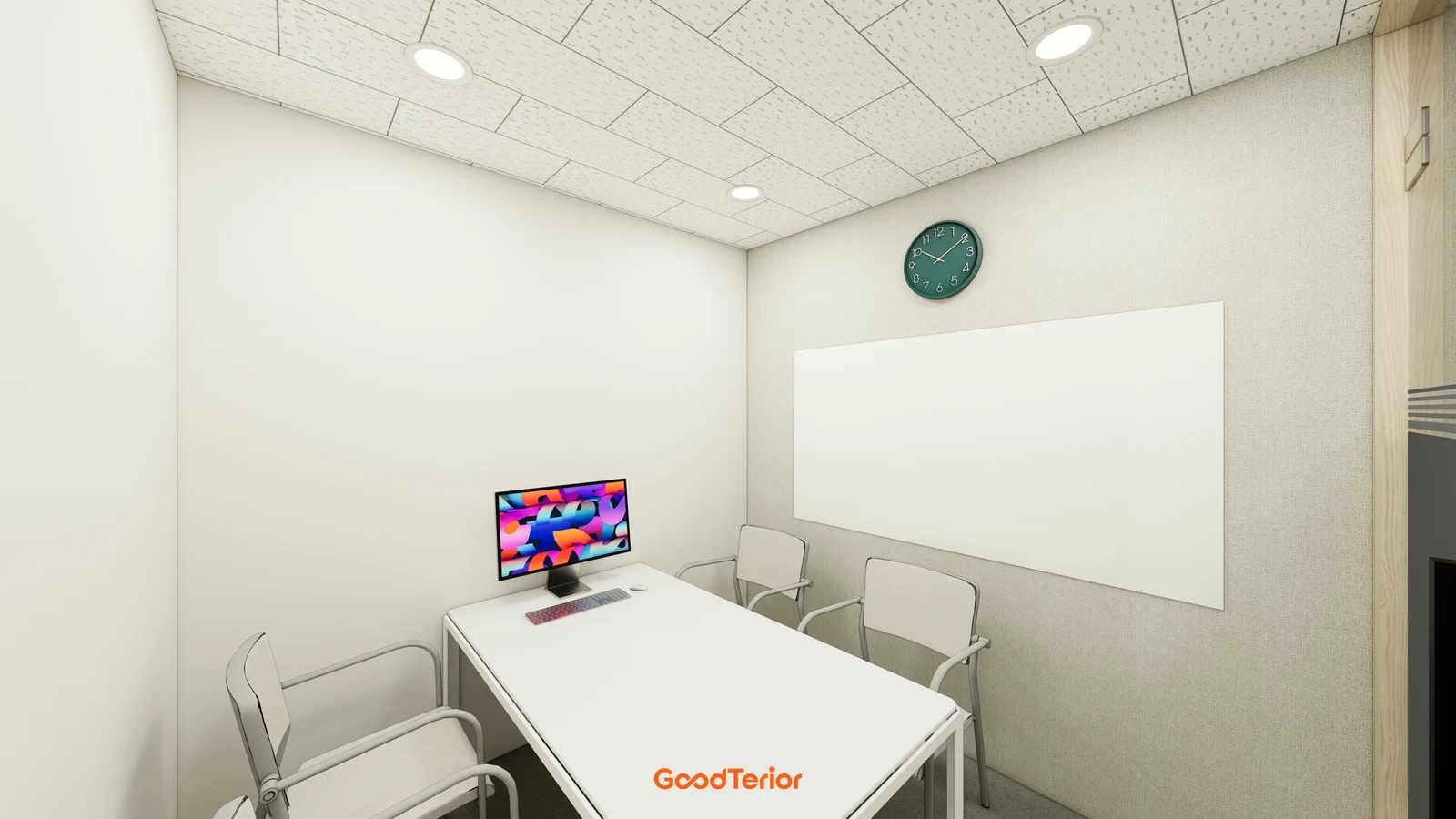
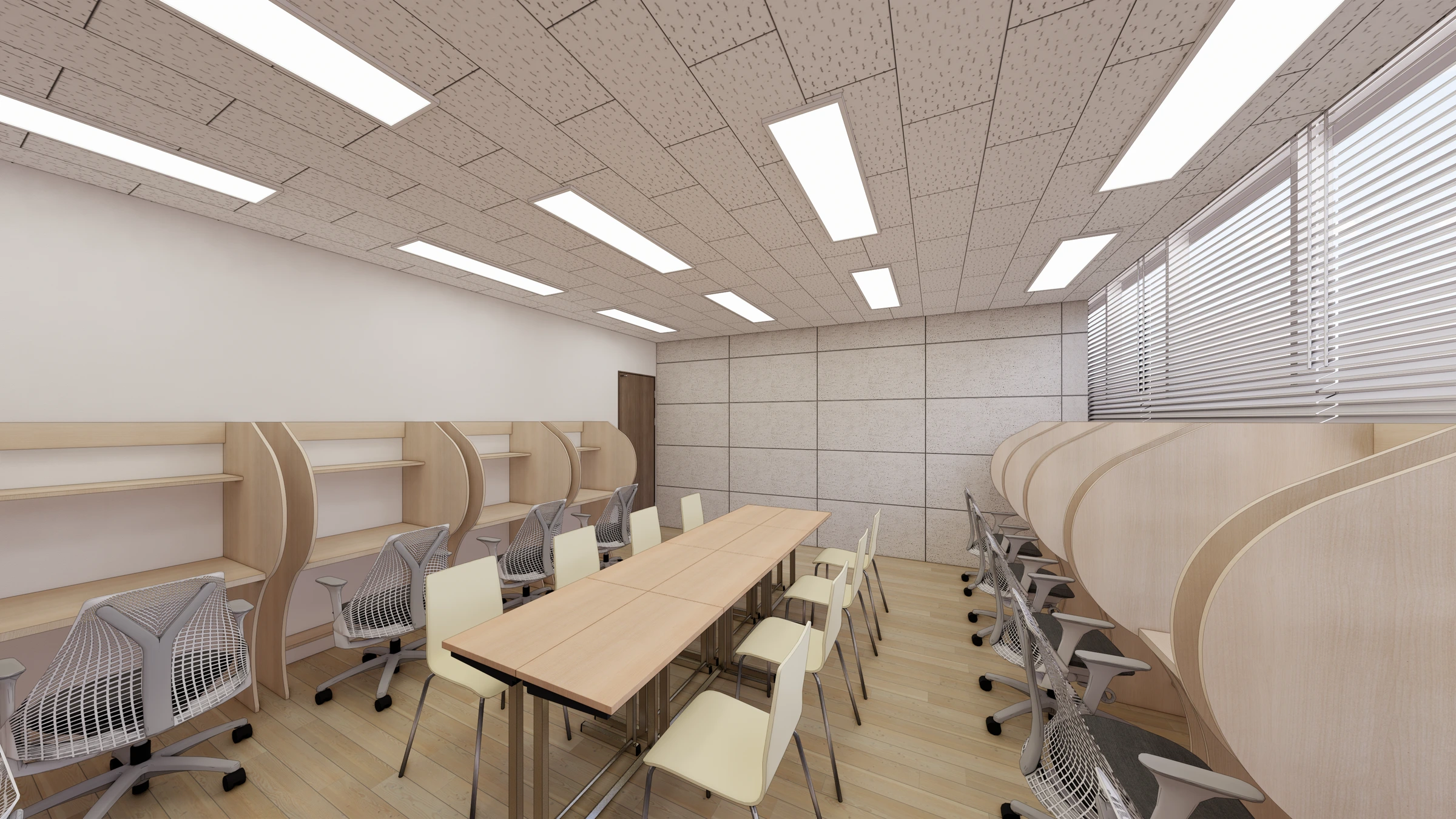
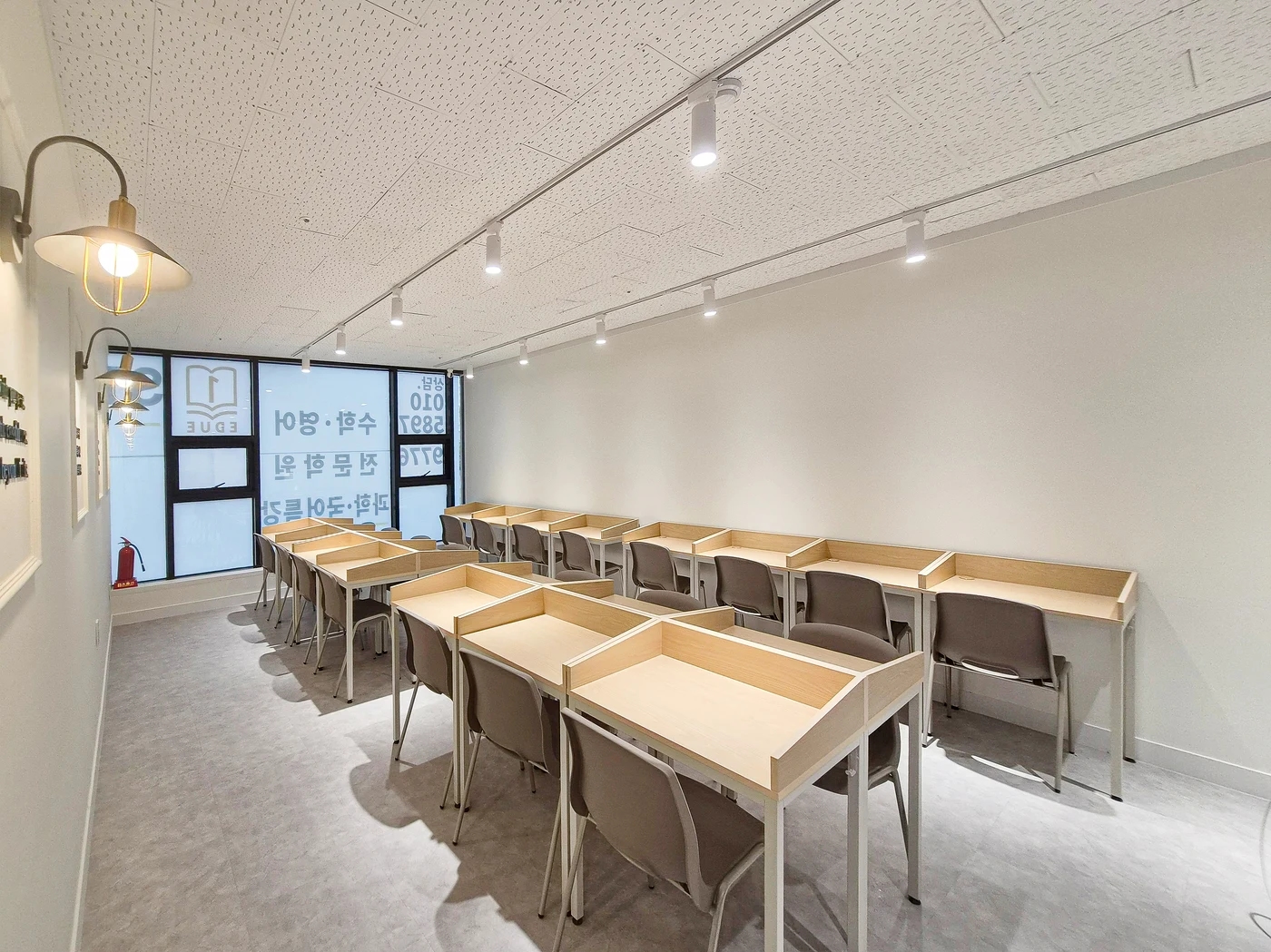
Simply counting ceiling fixtures can miss seats when choosing study-room lighting. The photograph shows rows of partitioned desks and small lights along ceiling tracks. Check desktops facing walls and at window-side ends as well as central seats. Partitions may block light, or hands may cast long shadows over writing in an open book.
Signify's Classroom Lighting Design Guide considers even desk lighting alongside glare. As a UK educational design guide, it is not a source of statutory illumination requirements for this academy, but its principle of checking light at each seat after fixing desk positions is useful. Photograph brightness cannot establish actual desk illumination or glare. Check desktops and seated eye levels with lights on.
Rooms combining desks and cabinets
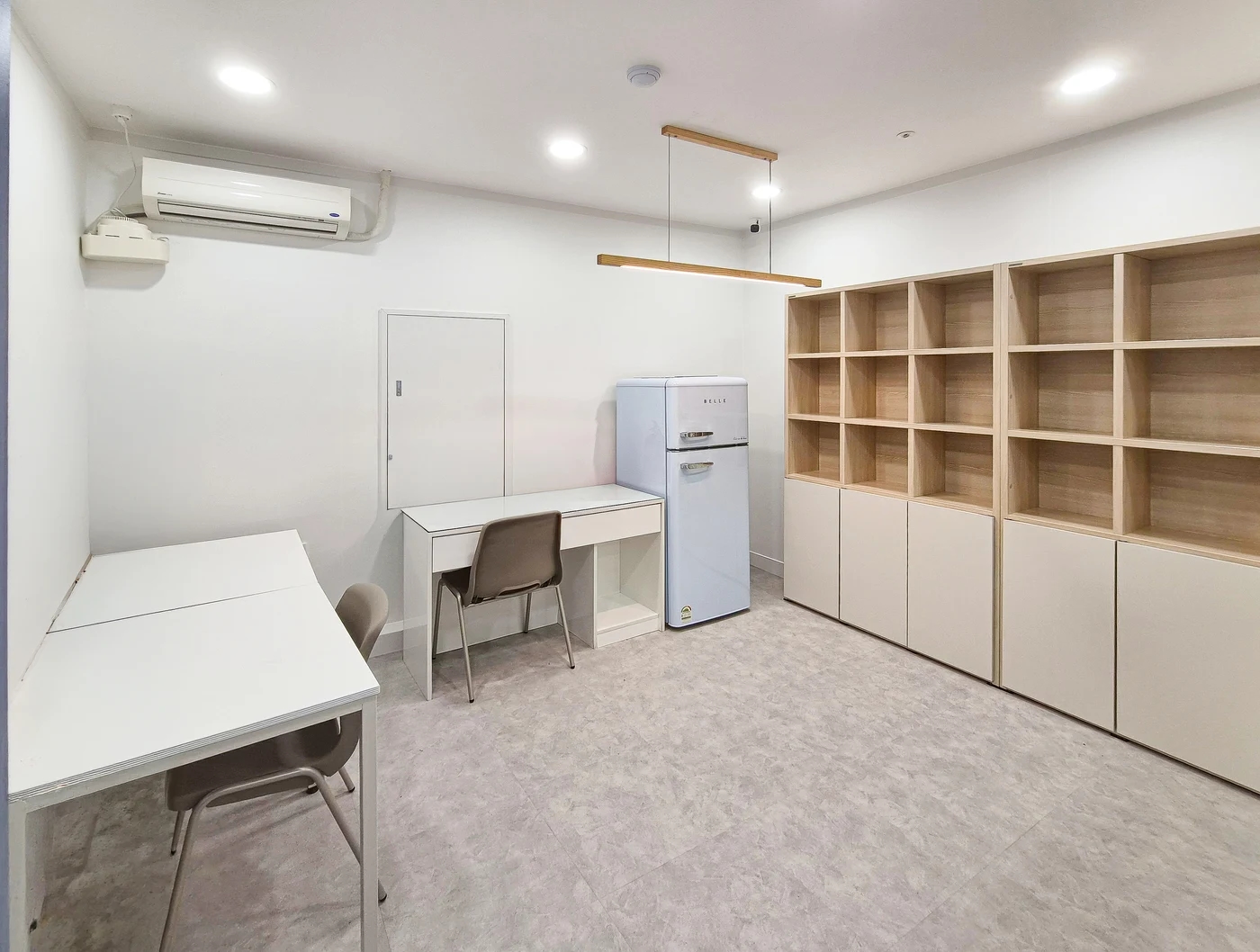
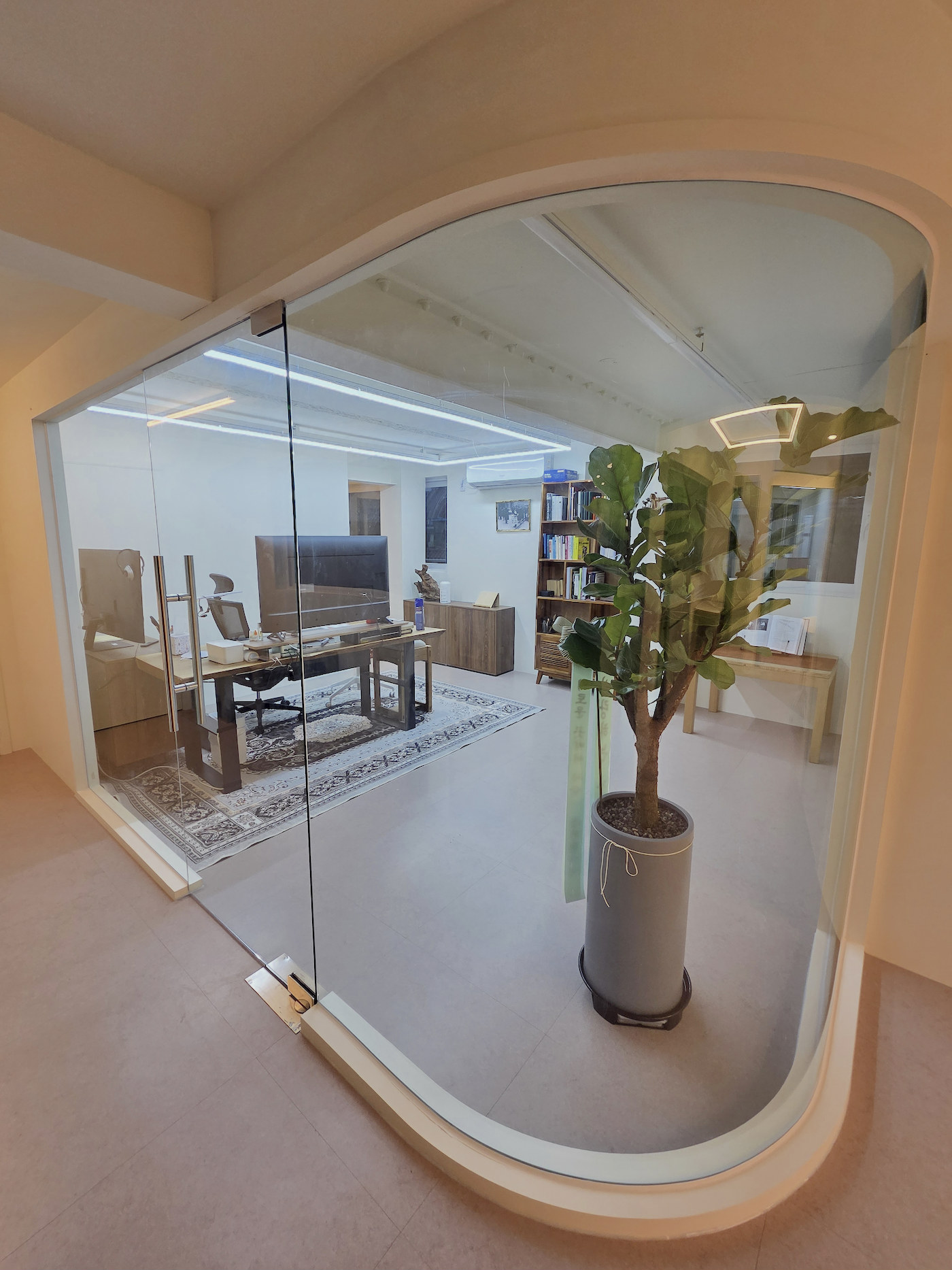
A room for opening teaching materials or organizing supplies has different lighting needs from a study room. The photograph shows long pendants in front of cabinets and recessed ceiling lights. Attractive pendants may still expose bulbs or cast strong facial shadows from nearby seats. A photograph taken standing cannot reveal that experience.
After placing desks and chairs, sit in the actual position and rest a hand on paper. If desks can move, check the reach of general lighting rather than arranging all seats around a single pendant. The room's actual operation cannot be established from the photograph, so do not assume its teaching or consultation use.
Corridors from the moving user's eye level
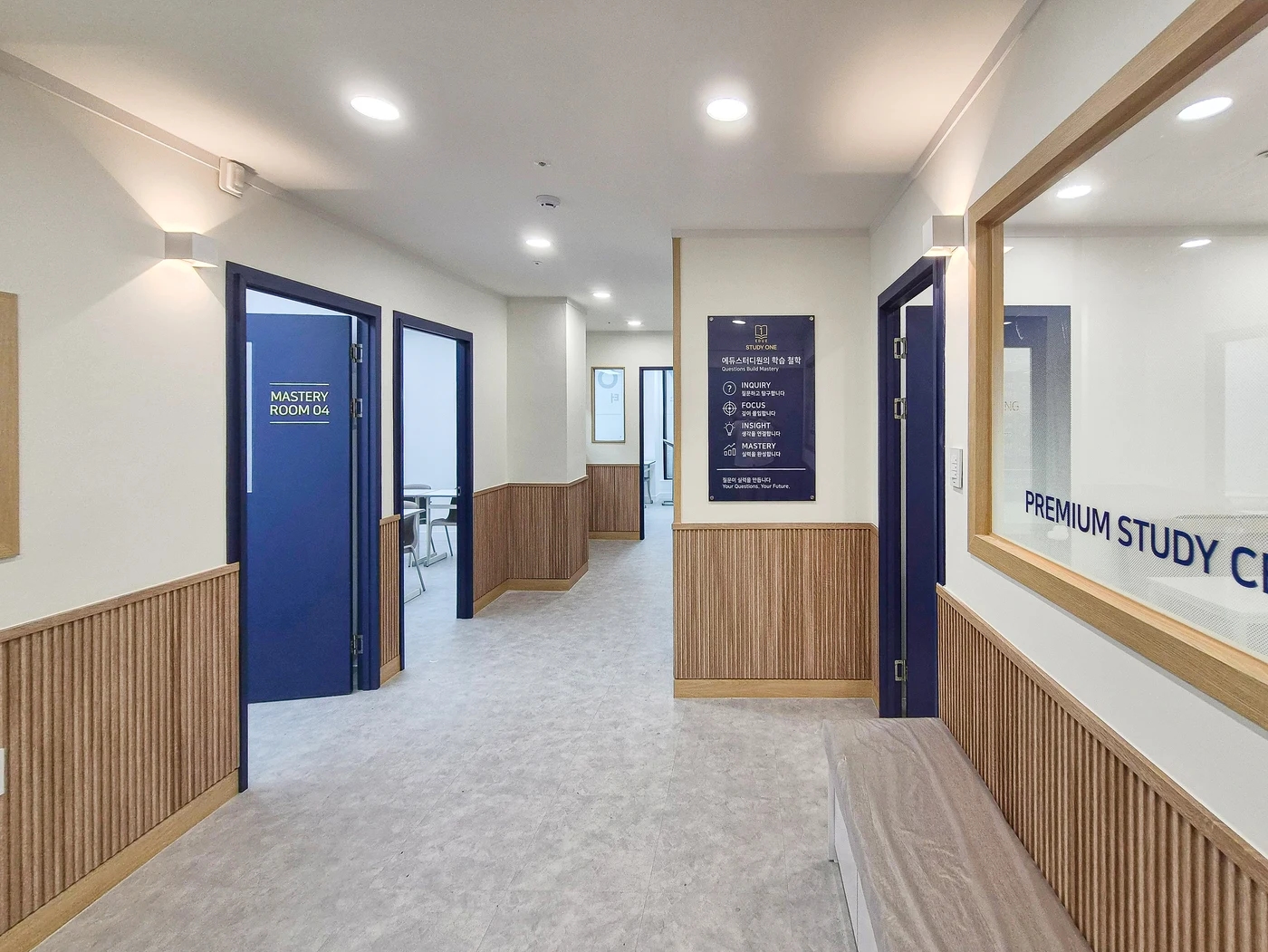
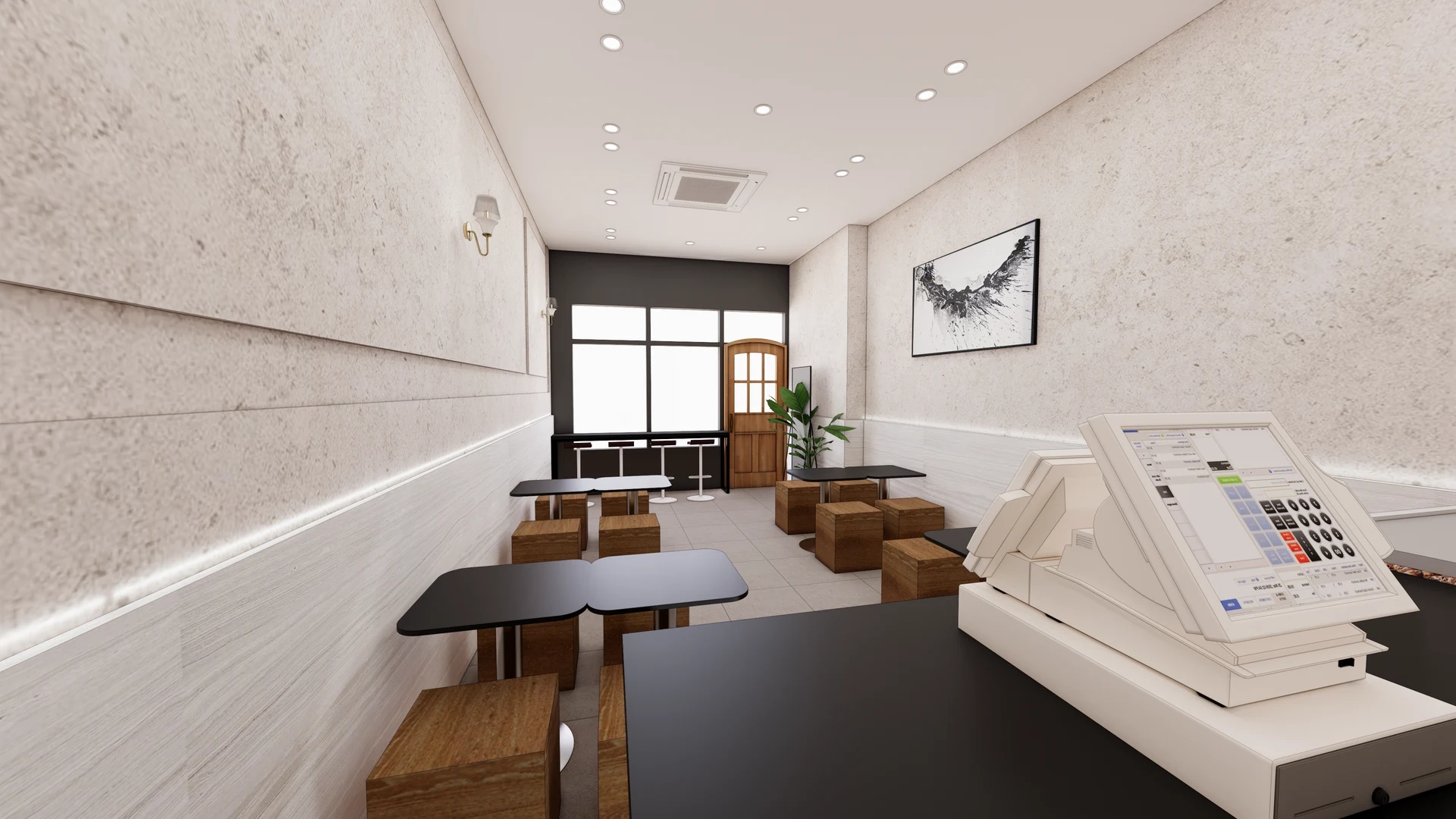
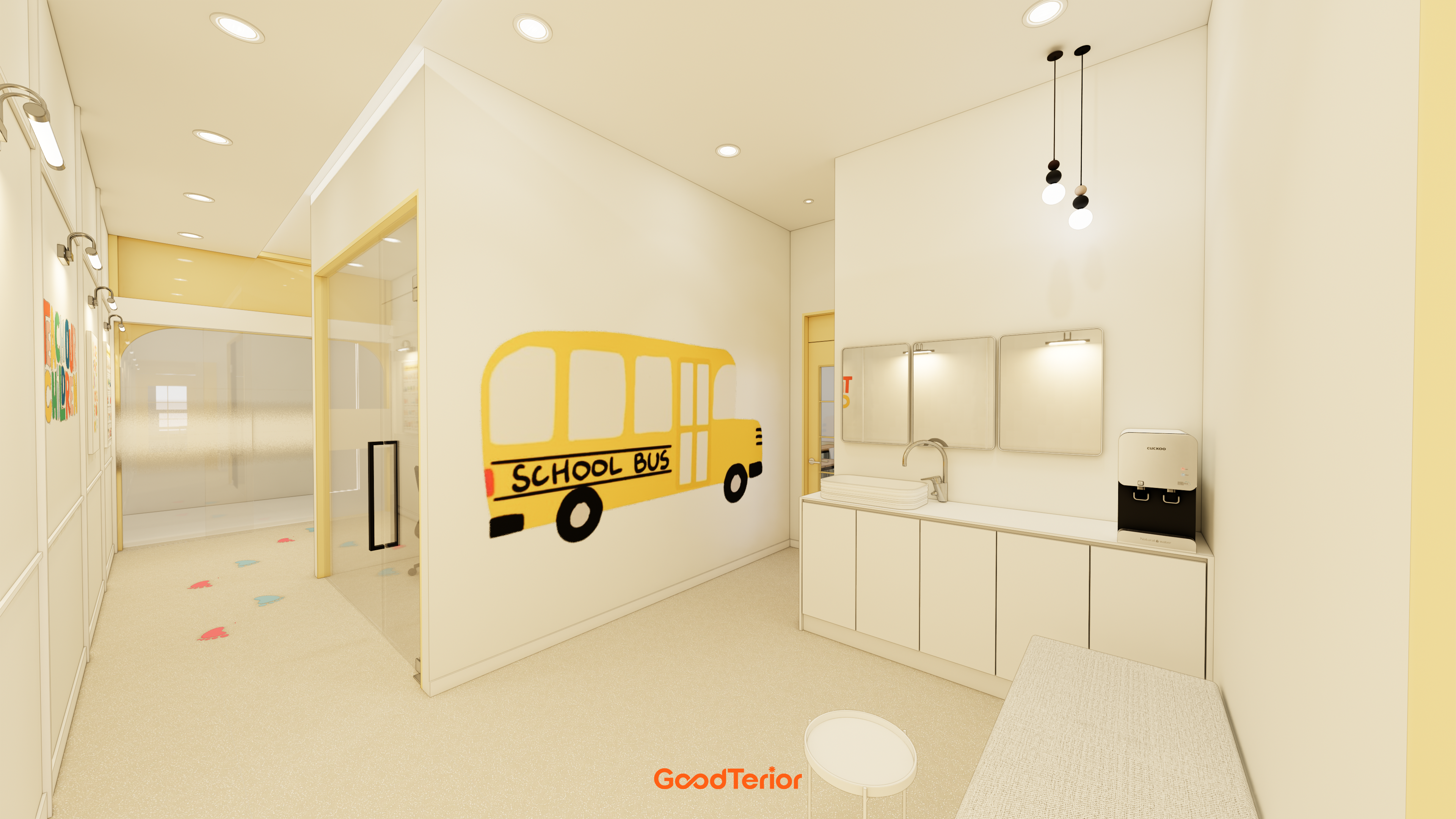
The corridor of classroom doors shows both recessed ceiling lights and wall lights. Reading writing at a desk and walking to find a room name do not necessarily need the same light. Even if a wall light illuminates a sign, an open door or person's shadow may obscure it. The photograph shows fixture positions, not measured corridor brightness.
Record lighting scenes separately for desks, teaching-material rooms, and circulation. Which lights operate during lessons or final cleaning can inform circuits and switch positions. Signify's classroom lighting guide also discusses controls for different learning activities, without implying that a specific switch arrangement or product should be copied here. Review the electrical plan against actual services and use.
Ask us about your interior project
We can discuss a quote and design suited to the space you are planning.
Request a free consultation