Checking lighting at salon mirrors
Salon lighting cannot be chosen simply because the whole shop appears bright. Review seated views, daytime and evening window conditions, and the separate roles of decorative and task lighting.

Before you begin
- Review faces and hair from both the seated customer's and standing stylist's positions.
- Compare daylight and evening lighting separately at window-side seats.
- Distinguish light color, color rendering, and decoration, and retain product and switching zone information.
Lighting viewed from the styling chair
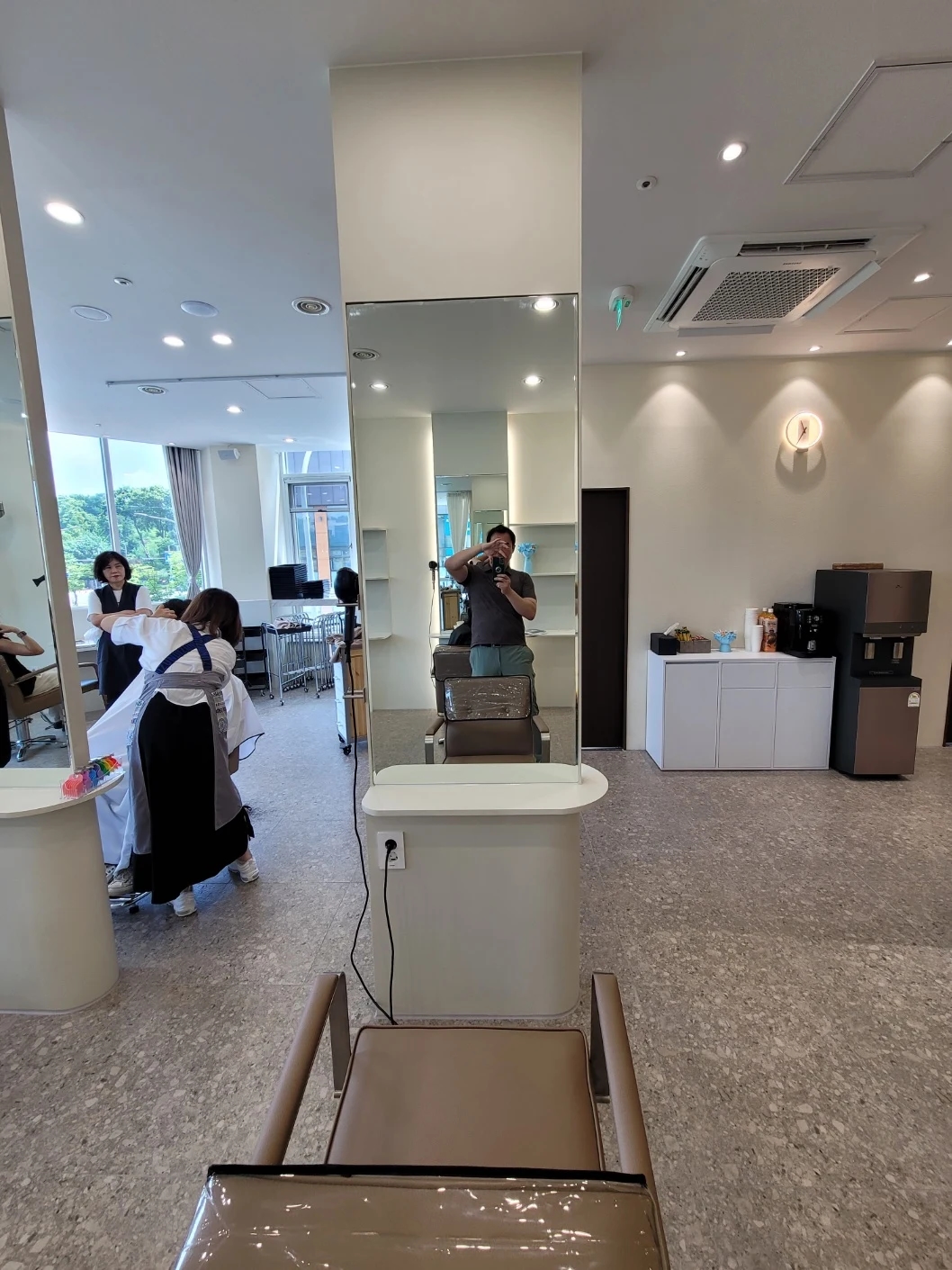
Review salon mirror lighting from both an entrance overview and actual styling seats. Ceiling lights may look even in a broad photo, but customers sit in one place viewing the mirror for extended periods. Before finalizing fixtures, place the intended chair and mirror and review seated eye-level views.
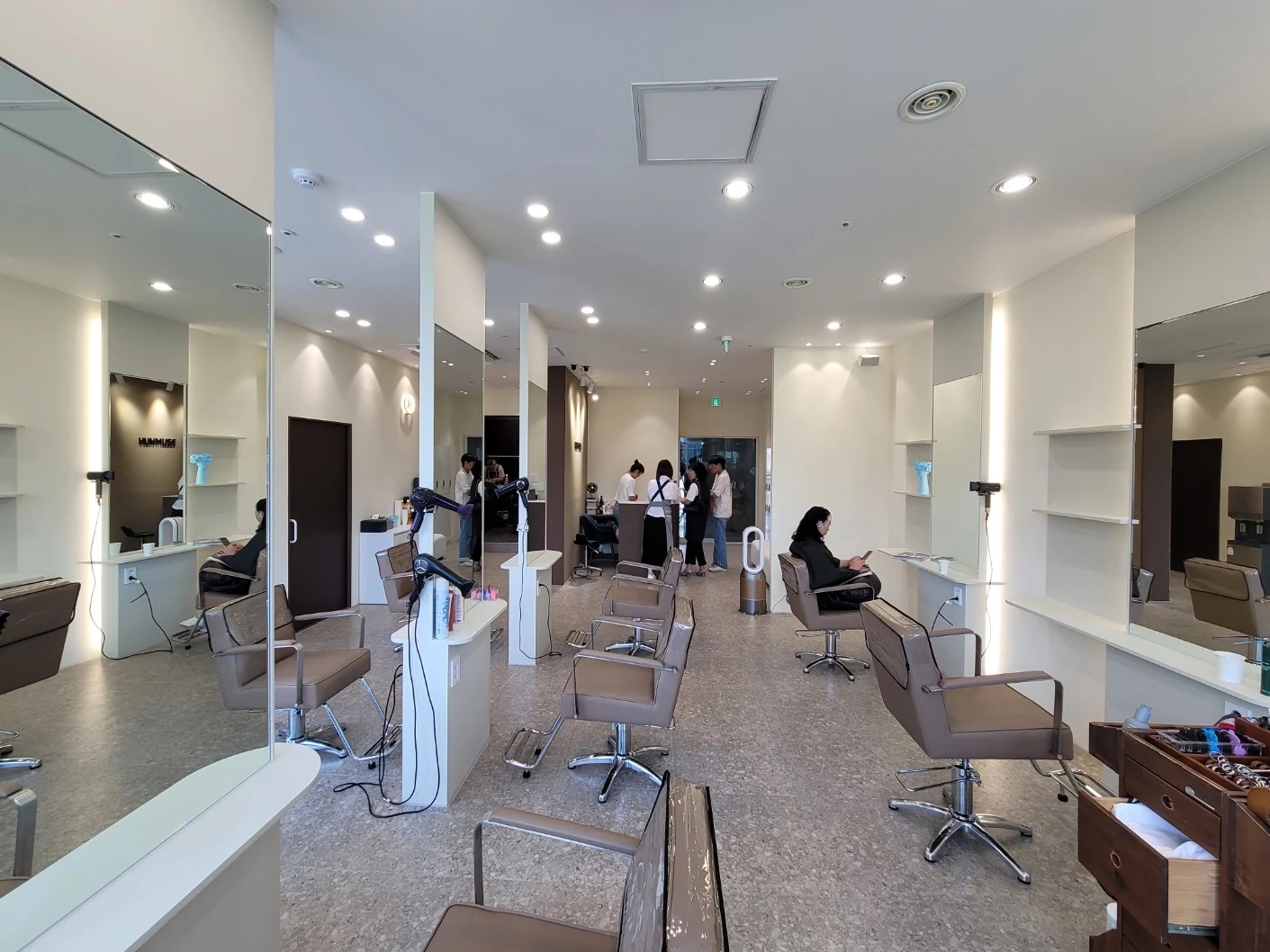
The photo shows a freestanding station and chair, with ceiling lights reflected in the mirror. The view includes reflected surroundings as well as lights beside the mirror. Identify precisely which bright source bothers which seat and where it appears in the reflection. A vague report of glare makes it harder to decide between changing light position and direction.
Rehearse customer and stylist roles. One person sits to examine front and side views while another stands behind and beside them to inspect hair. Compare whether hands or tools block the target area during movement. This defines checks for the new salon rather than establishing that the pictured lighting is adequate.
Adding light beside mirrors and changing ceiling fixture positions or directions are different jobs. Record the troublesome viewpoint first, then ask the lighting specialist for alternatives. Compare where and what light changes through drawings and actual switching, rather than requesting only more fixtures. Recheck whenever final mirror or chair positions change, even if the fixture form is approved.
Wall-mounted and freestanding styling stations may have different conditions within the same salon. Choose representative window-side, inner, and aisle-side seats instead of applying one seat's result everywhere. Recorded troublesome directions help decide between overall replacement and selective adjustment.
Check window seats during daytime and evening separately
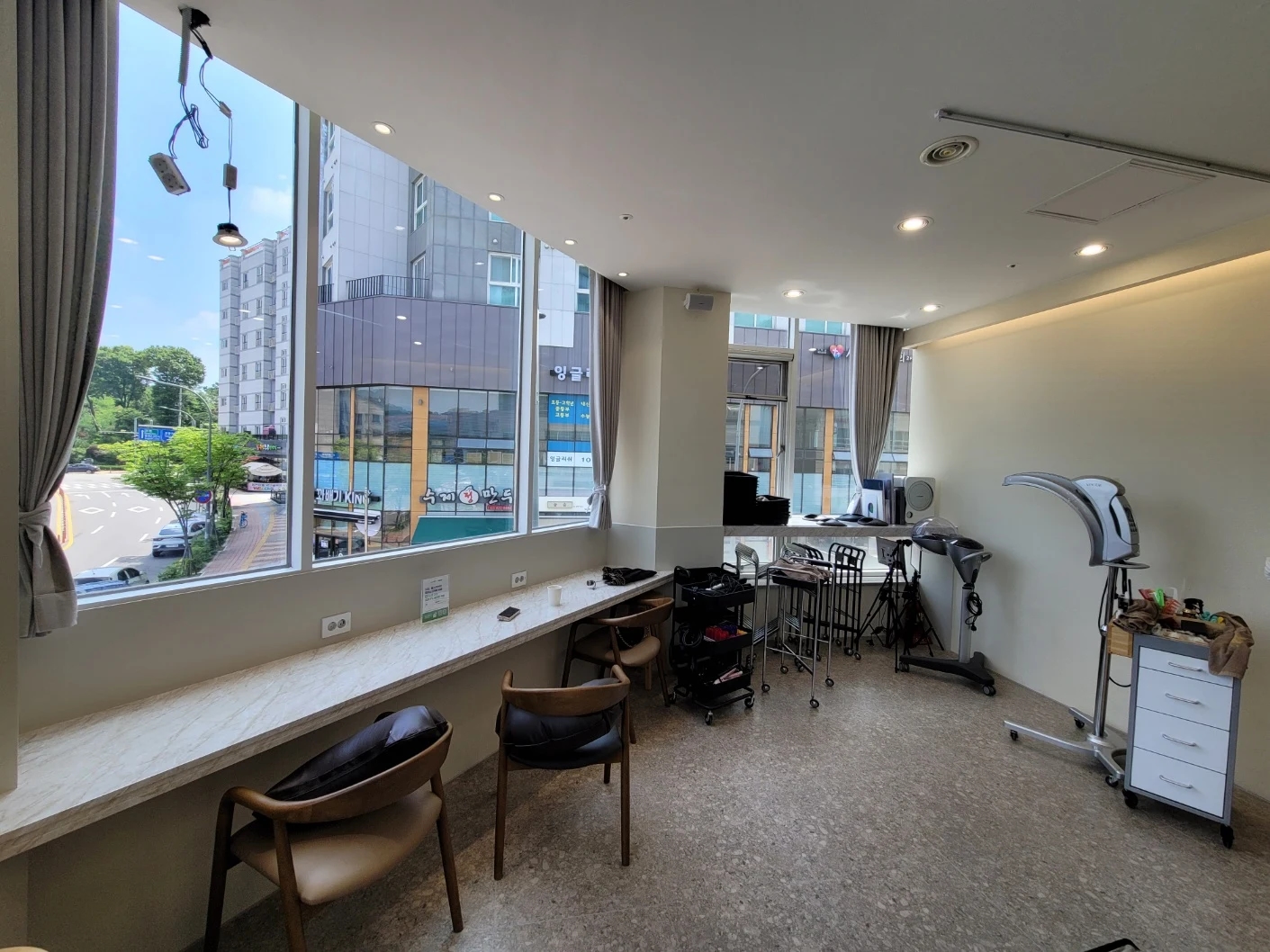
Do not finalize a windowed salon's lighting from a single daytime impression. The photo shows broad windows, a window-side top, and upper-wall light, but not how treatment seats look after sunset. Review daylight during intended opening hours separately from the lights operated then.
During the day, compare curtains open and closed. Operating patterns differ between shading only troublesome sunlight and keeping windows covered whenever seats are used. If closed curtains are needed for comfort, check treatment visibility in that condition. Large windows alone do not remove the need for additional lighting.
In the evening, review actual operating combinations. Check all lights on, some waiting area lights off, and only inner seats in use. Examine whether switching off one zone affects neighboring mirrors and how work areas look with decorative lighting alone. Set required switching zones from these results.
Do not judge color solely from a phone photo's brightness or white balance. Agree a comparison method with the lighting specialist using actual hair color samples and tools beneath candidate lights. Include customer and stylist viewpoints from opposite sides. This creates specific questions about colors or areas that remain difficult to distinguish.
If retaining some existing fixtures, also review old and new lights operating together. Mark retained and replacement zones and curtain conditions on drawings. Keep daylight findings separate from evening-only findings so future replacements have clear recheck criteria.
Decorative effects and light needed for work
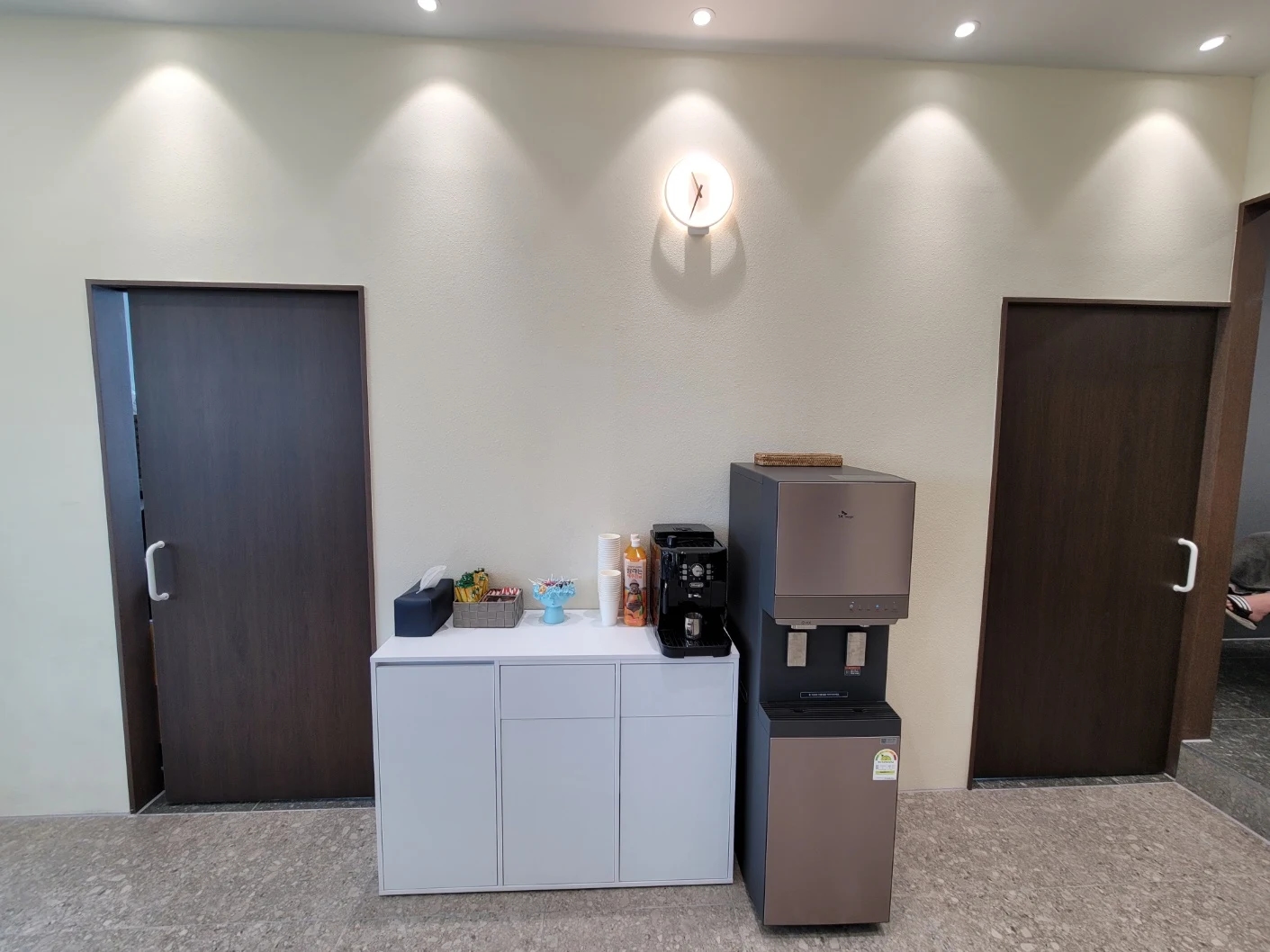
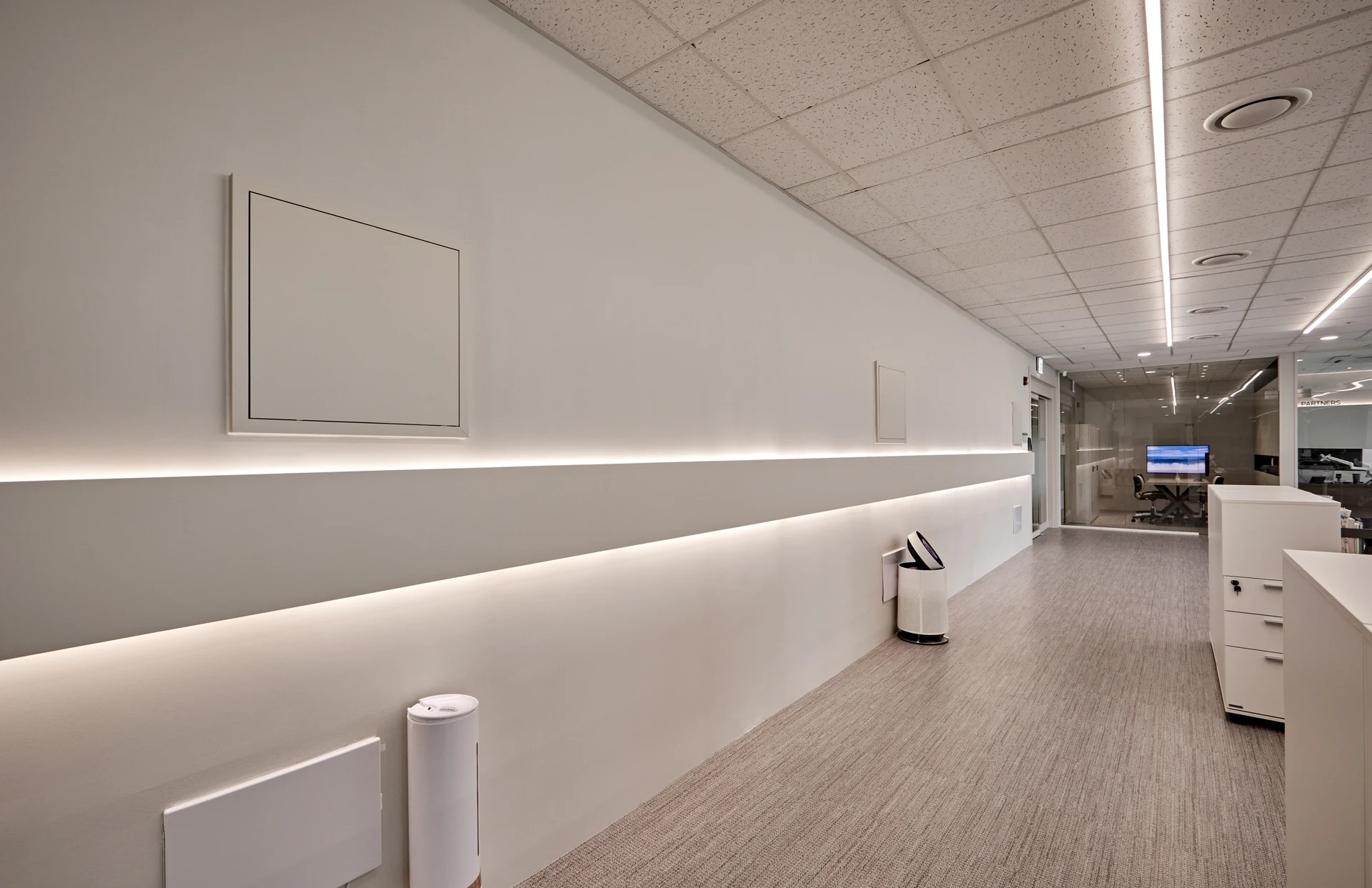
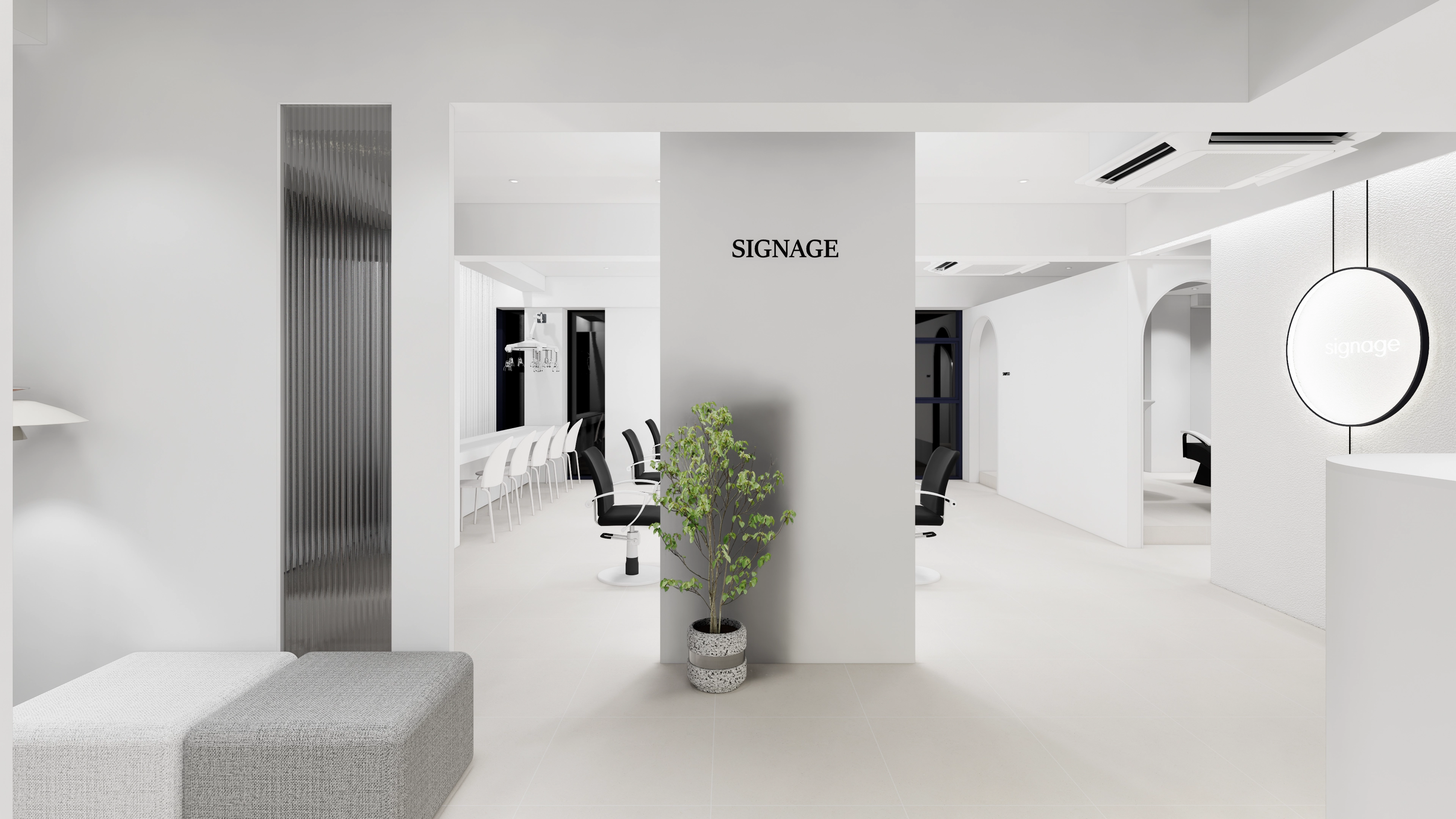
The photo shows downward light and a round wall fixture. Attractive light spread can illustrate atmosphere but does not establish visibility of faces and hair at styling seats. Separating decorative wall lighting from working light helps explain budget priorities.
When comparing products, distinguish warm or white light from color rendering. Philips's Korean LED bulb product sheet describes CRI as a measure of a light source's effect on color and lists color temperature and color rendering separately. This is an individual bulb description, not recommended specifications for a whole salon. Use it as a prompt to obtain actual candidate product information.
If a proposal lists only color temperature or wattage, also request product names, light output data, distribution, and dimming availability. Similar-looking fixtures still need model-specific information. The photographed fixtures' manufacturer and specifications are unconfirmed, so they cannot support a product recommendation or equivalent performance assumption.
For new lighting, separate fixture prices from installation scope. Retained wiring, new connections, and changed switching zones require different work. Coordinate mirror or wall-mounted lighting connections and future access with the fabricator. Do not leave connections and replacement methods until after selecting visible fixtures.
Finally, review reduced decorative lighting separately from the treatment setting. Record seated customer and standing stylist positions, daytime and evening conditions, selected products, and switching zones. Plan salon mirror lighting around what needs to be visible from each position rather than simply switching on more lamps.
Ask us about your interior project
We can discuss a quote and design suited to the space you are planning.
Request a free consultation