Commercial Sign Replacement: Comparing Lettering and Backing Quotes
Decide whether a commercial sign needs new lettering alone or a new backing as well. Compare old fixing marks, backing condition, lighting, removal and installation preparation before approving a replacement quote.

Before you begin
- Separate lettering, backing, frames, lighting and glazing graphics before deciding what stays.
- Record visible marks and the agreed limits of backing repairs in the quotation.
- Confirm site conditions, building management requirements and local procedures before fabrication.
Can the backing remain after the old lettering is removed?
When replacing a commercial sign, decide what should remain before requesting a price based only on the number of letters in the new business name. Mark on a photograph whether the change concerns the lettering, the broad backing behind it, the frame or the lighting. Quotes for the same general request are difficult to compare by total when contractors include different work.
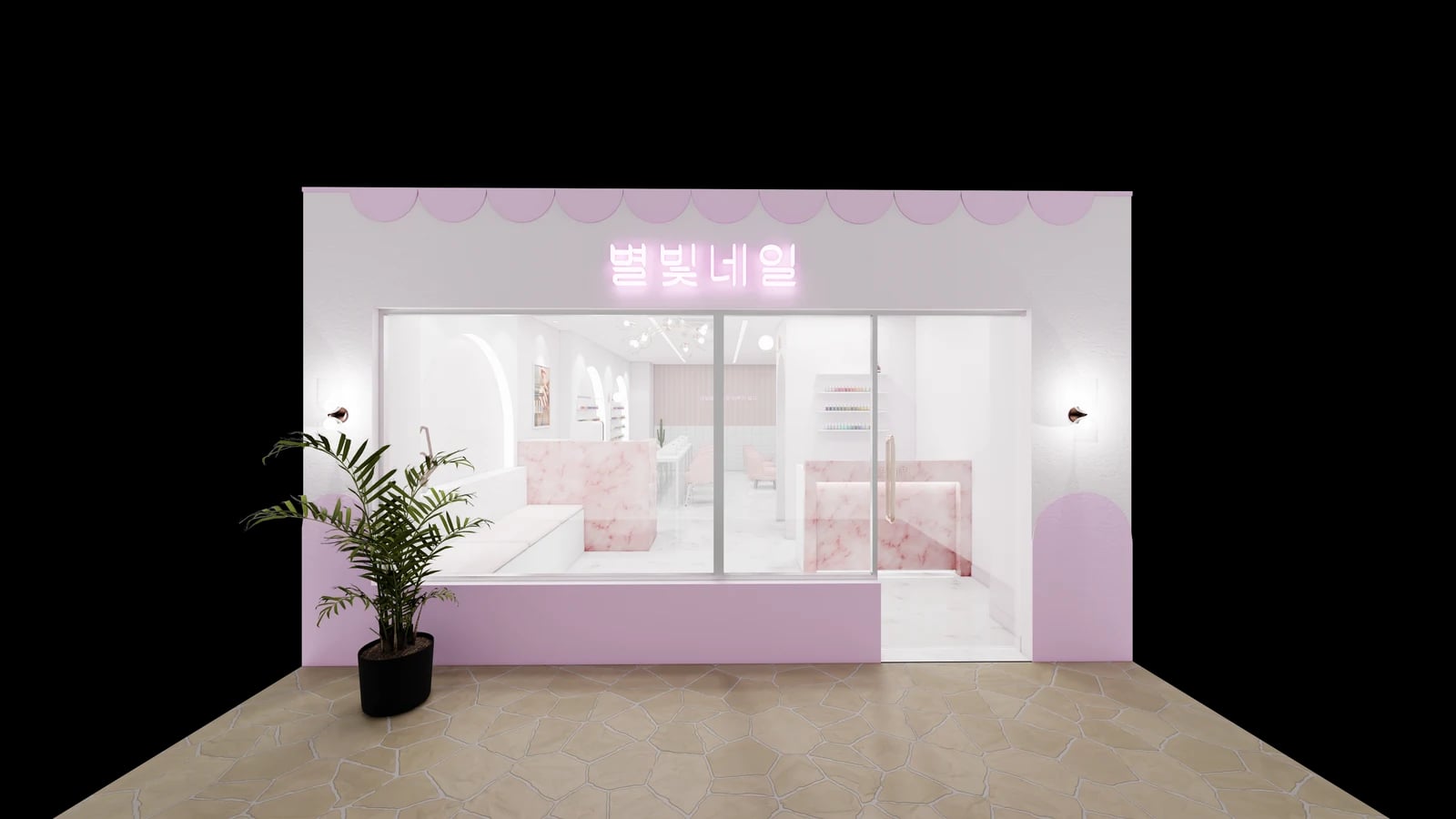
The nail salon cover design places pale lettering above a glazed entrance on a pink shopfront. If its name were to change, fabrication of new letters and refinishing the backing could be considered separately. This is a design study rather than a photograph of a removed sign. It cannot establish that lettering alone could be replaced or identify its actual fixing method.
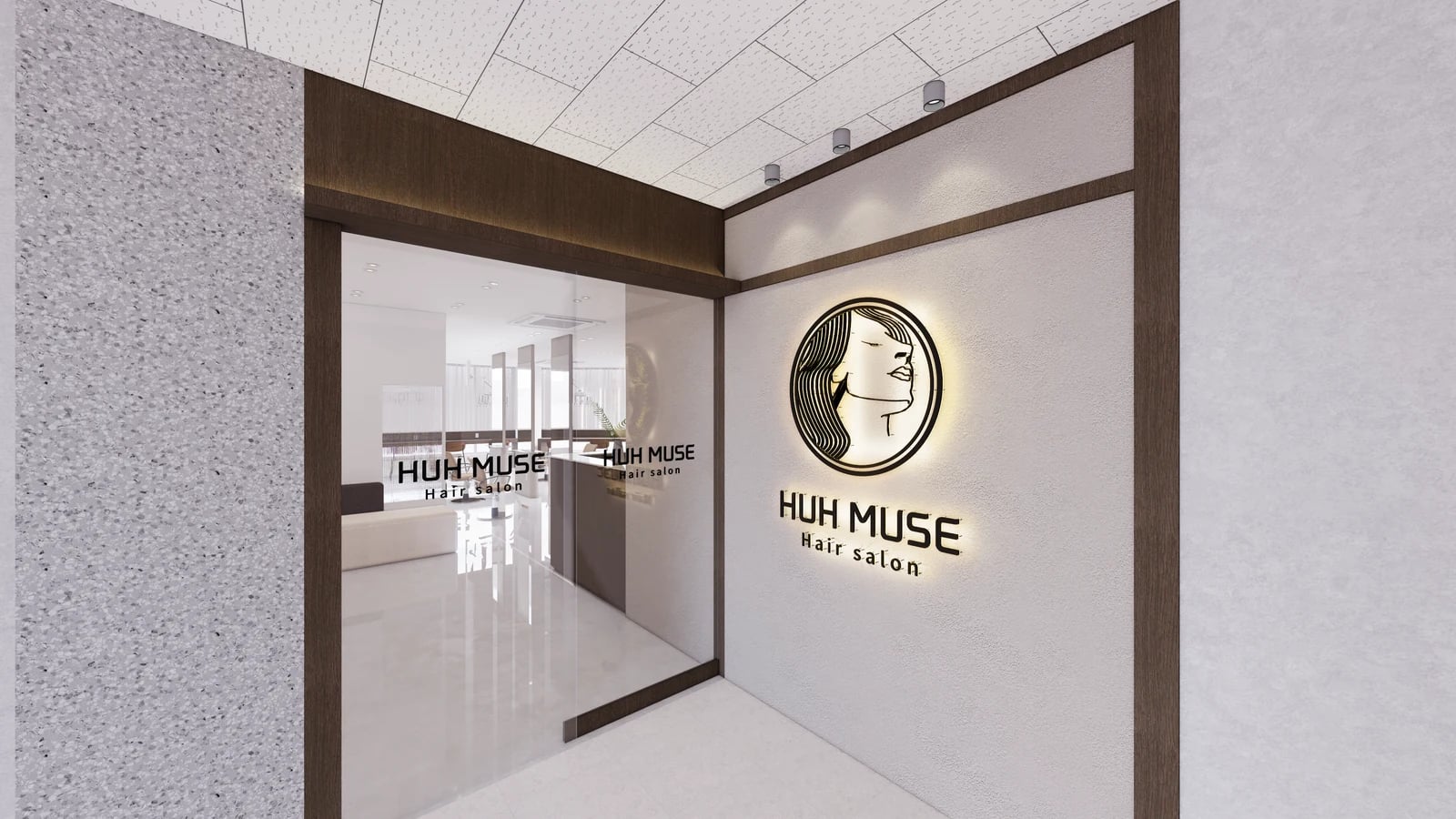
The first salon entrance design shows a face-shaped logo, business-name letters and graphics on the adjacent glass door. It helps distinguish replacing one broad panel from replacing individual letters attached to a wall. To retain the wall finish, overlay the old and new artwork and separately mark whether the old name on the door belongs in this contract.
For a lettering-only replacement, review the surfaces that removal may expose. Ask the contractor to check whether fixing locations, cable entries or differences in surface color will remain visible beyond the new letters. If the name becomes shorter or spacing changes, do not assume the new design will cover the old area. Record inaccessible conditions as items to confirm after removal.
Deciding between retaining and replacing a backing takes more than a view of its face. The contractor needs to examine the panel and frame for reuse and review joints and adjoining finishes. Readers need not climb up, shake a panel or open electrical connections. Gather front and side photographs and any existing installation drawings to define the site assessment.
For a lower-cost reuse option, make the retained components explicit in the quote. A new-lettering option should state that the backing remains and define repairs to old marks. A new-backing option should identify its extent and whether the frame stays. Separating local repairs from refinishing a whole face helps describe both the desired appearance and the traces you are willing to retain.
If obtaining preliminary quotes before a site visit, separate confirmed prices from items awaiting inspection. Do not read two options with different backing removal scopes as a price difference for identical work. Agree how photographs, changed work and costs will be reviewed if removal reveals more work. There is no need to assume that every component can stay or that everything must be discarded.
Comparing lighting, removal and installation preparation
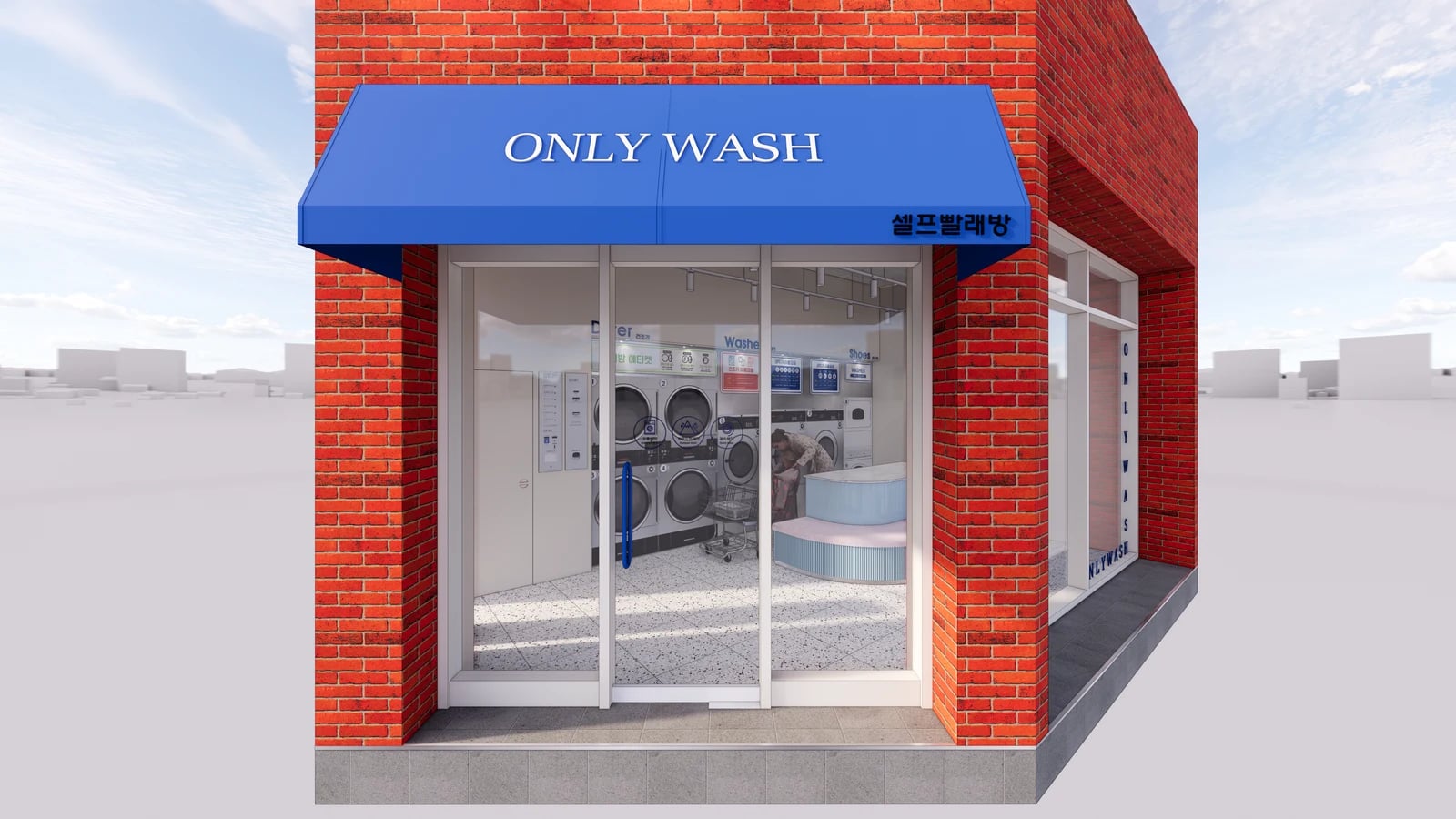
The second design places a laundry name on a blue awning above its glazed entrance. This differs from lettering on a flat panel or a wall. Establish whether the contract changes only the graphic or also the fabric and frame. The image does not establish that the awning is illuminated; check lighting separately on the actual sign.
With an illuminated existing sign, separate the decision to change letter shapes from the decision to retain electrical equipment. Have the contractor review operation, equipment locations and maintenance access, then identify reusable equipment and new supplies in the quote. Working lights alone do not establish internal condition or compatibility with new letters. Assign responsibility for connections and testing.
Align quote items for existing-sign removal and disposal, new lettering, backing and frame work, lighting and electrical connections, and adjoining finish repairs. Check where equipment and preparation appropriate to the working height are included. The same material name can conceal different thicknesses, sizes, finishes and illumination methods. Attach the same approved drawing and specification to each option, without inventing average unit prices.
Check building management requirements and local administrative procedures before fabrication. For example, Gimpo City’s online outdoor advertising application guide distinguishes routes for permits and notifications, including changes and extensions. This is a Gimpo municipal service guide, not evidence that every commercial lettering replacement follows the same procedure. Provide the installation address, advertising type, existing approval or notification records and proposed changes to the responsible local office to establish applicability.
For an operating shop, distinguish fabrication dates from site working dates. Agree permitted hours, equipment locations and pedestrian management with the landlord or building management. Prepare a way to identify the shop while its old sign is down and confirm where temporary information may be placed. Obtain any required power interruption or entrance restrictions from the contractor and incorporate them into operating notices.
Before fabrication, review both the view within the building frontage and close reading. Check the name, business type and contact details, including old names on glazing or awnings. Show backing boundaries and letter locations on a drawing with actual dimensions so approving lettering does not leave surrounding finishes undecided. If illumination changes, include its lit appearance in the approval material.
Inspect the completed work against the approved artwork and scope schedule. In daylight, review letter positions, repair boundaries and any remaining old graphics. For illuminated signs, separately check operation with the contractor. After removal waste and adjoining repairs are resolved, retain the final specification, maintenance access information and responsible contact. The choice between replacing letters alone and replacing the backing should end in a quote that matches verified reuse conditions with the work commissioned.
Ask us about your interior project
We can discuss a quote and design suited to the space you are planning.
Request a free consultation