Café Chair Colors: Coordinating Seats, Tables and Frames
Compare chair colors by separating the seat, backrest and frame. Three design studies show how white and wood tones, dark frames and colored bench seating can guide samples, mixed arrangements and order quantities.

Before you begin
- Compare seat, backrest and frame colors with the table and floor.
- Define a shared feature and quantities for each location when mixing colors.
- Review a real chair with finish samples and record product codes by component.
Separating chair components from the table and background
When choosing café chair colors, do not record a chair as a single color. Separate the seat, backrest and leg frame. A wood-tone seat on black legs and a white seat on the same black legs share only part of their appearance. Decide which component should match the table and which may differ to establish a useful comparison.
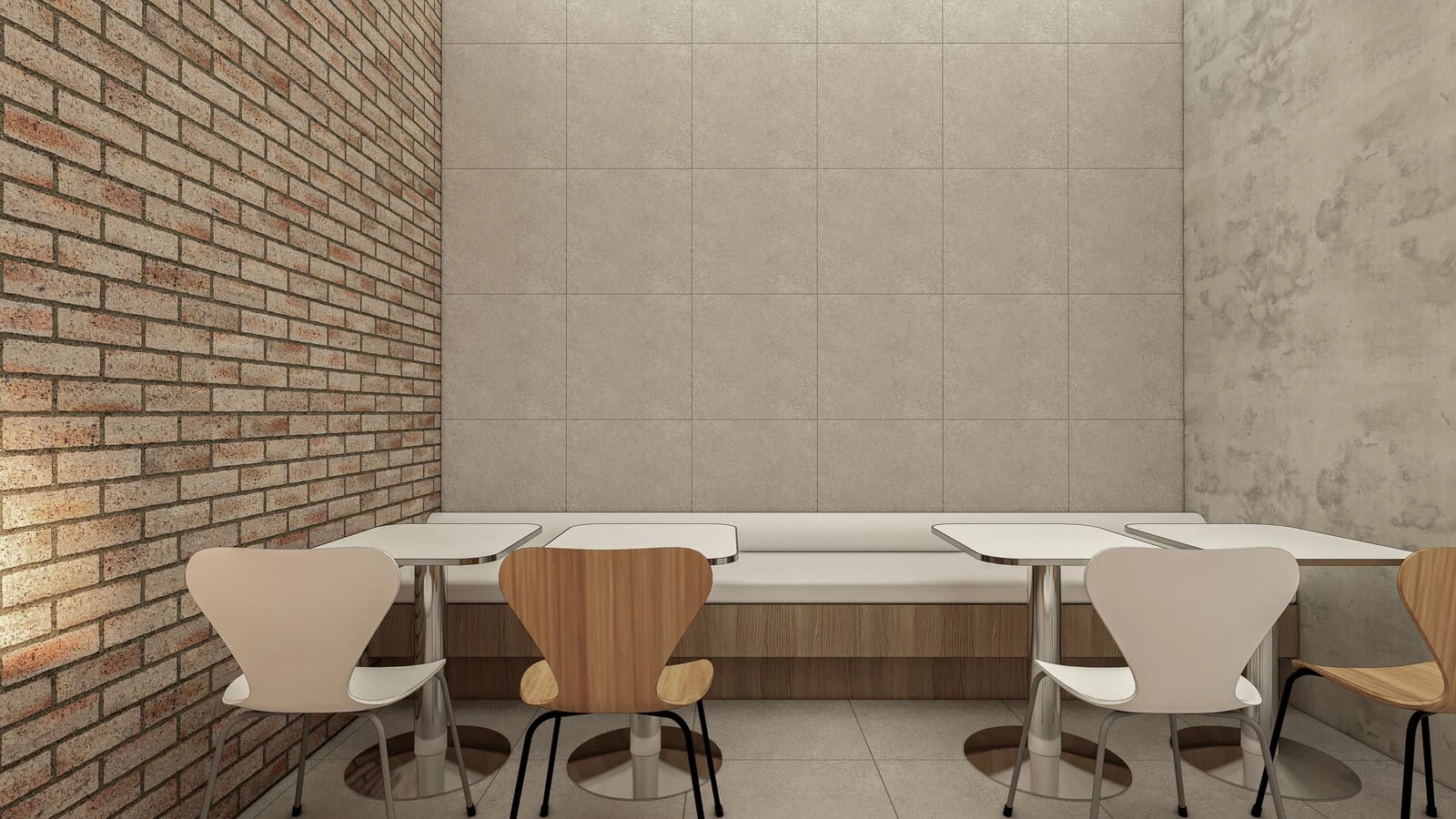
The cover design places white and wood-tone backrest chairs along the same row of tables. The wall, long bench and tabletops each continue while the chair colors change. Review how many chairs of each color belong along that row rather than selecting the white and wood-tone options separately. Liking both options and seeing them together in one room are separate decisions.
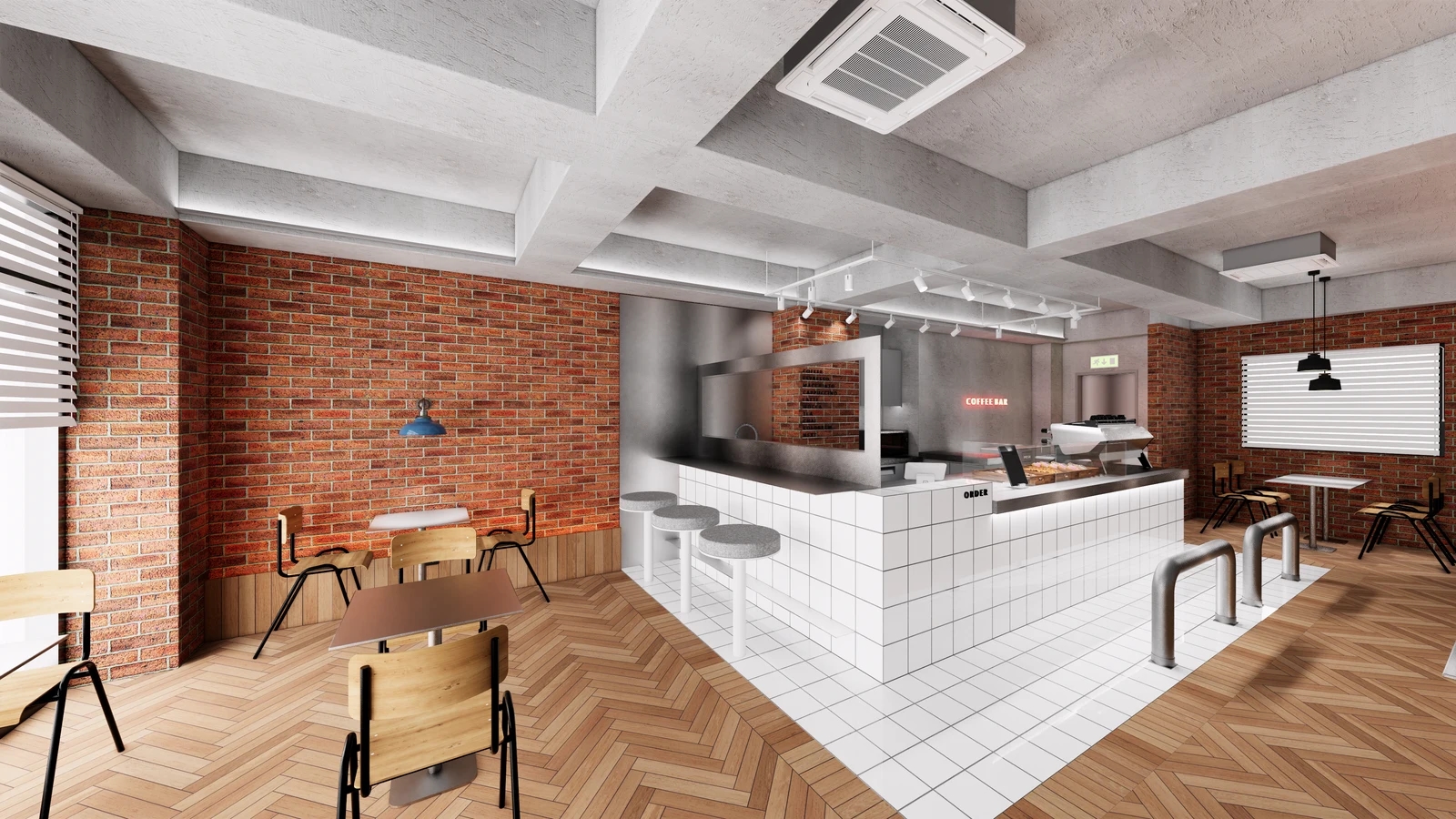
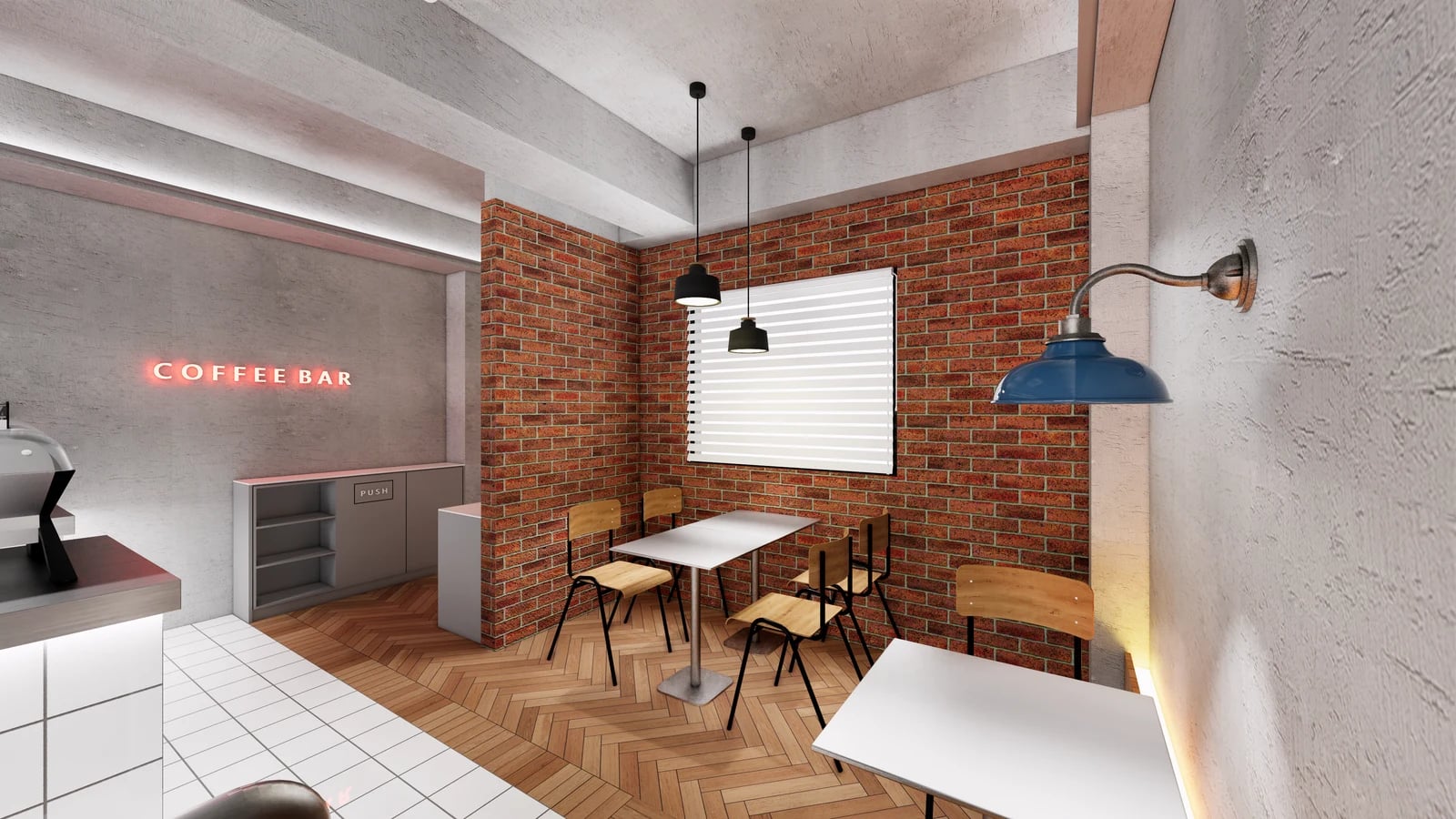
The first section design combines wood-tone chairs with black lower frames, white tables and a brick-pattern wall. The chair backs and tabletops need not share a color to let you compare how their legs relate to surrounding lines. Here, wood tone describes the visible color. Confirm the actual material, coating and product through separate documentation.
The Korean manufacturer Fursys distinguishes wood, fabric and artificial-leather seat-and-back specifications and separately describes leg colors in its Spoon standard chair guide. This example suggests separating the body finish from the frame option in a candidate list. Confirm the combinations actually available for each model and specification. It does not identify the chairs in these images or imply identical choices are available for every chair.
For a coordinated scheme, define exactly what should match. Matching only the backrest color and matching the seat and legs within one product produce different orders. If tables are already in place, compare the actual candidate chair beside them with the floor and walls in view. For new tables, retain chair and tabletop samples together so separately approved finishes do not become an unintended combination.
Avoid combining every wood tone under one color name. Compare a reddish chair beside a pale wood-tone table with an alternative that leaves the top white and uses wood tones only on chairs. With a patterned floor, view the candidate from the intended standing position rather than studying a small sample alone. Once the combination is clear, record the manufacturer, product code and finish location as well as the color name.
Include furniture being retained when ordering only some new chairs. Compare a seemingly similar black frame next to the existing item rather than substituting from a photograph. If the original product is no longer available, decide whether to add a near match or clearly distinguish the new furniture area. Compare repainting or replacing seats as a separate quotation after the supplier confirms the feasible work and finish.
A shared feature for a mix of different chairs
A mixed-color scheme differs from adding colors at random. Keep the model and change only backrest colors, or retain similar colors while varying chair forms. Changing both is possible but introduces more comparisons. Start with a shared feature and then review the differences to make the reason for your choice clear.
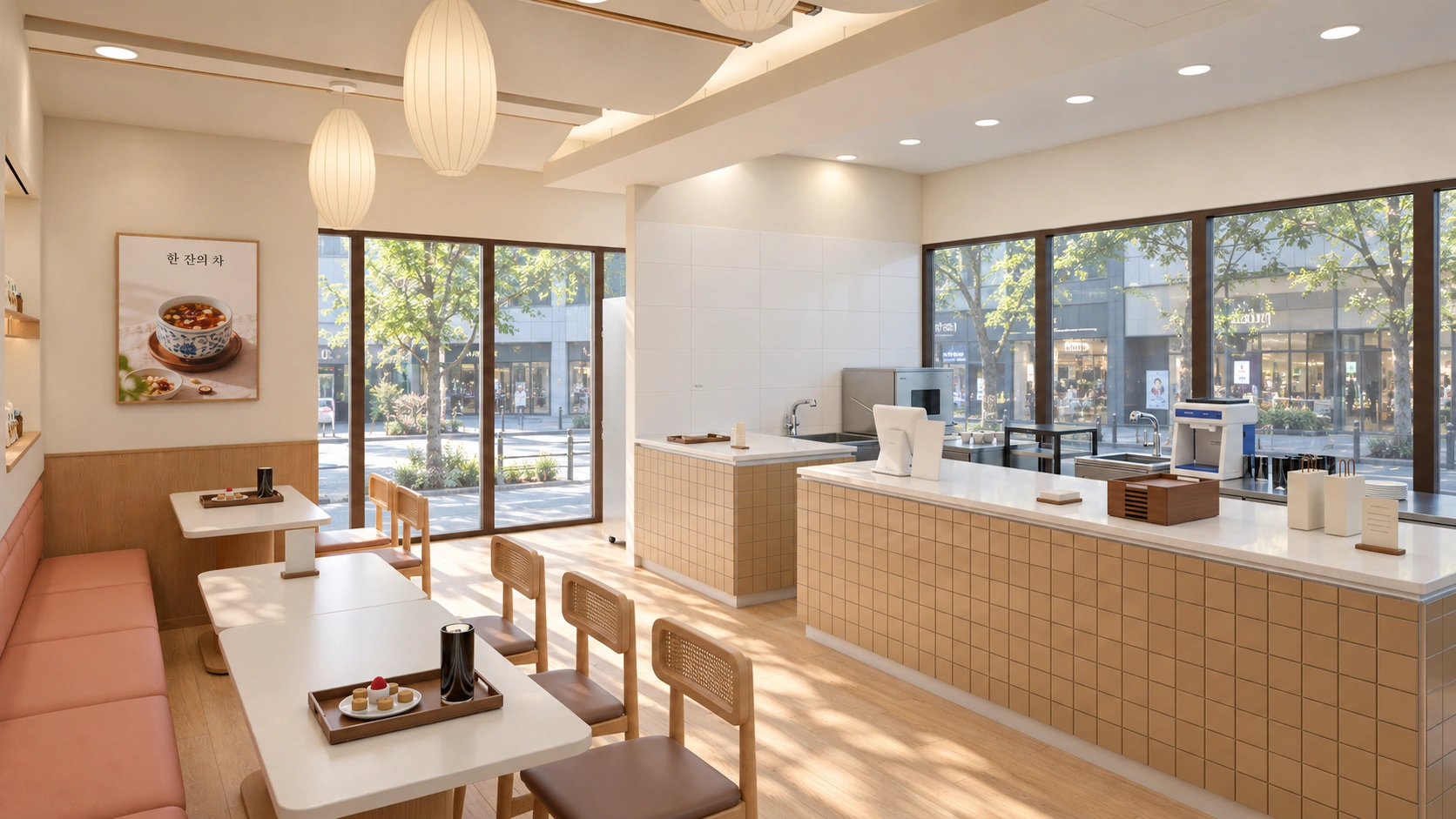
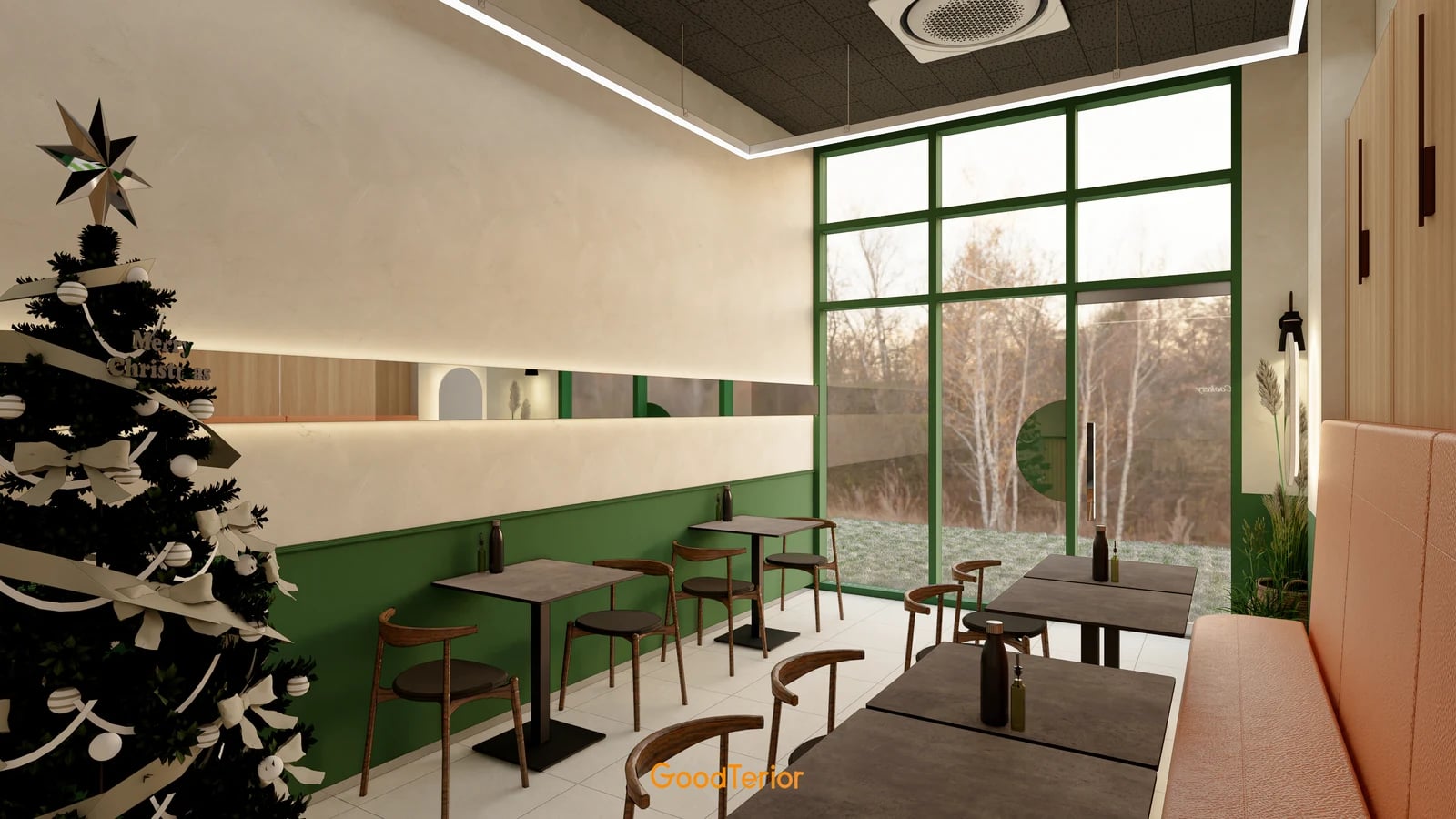
The second section design shows an apricot-colored bench, wood-tone wall panels and movable chairs with dark seats. Rather than matching benches and chairs, it lets you compare their relationship with dark tables and wood-tone components. The same comparison can help a café retaining long fixed seating while replacing chairs in front. Rendered colors do not establish a fabric performance rating or an actual product specification.
Decide the mix through a chair schedule and layout. Draw alternatives that alternate colors within one table or group window and inner seats by color. Discuss whether staff can maintain the arrangement after moving chairs to clean. If restoring a precise daily order is impractical, define acceptable variations or compare simpler groups by area.
Review the full arrangement and an occupied arrangement separately. Compare the line of chair backs from the entrance, the opposite chair from a seat, daylight at the window and the room with its lights on. Bags and coats may cover parts of a chair, so do not decide solely from an empty room seen head-on. Record the combinations to retain and change under the same conditions rather than relying on lengthy descriptions of a mood.
Follow color sample approval with a separate sitting review. Substituting another model with the same backrest color makes the seat shape, arms and leg outline subjects for review again. A color chart cannot establish whether a chair feels suitable or fits beneath a table. Put the final chair and table together and check sitting, drawing the chair in and standing before confirming quantities.
Separate the chair model, component colors, material specification and quantity of each color in the quotation. Decide on additional or spare chairs with the budget and storage location in mind; do not record later availability of the same color as guaranteed. Check changed components and codes as well as the total in a revised proposal. Changing a leg finish and replacing the whole model are different changes.
At delivery, compare the approved physical sample with the model and color quantity schedule. Check each unpacked seat, backrest and frame before arranging chairs at their tables. Retain final layout photographs, component information and the supplier’s care instructions together. The result of choosing café chair colors should be a combination whose relationships you can explain again, beyond a single favorite color.
Ask us about your interior project
We can discuss a quote and design suited to the space you are planning.
Request a free consultation