Music academy storage: keeping instrument cases off classroom floors
String-instrument lesson rooms need space for cases as well as instruments. Photographs help review case drop-off, storage shelves, and movement through classroom doors before and after lessons.

Before you begin
- Picture students setting cases down rather than judging only empty lesson-room floors.
- Separate instruments staying in the room from cases moved elsewhere after lessons.
- Walk from storage to classrooms carrying cases and opening doors.
Start with temporary case gathering before class
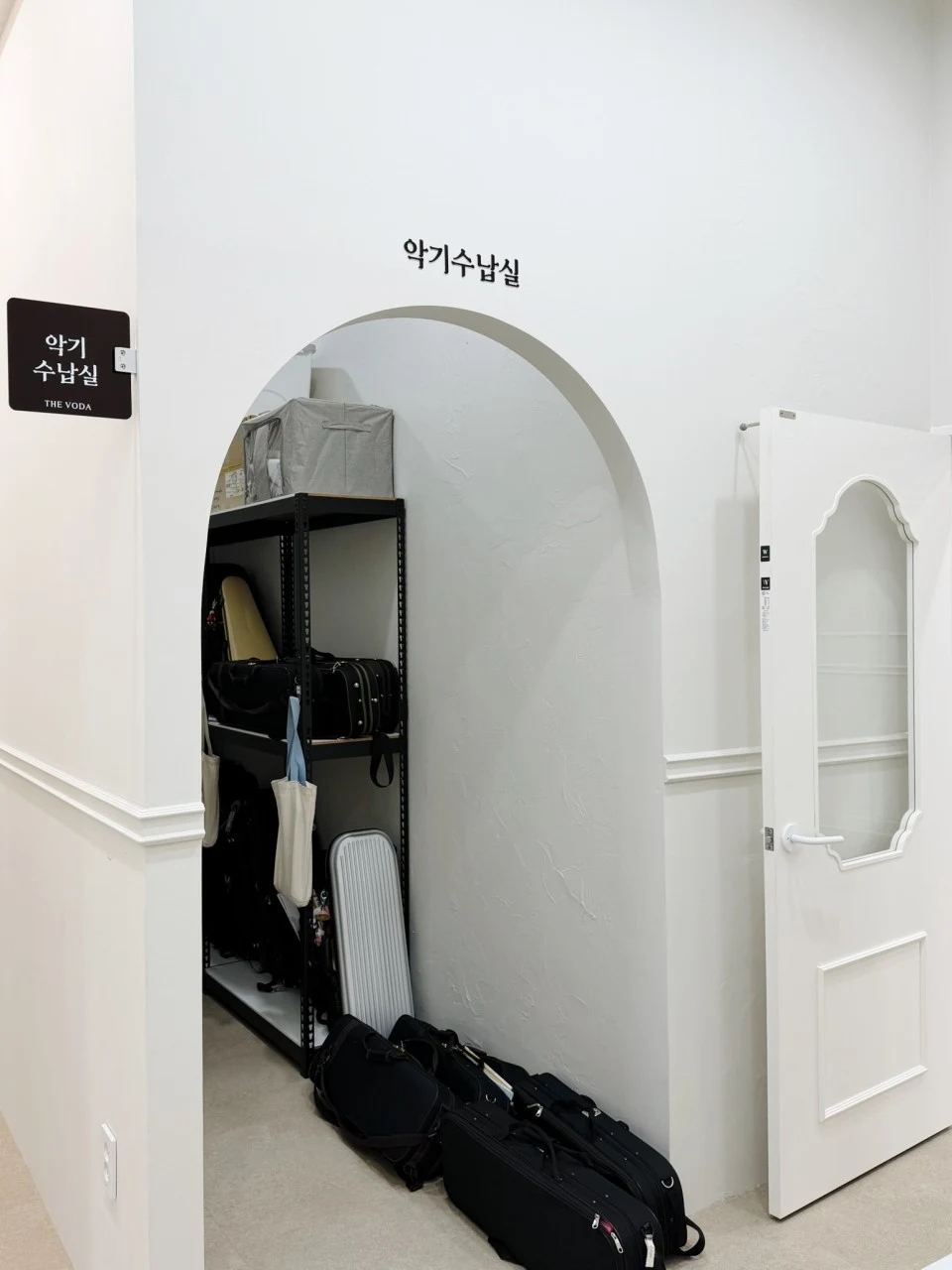
Students arriving with violins or cellos unpack on entering. Where do empty cases go? The photographed instrument store has shelves and cases on the floor. The image cannot establish that day's attendance or normal storage procedure, but highlights actual case footprints.
Record how many students bring instruments to each room and whether lessons overlap. Walk the site to see if retrieval and storage users gather at the same door. Floors appearing spacious empty change quickly when cases open.
Yamaha Music's Teach With Flow: Protect the Time You Have describes designated case positions and consistent routines at lesson starts and ends. This US school-teaching article is not a Korean academy storage-area standard. Actual storage demand here still requires operator confirmation.
Separate cases retained in lessons from cases moved away
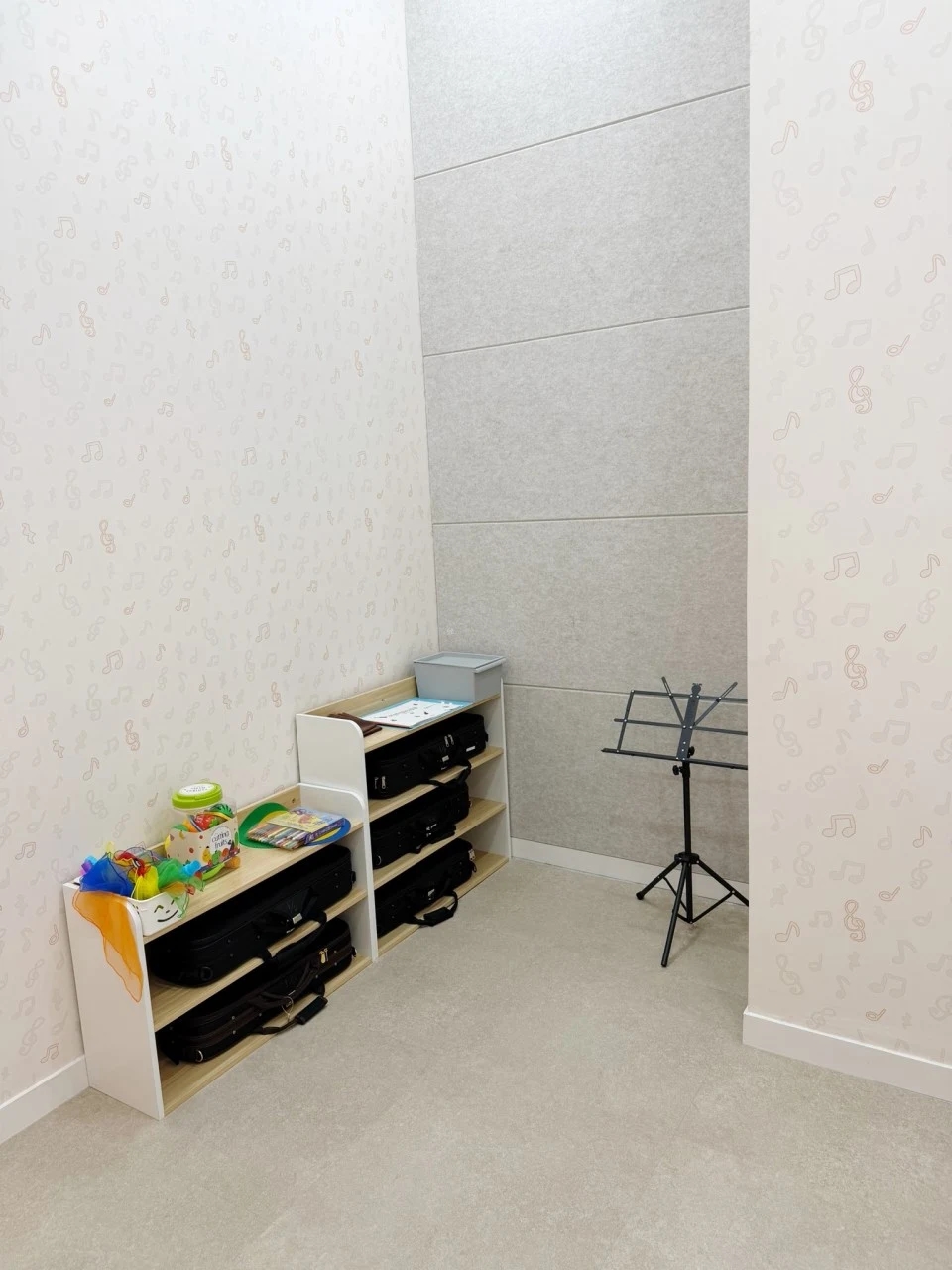
Music stands and teaching tools quickly fill small lesson rooms. The photograph shows low wall shelves holding cases and clear floor before a stand. Actual student and teacher sitting or standing positions cannot be established from the image.
Decide whether cases remain throughout lessons or return to storage after unpacking. For room storage, test actual cases on shelves and standing room before them while doors and music stands open. For external storage, define who moves cases and when as part of operations.
Photographed shelves do not establish suitability for every instrument. Violin, viola, and cello cases differ in length and shape, so test intended cases physically. Check front clearance for gripping handles and retrieving cases rather than shelf height alone.
Users meet again at doors after lessons
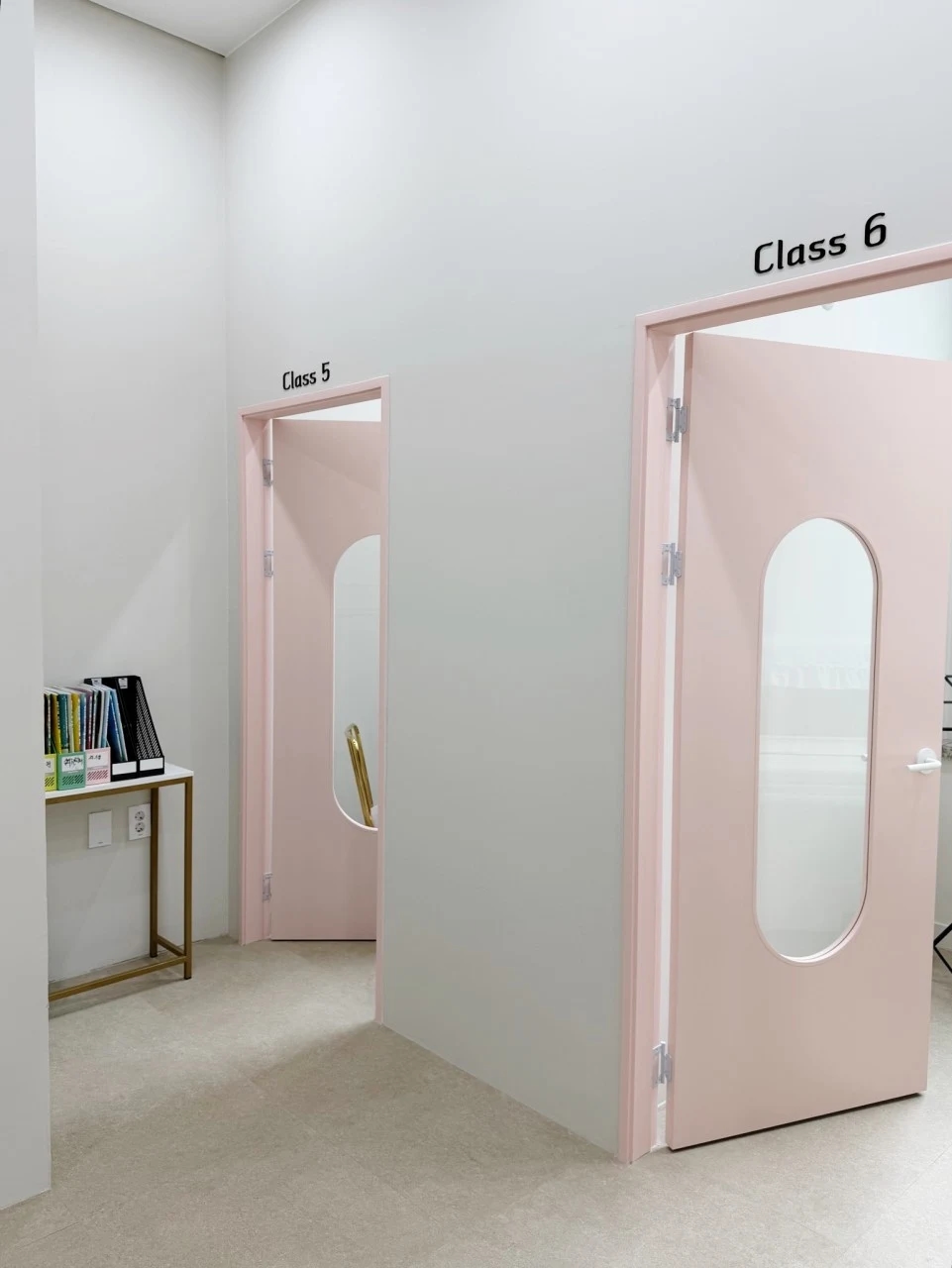
The photograph shows nearby Class 5 and Class 6 doors. Similar lesson end times may bring case-carrying students out while incoming students approach. The image cannot establish corridor widths or actual congestion, so a plan showing closed doors alone is insufficient.
Before operation, have someone carry the largest case from storage to a classroom. Rehearse another person opening the door and exiting too. If cases must briefly stand outside, check overlap with the next room's entrance.
Storage proximity alone does not complete planning. Defined retrieval and return sequences make lesson transitions less disorderly. Identify real conflicts between storage, classroom doors, and waiting before finalizing shelves.
Ask us about your interior project
We can discuss a quote and design suited to the space you are planning.
Request a free consultation